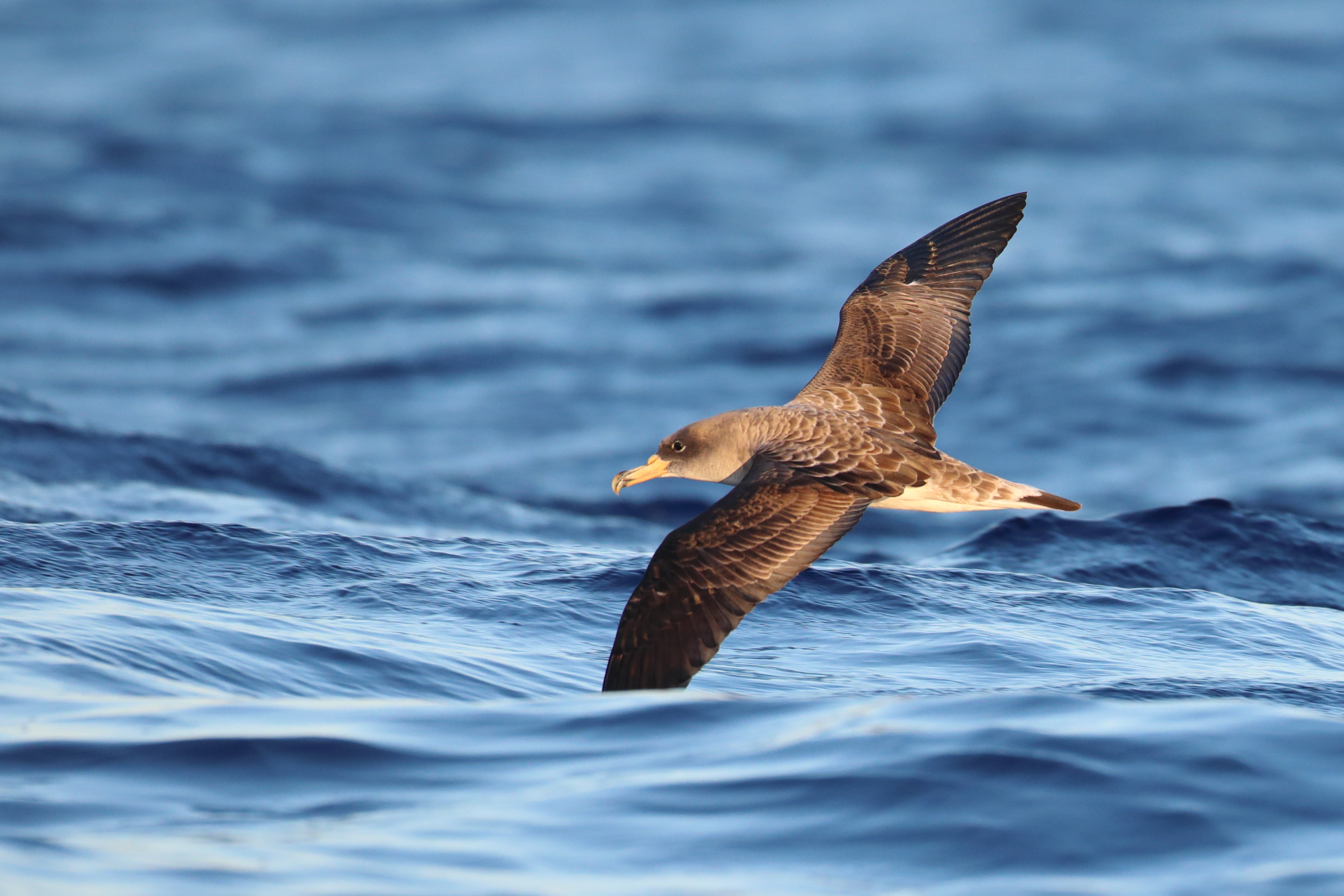
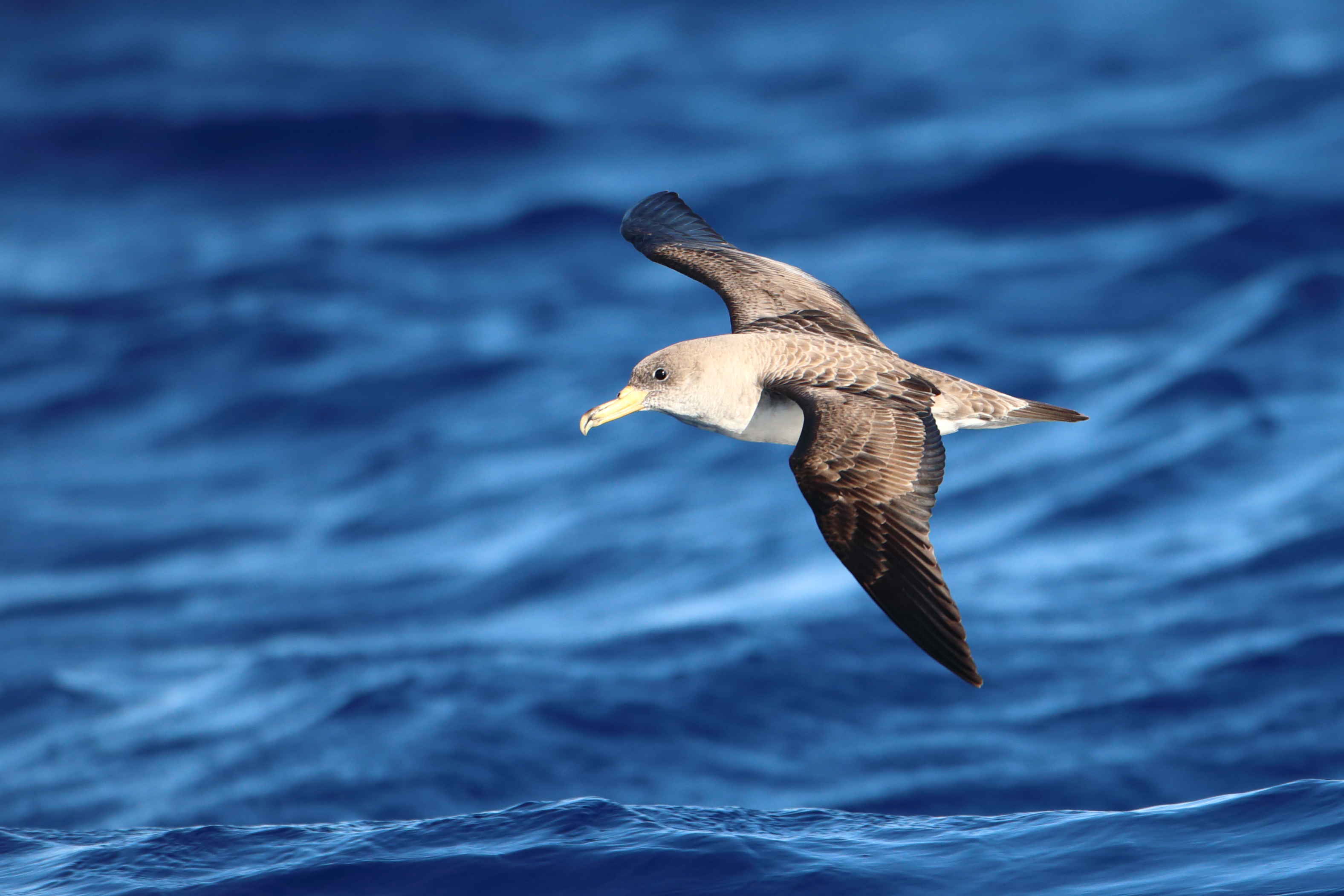
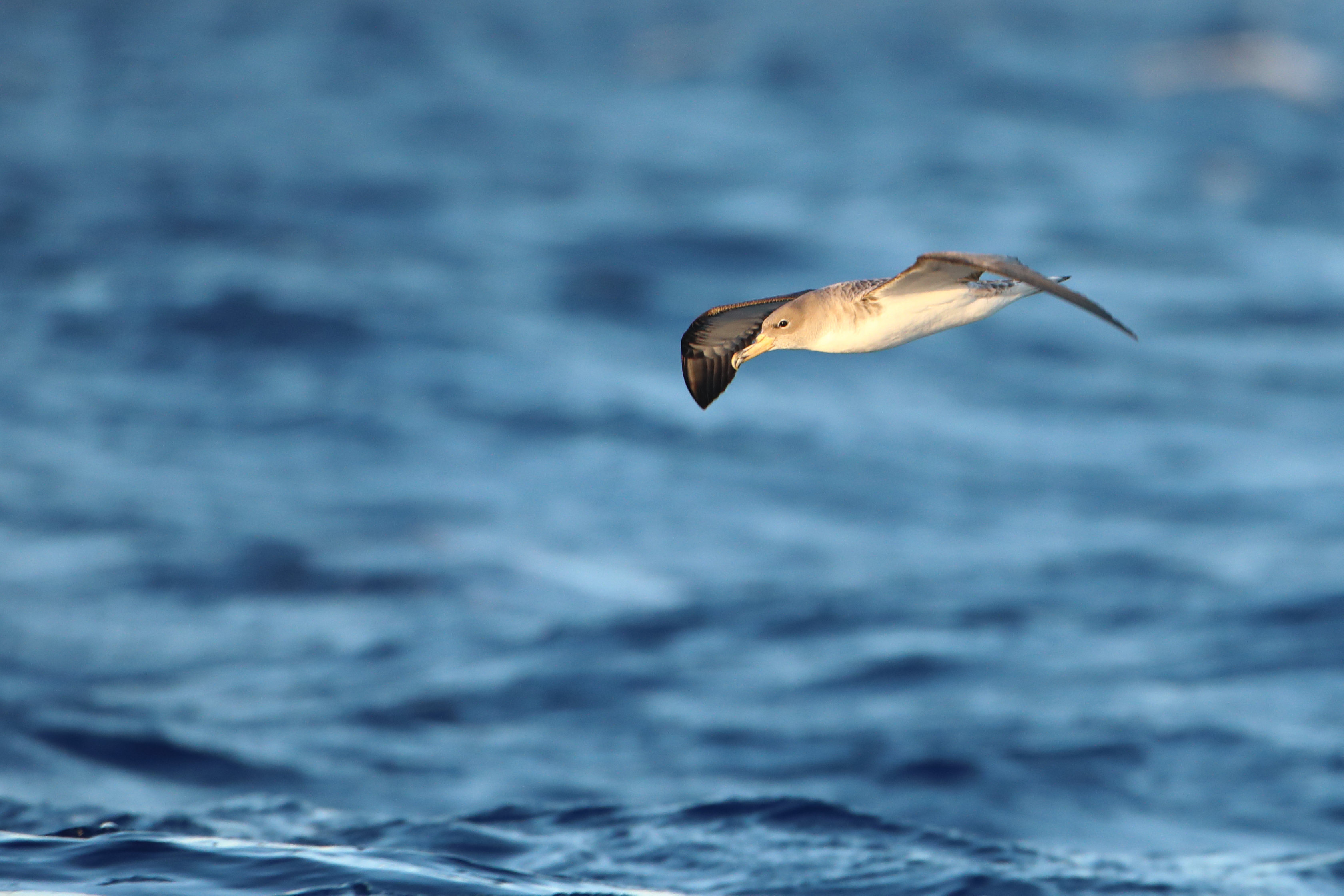
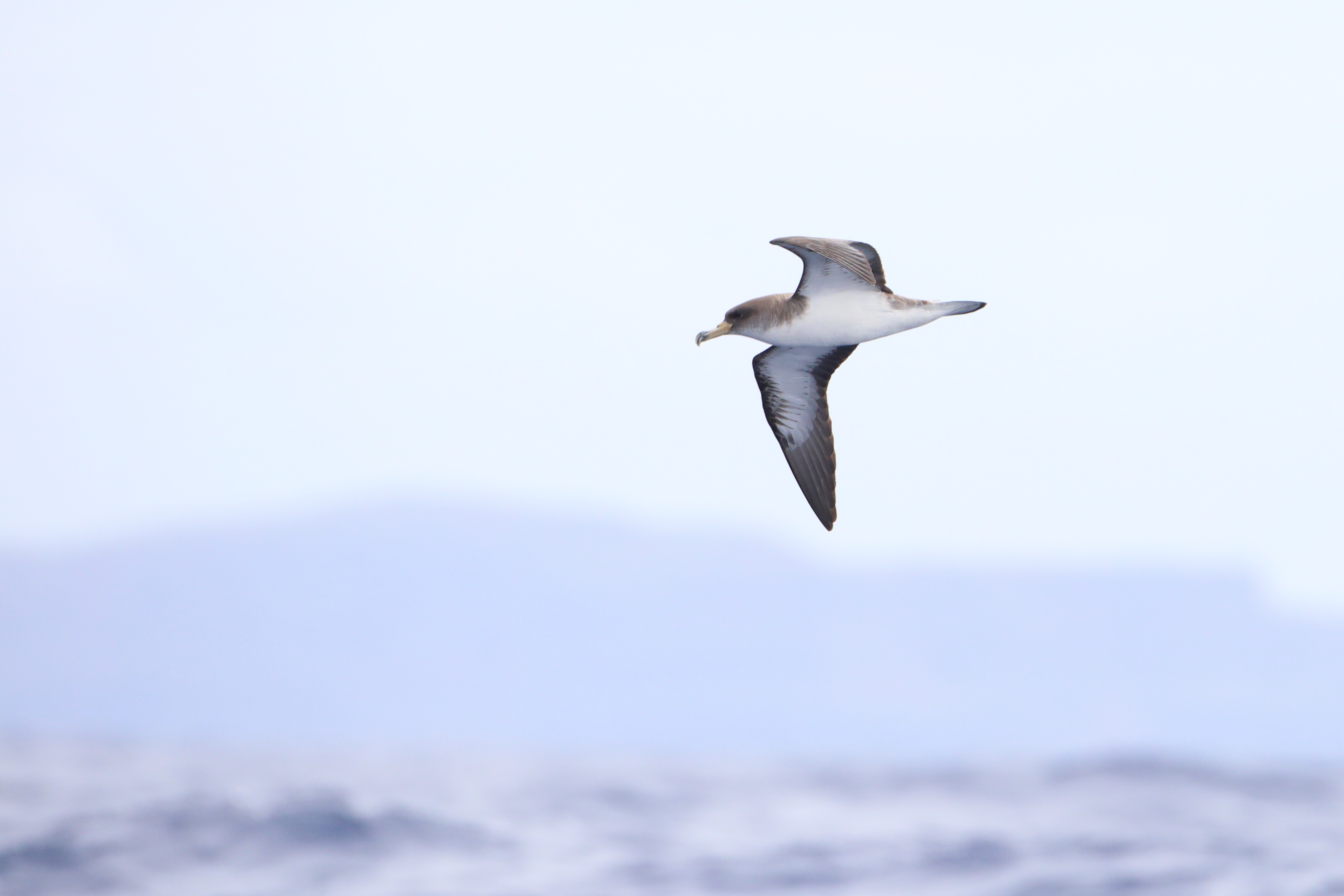
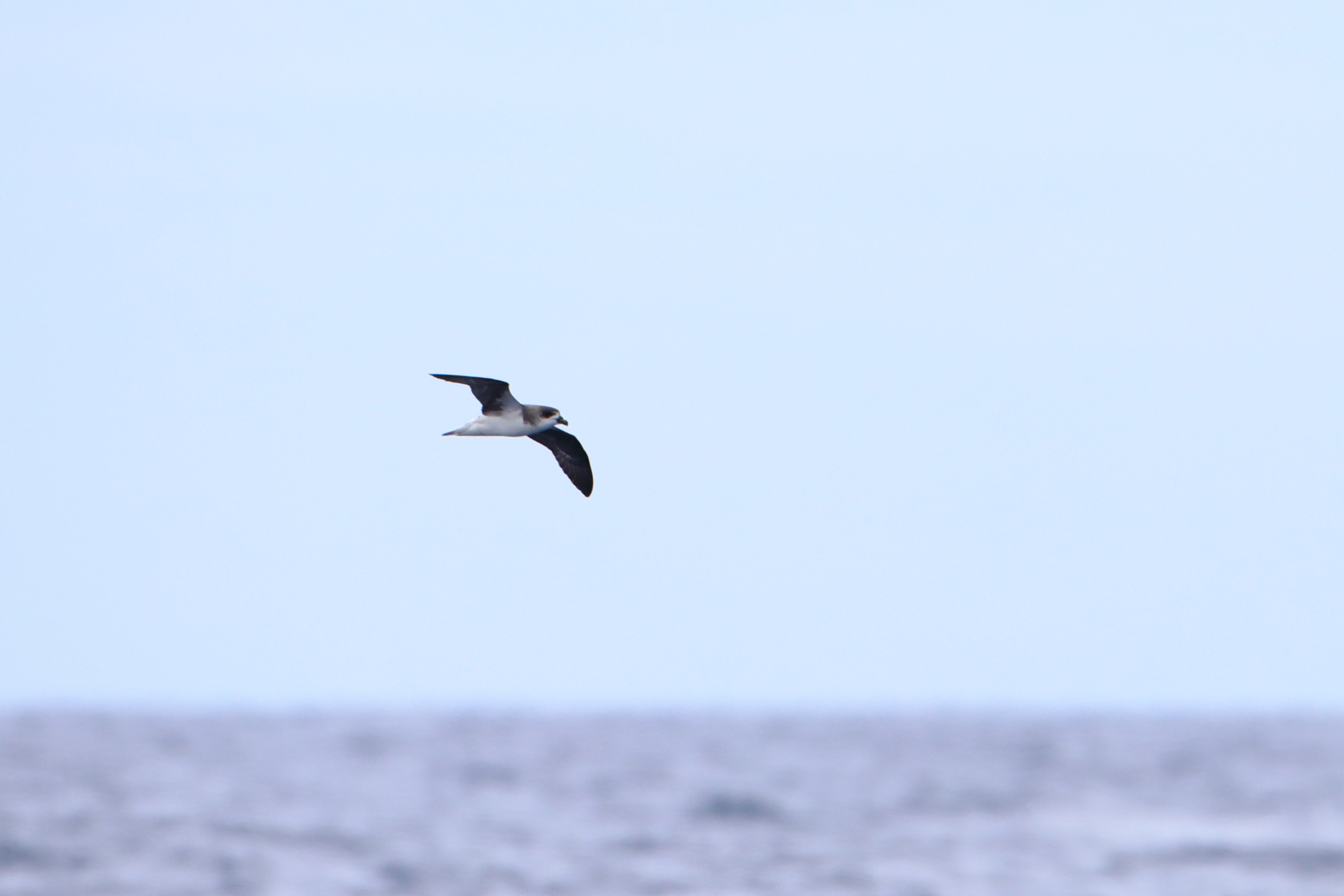
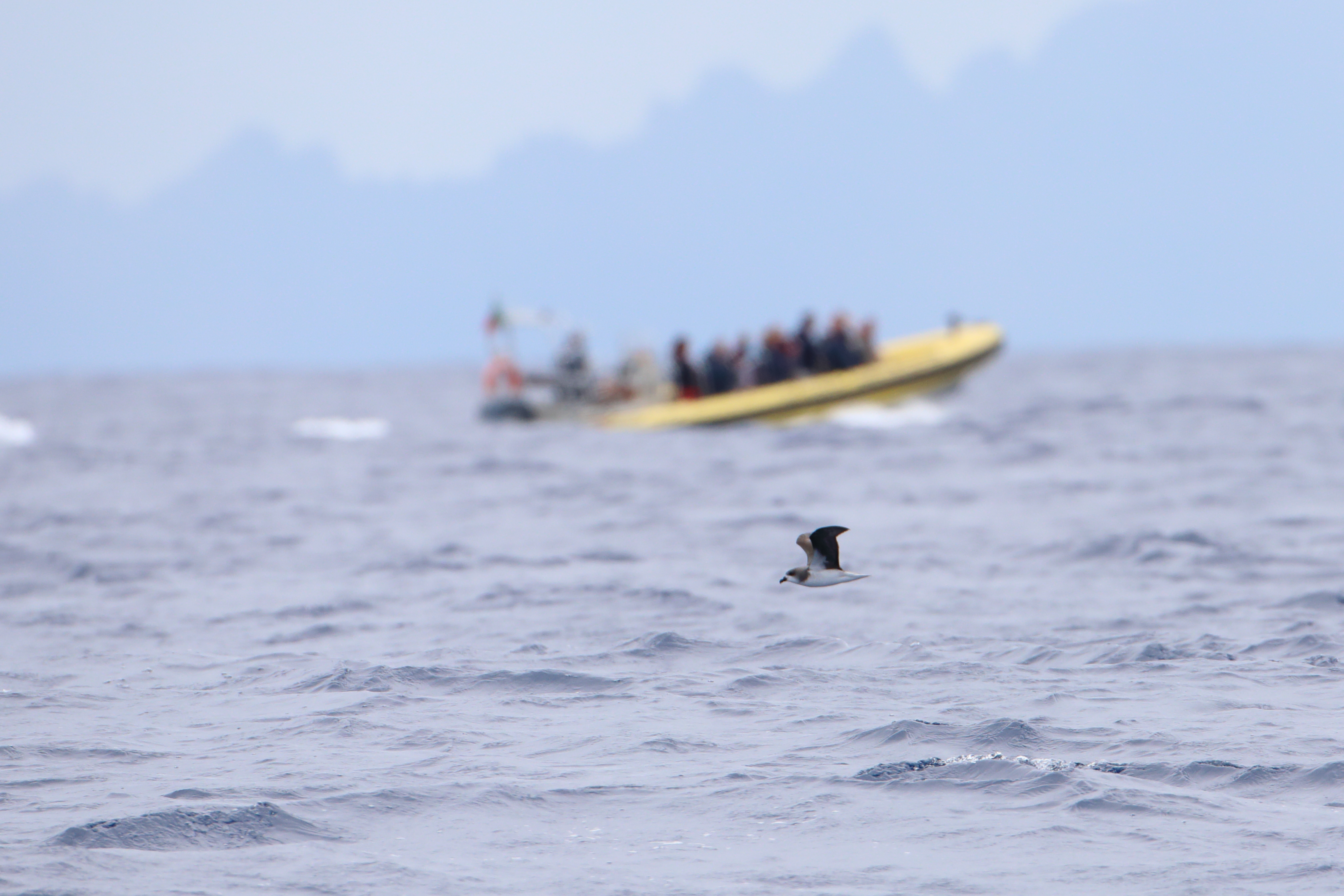
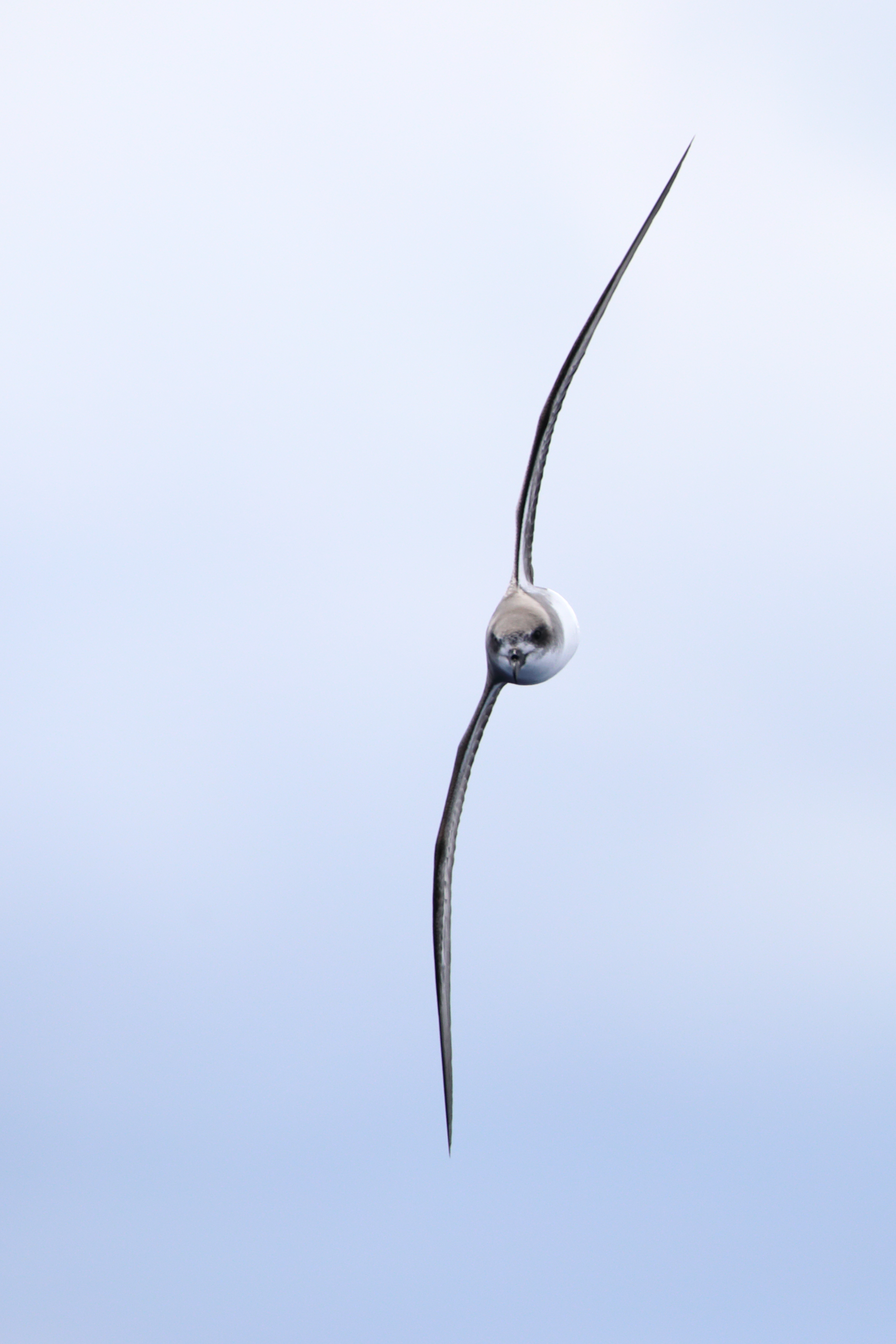
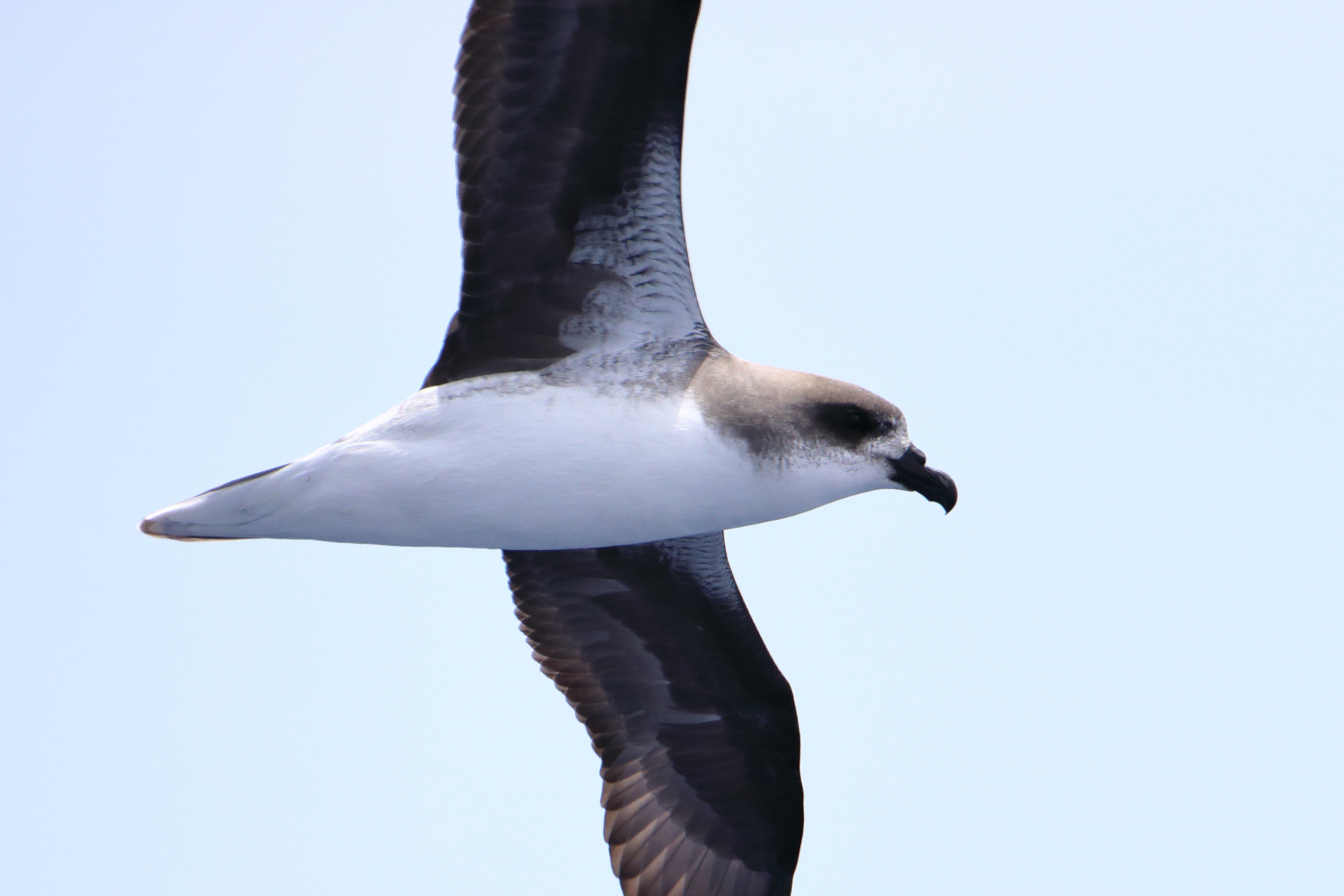
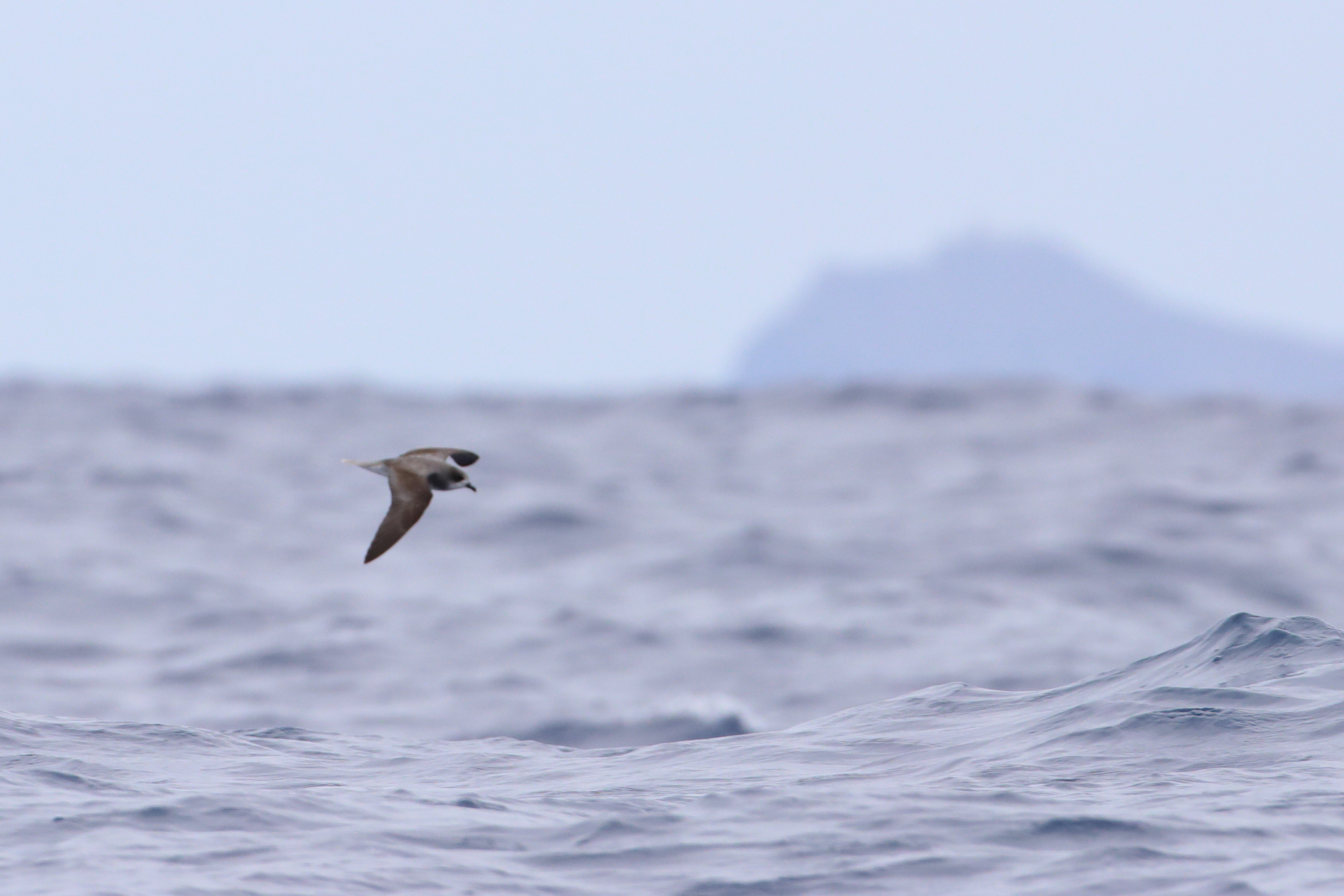
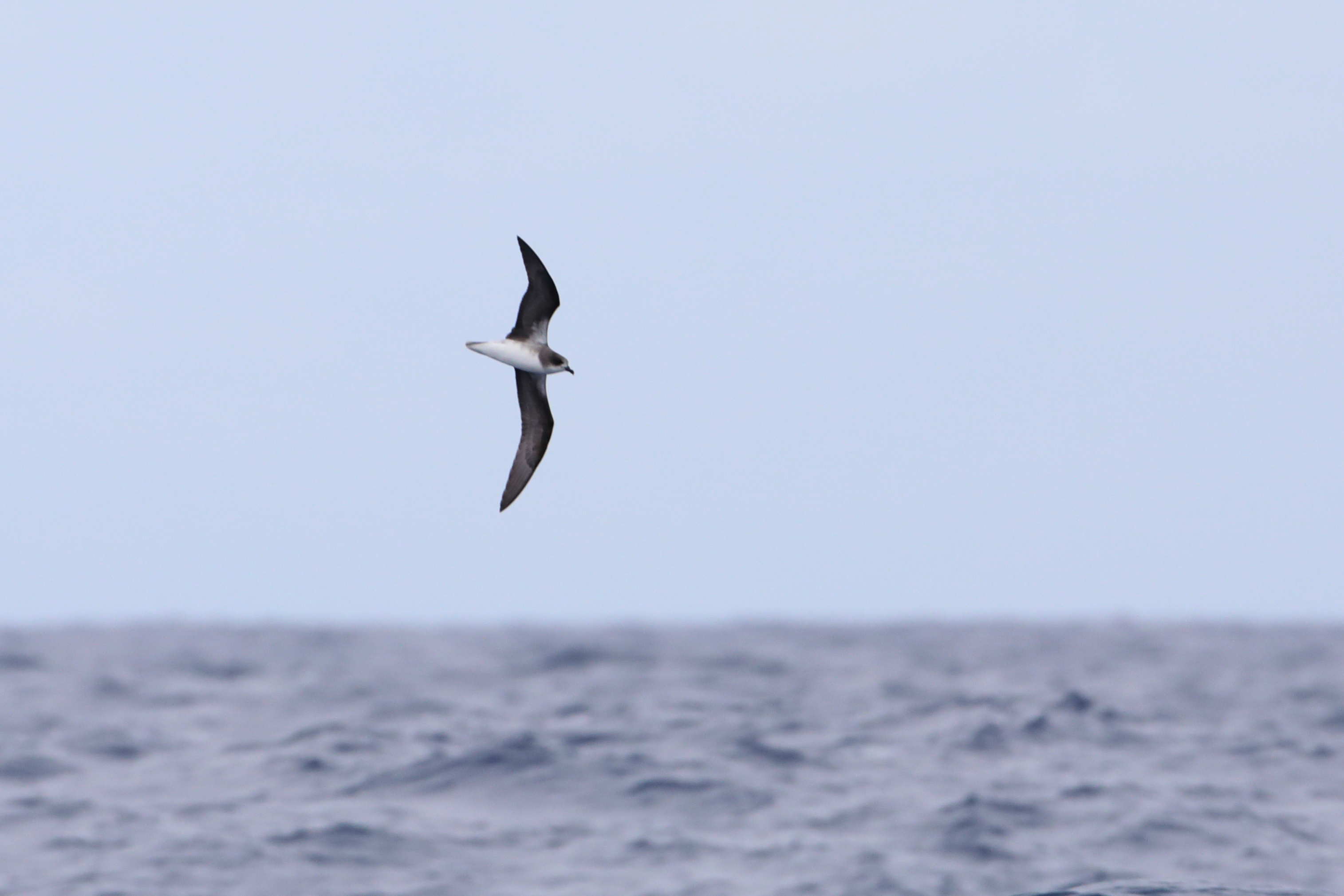
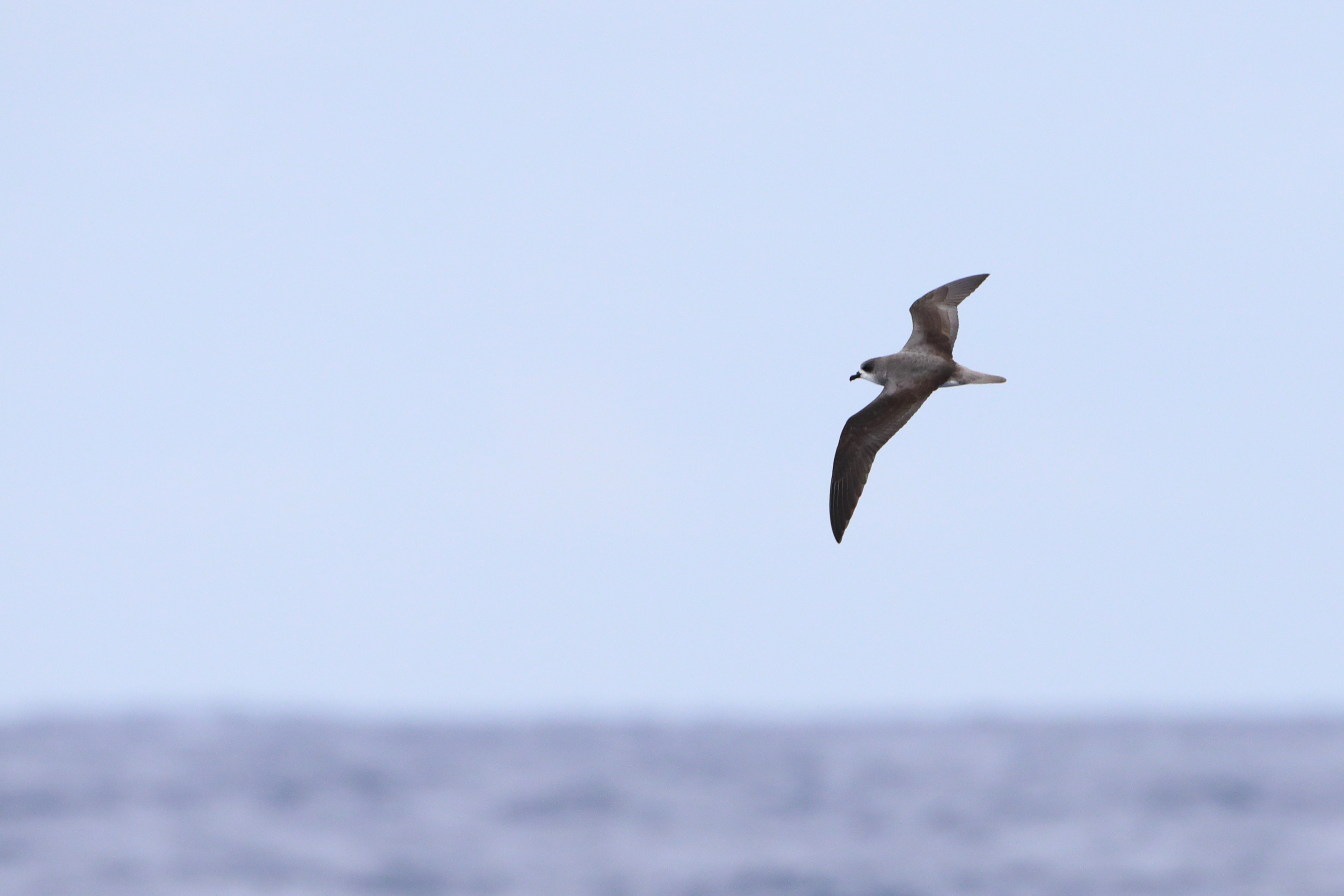
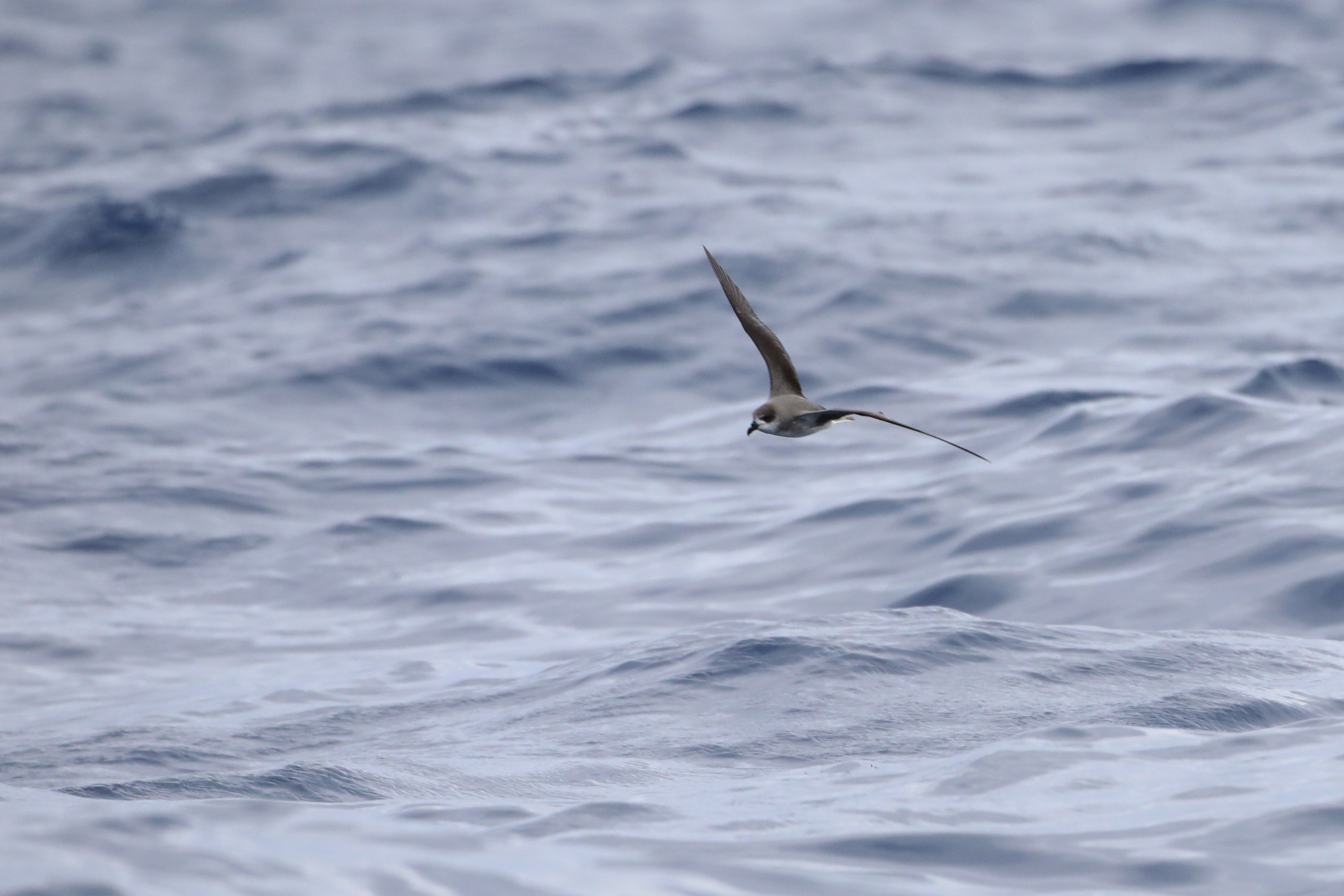
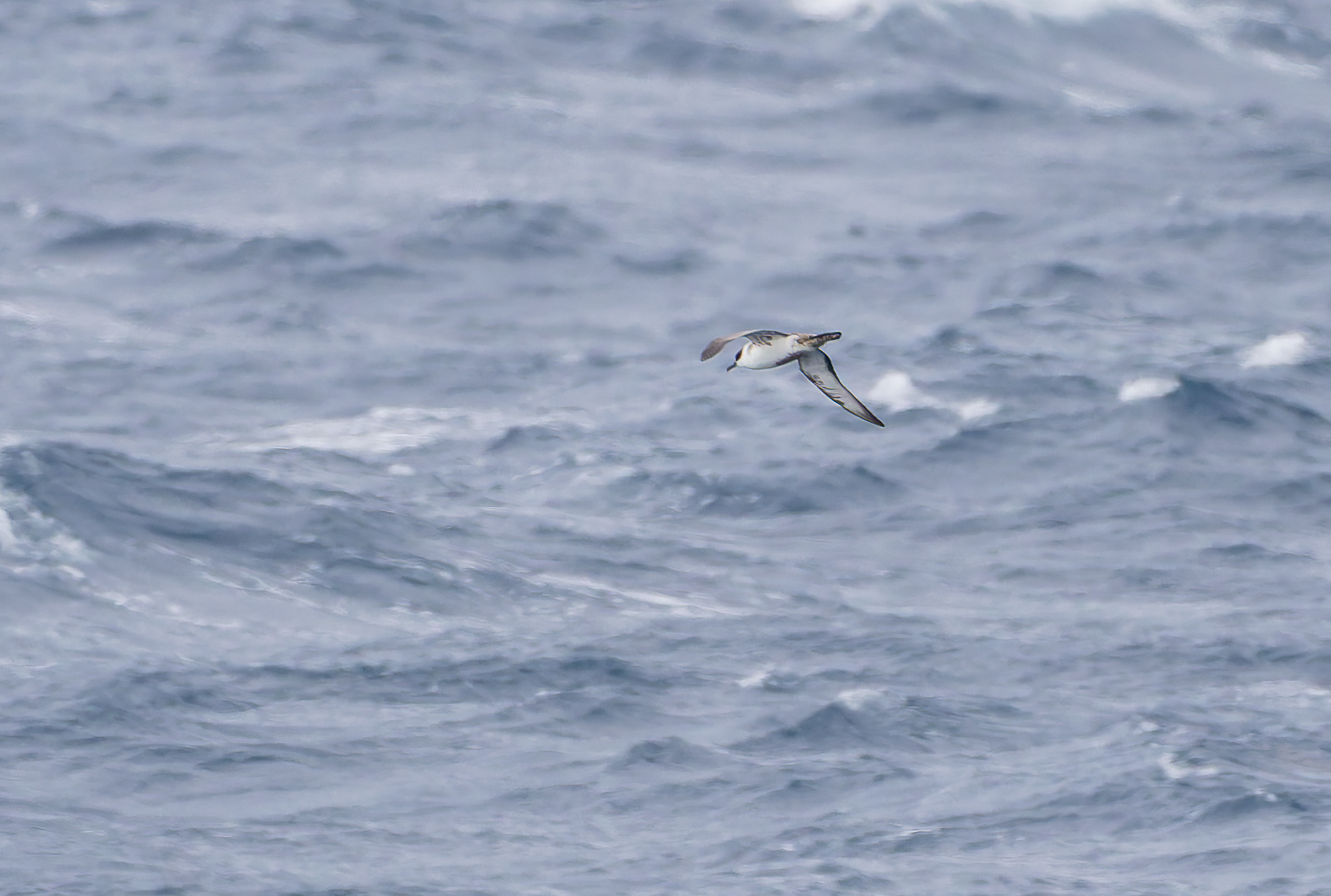
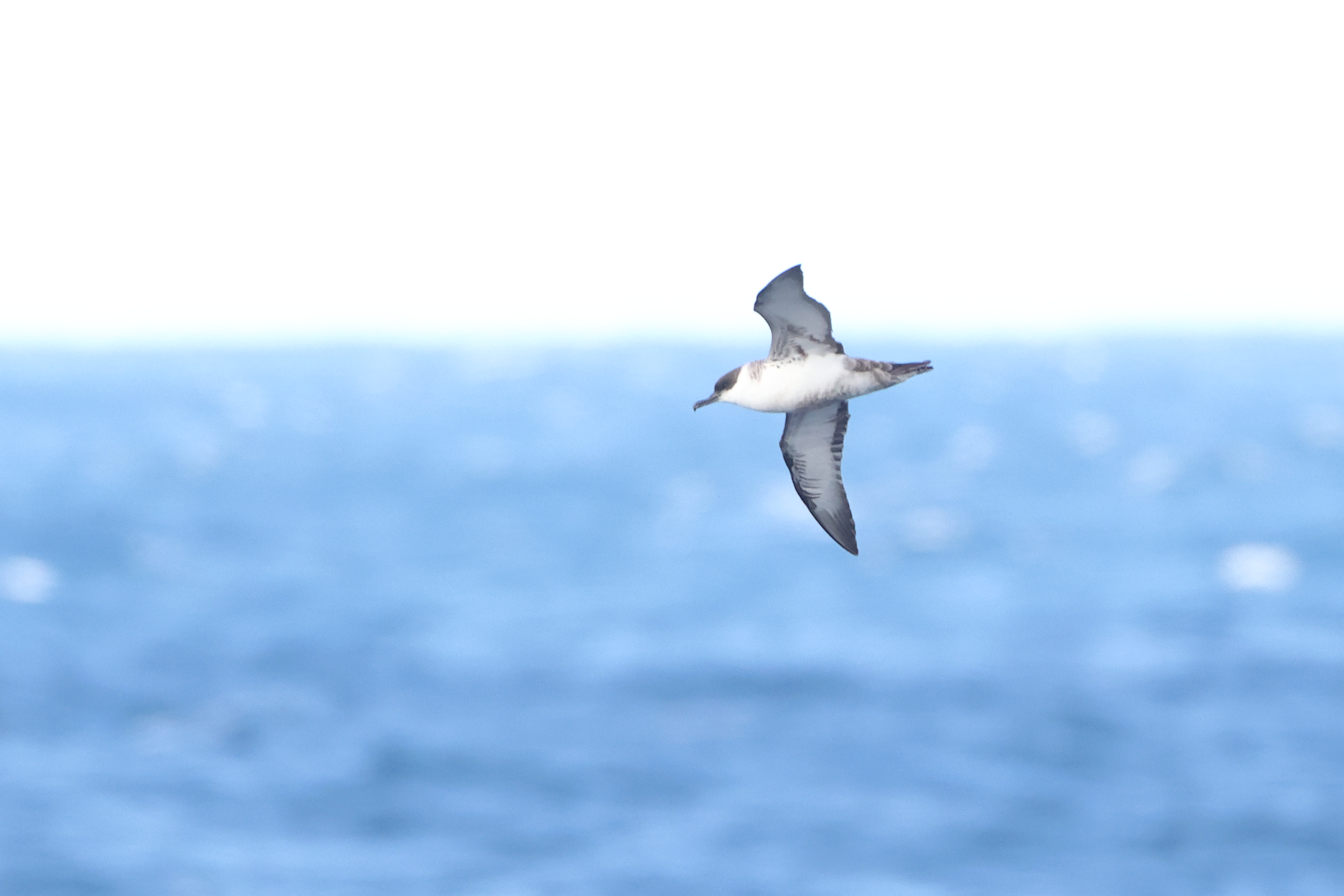
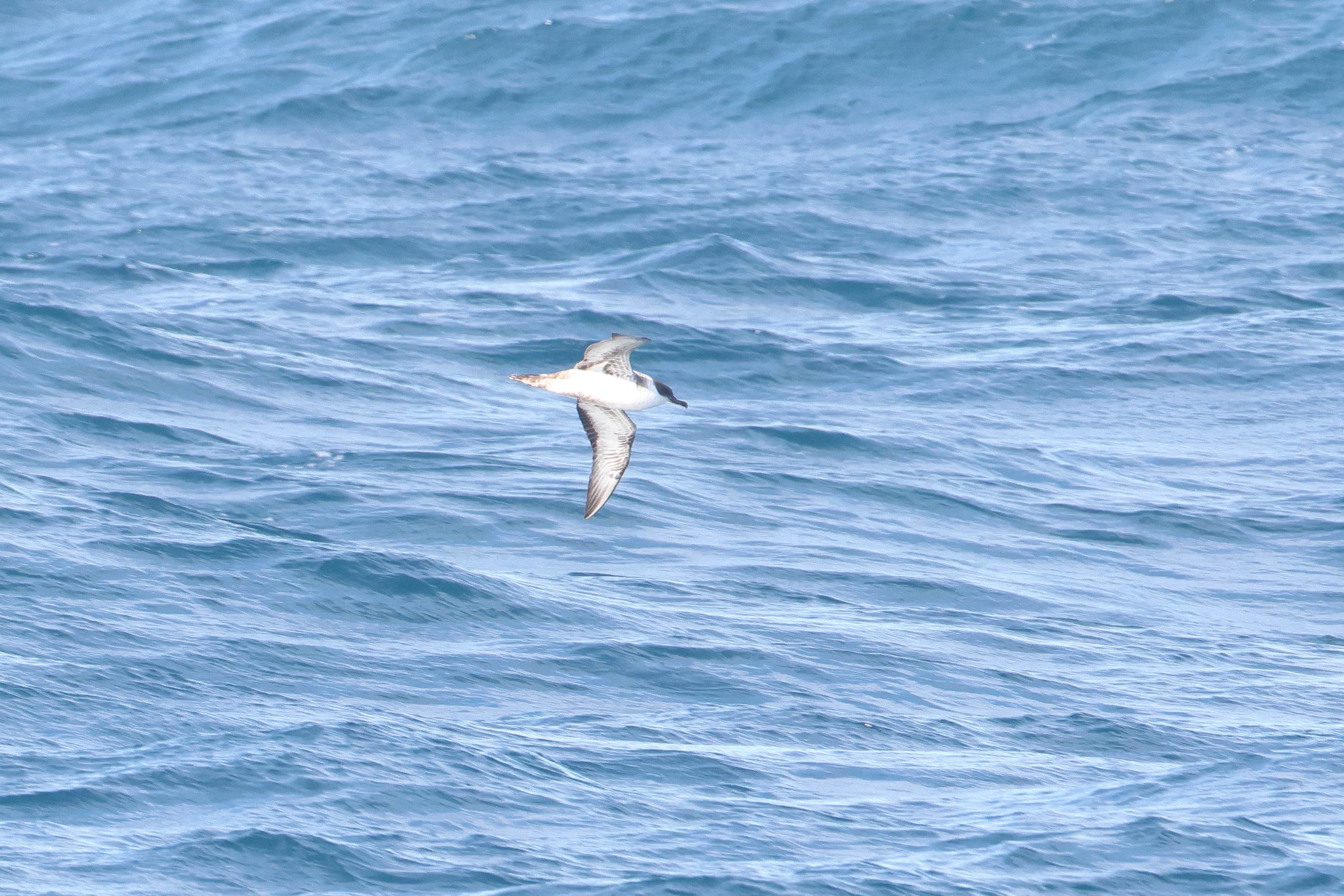
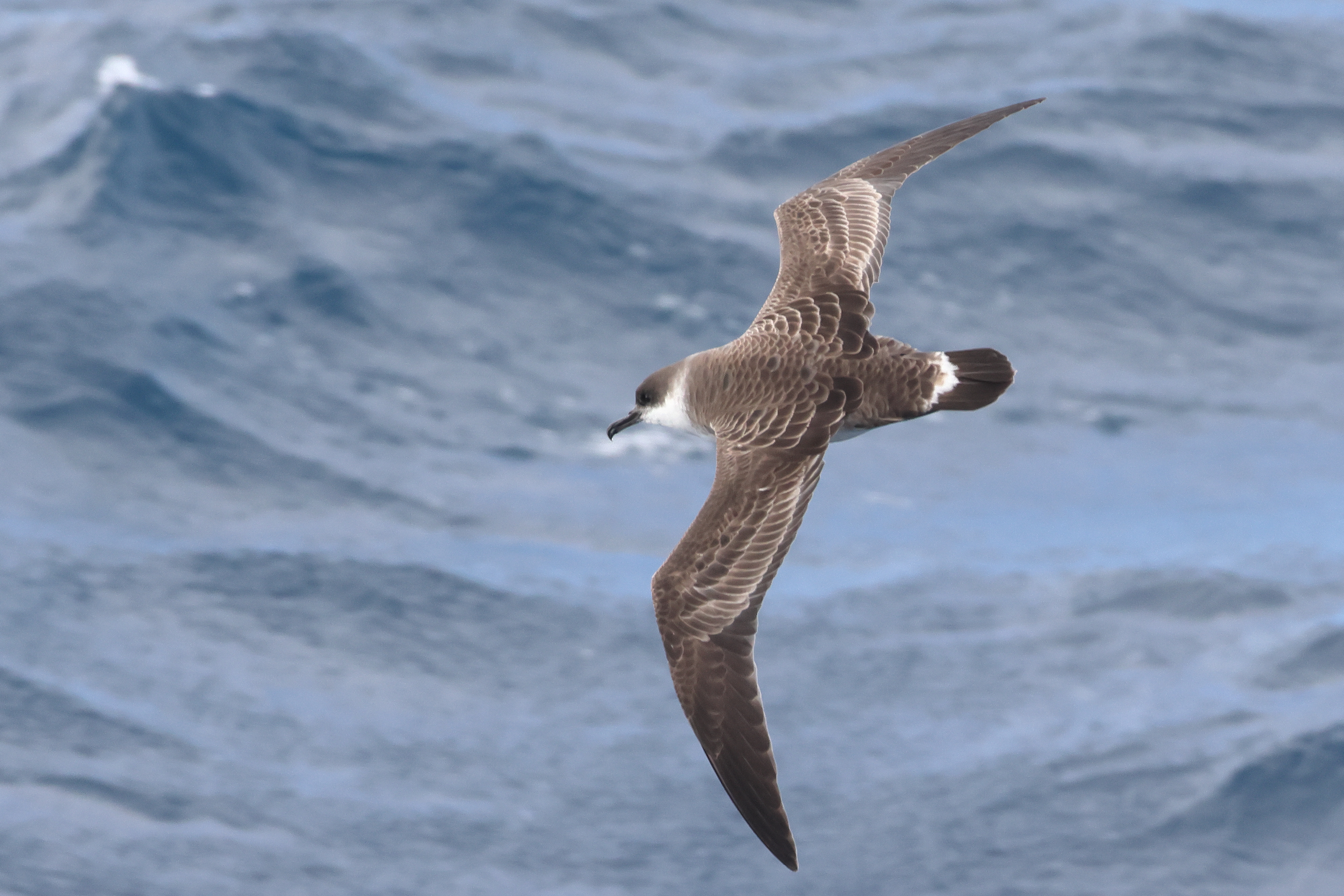
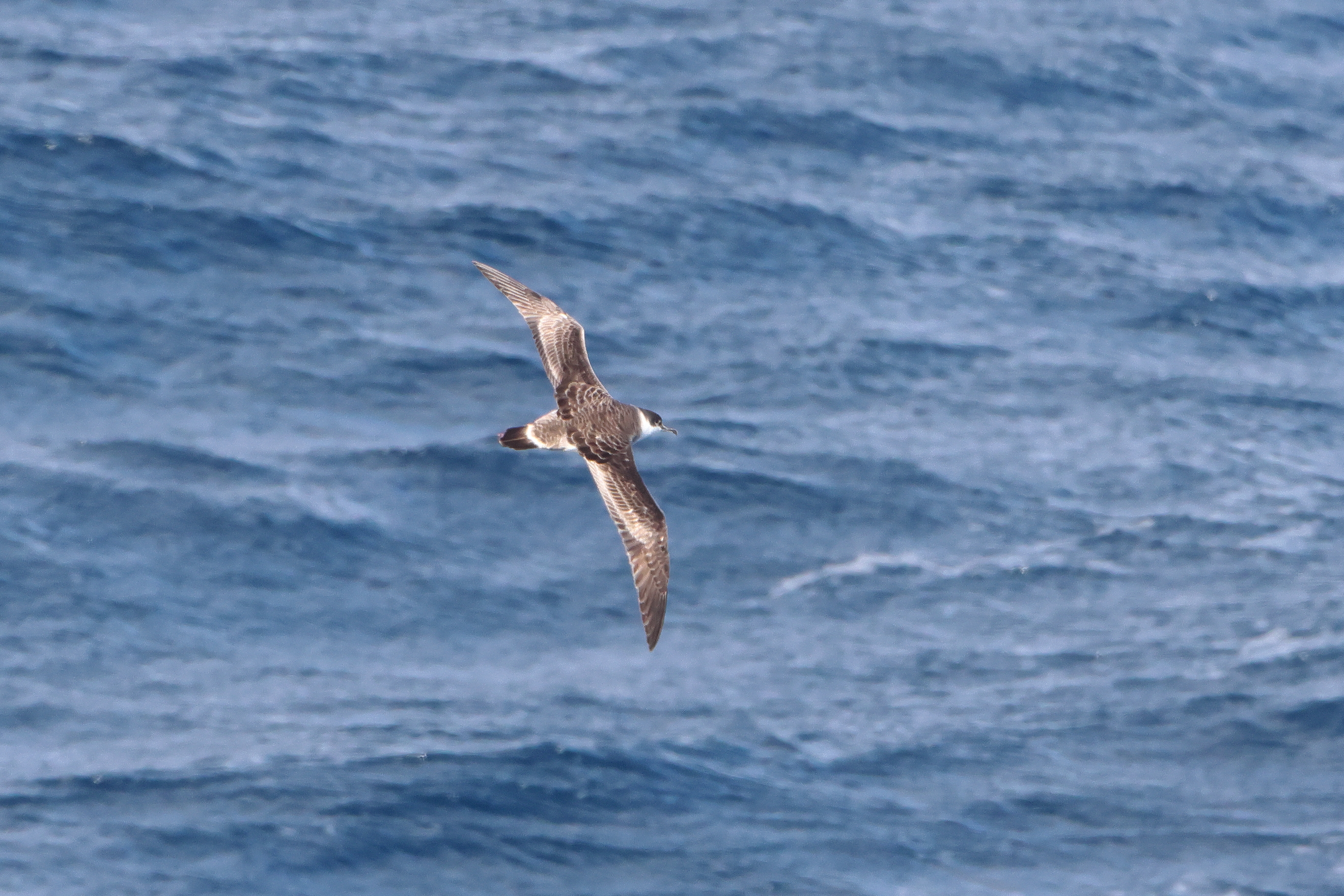
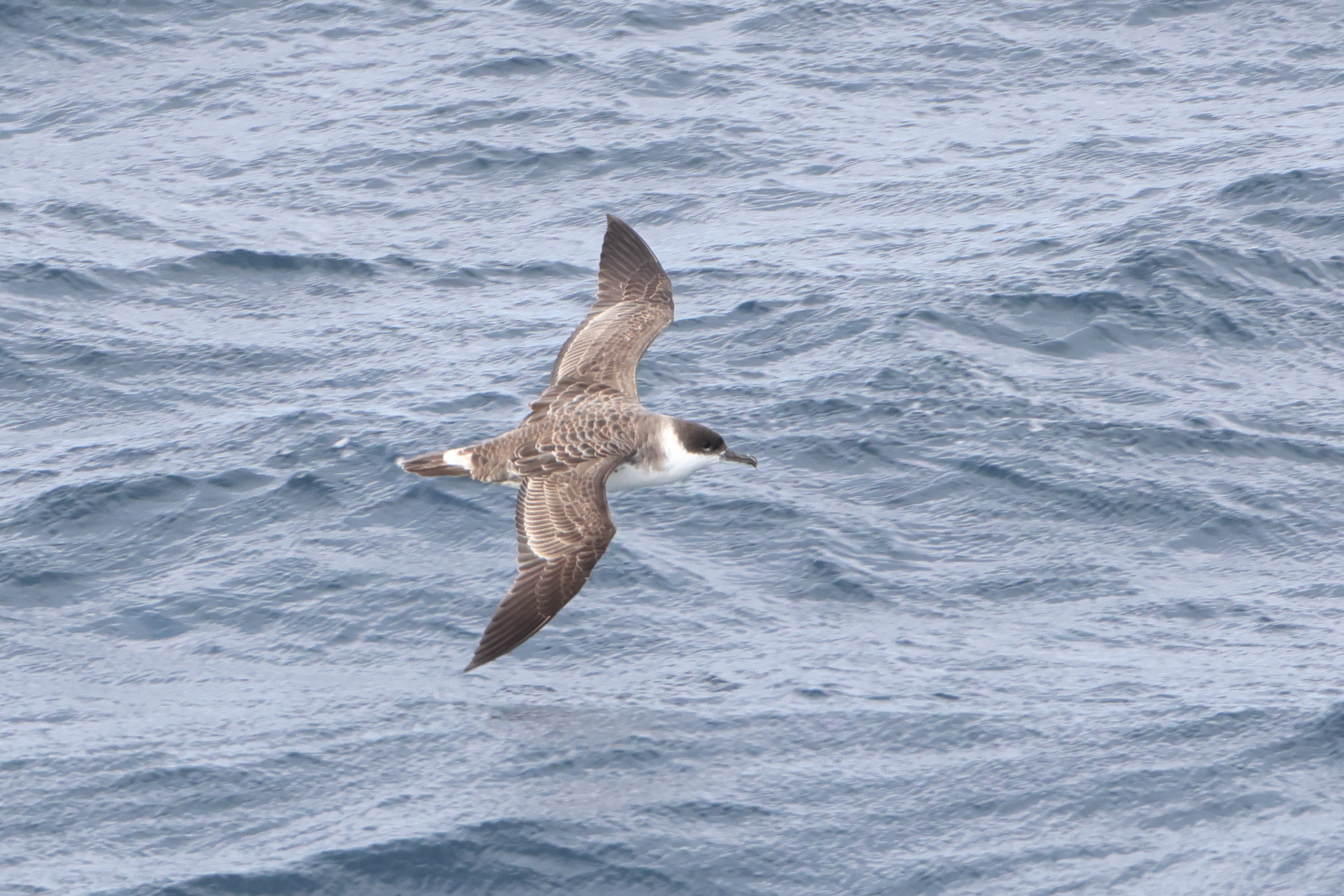
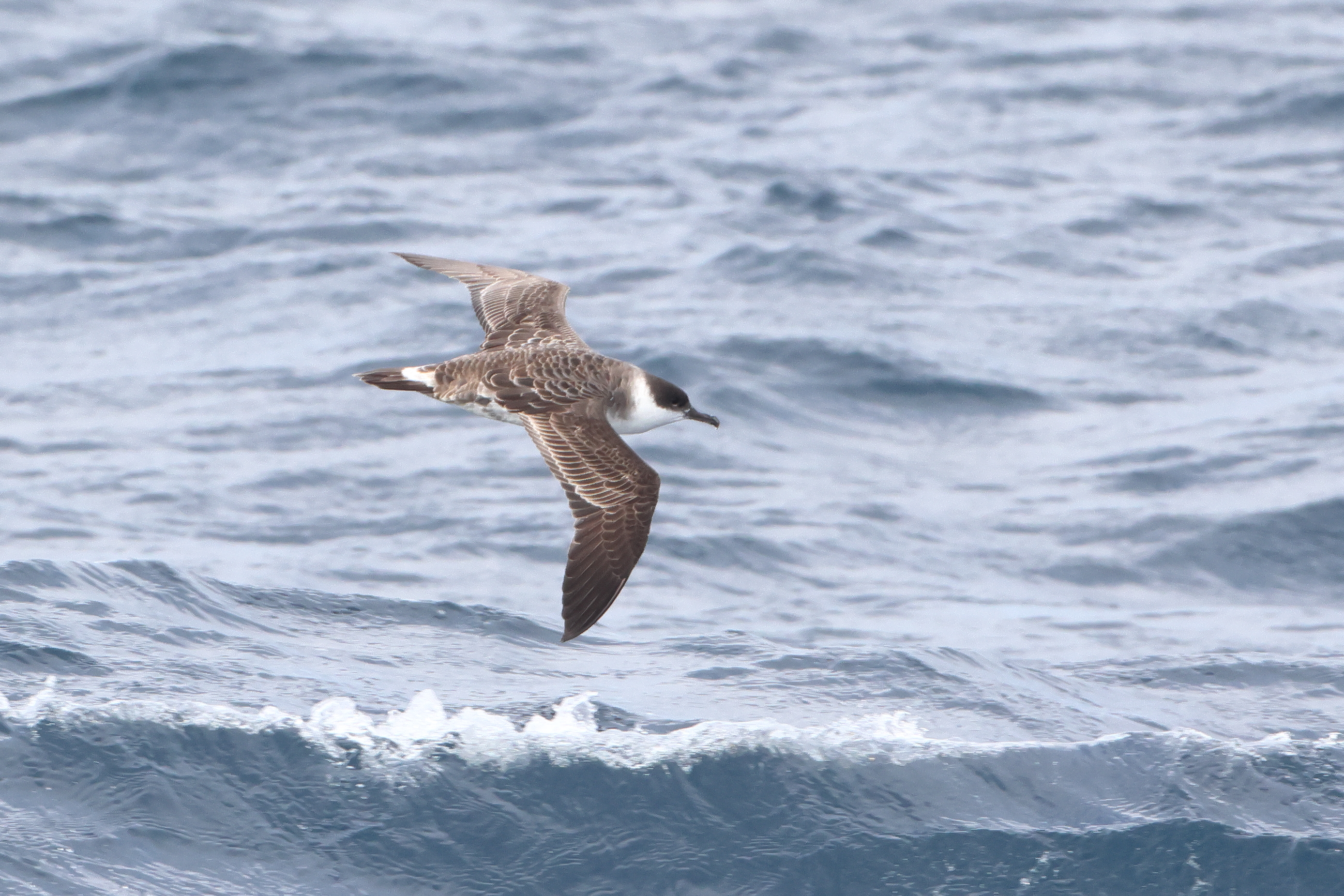
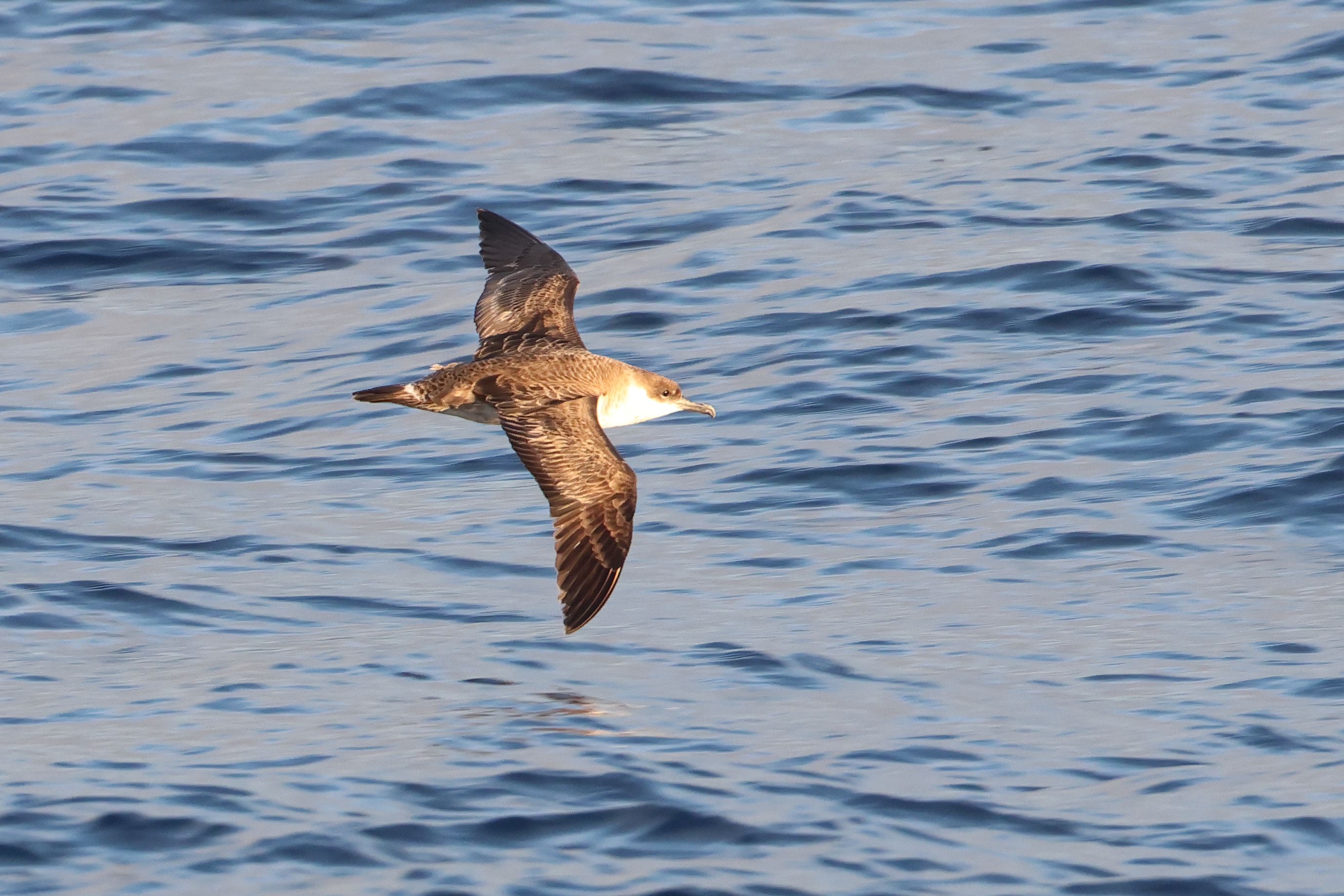
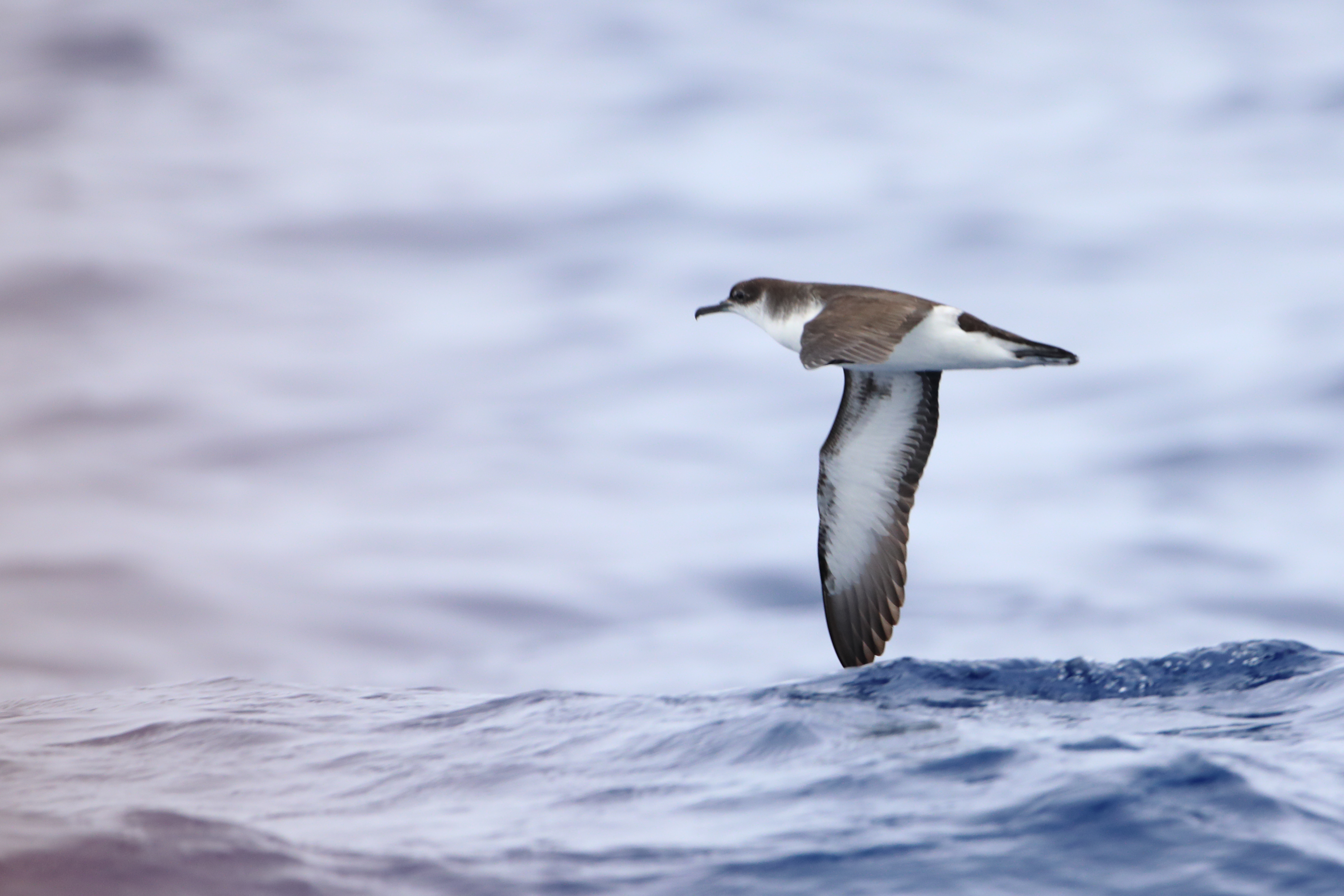
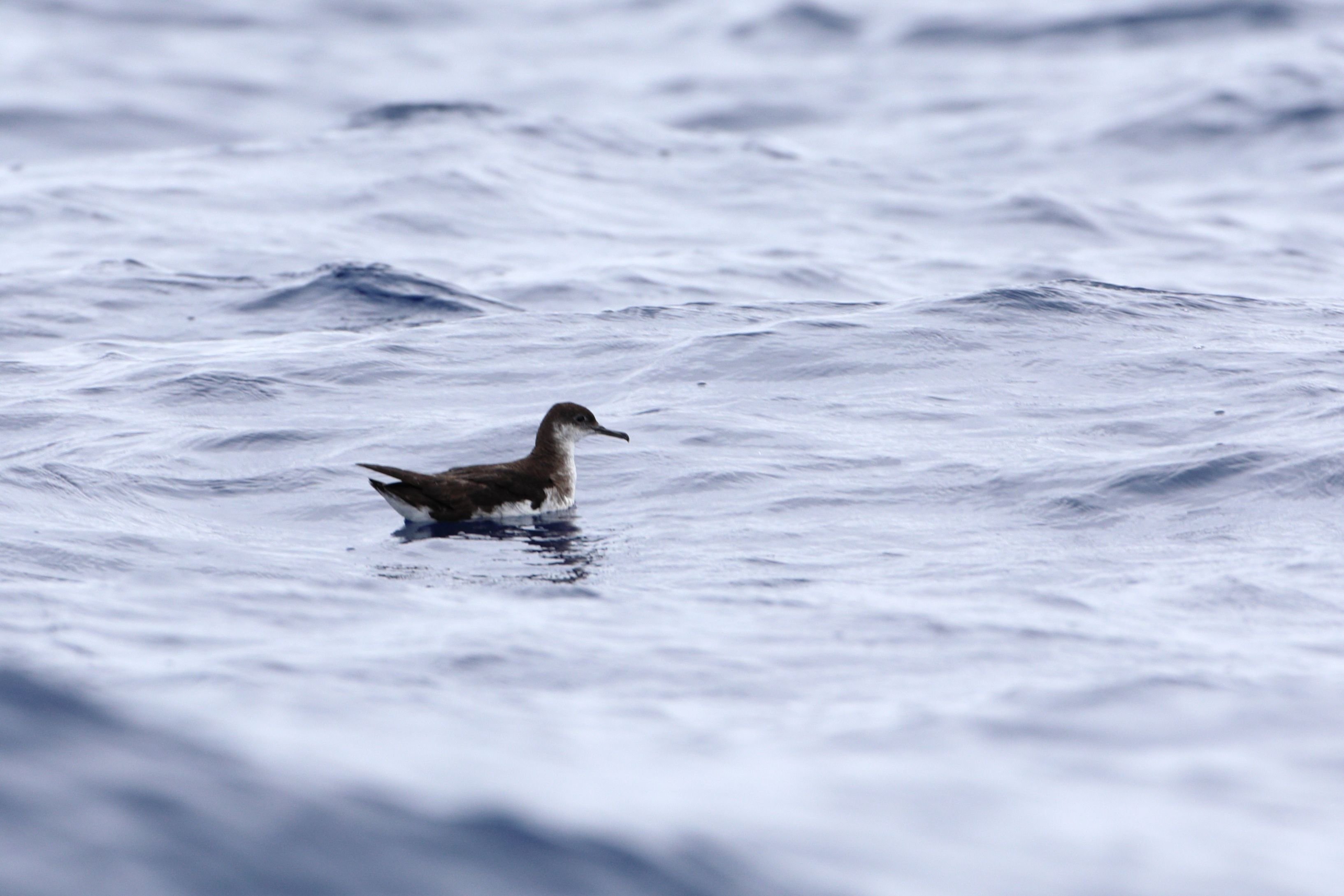
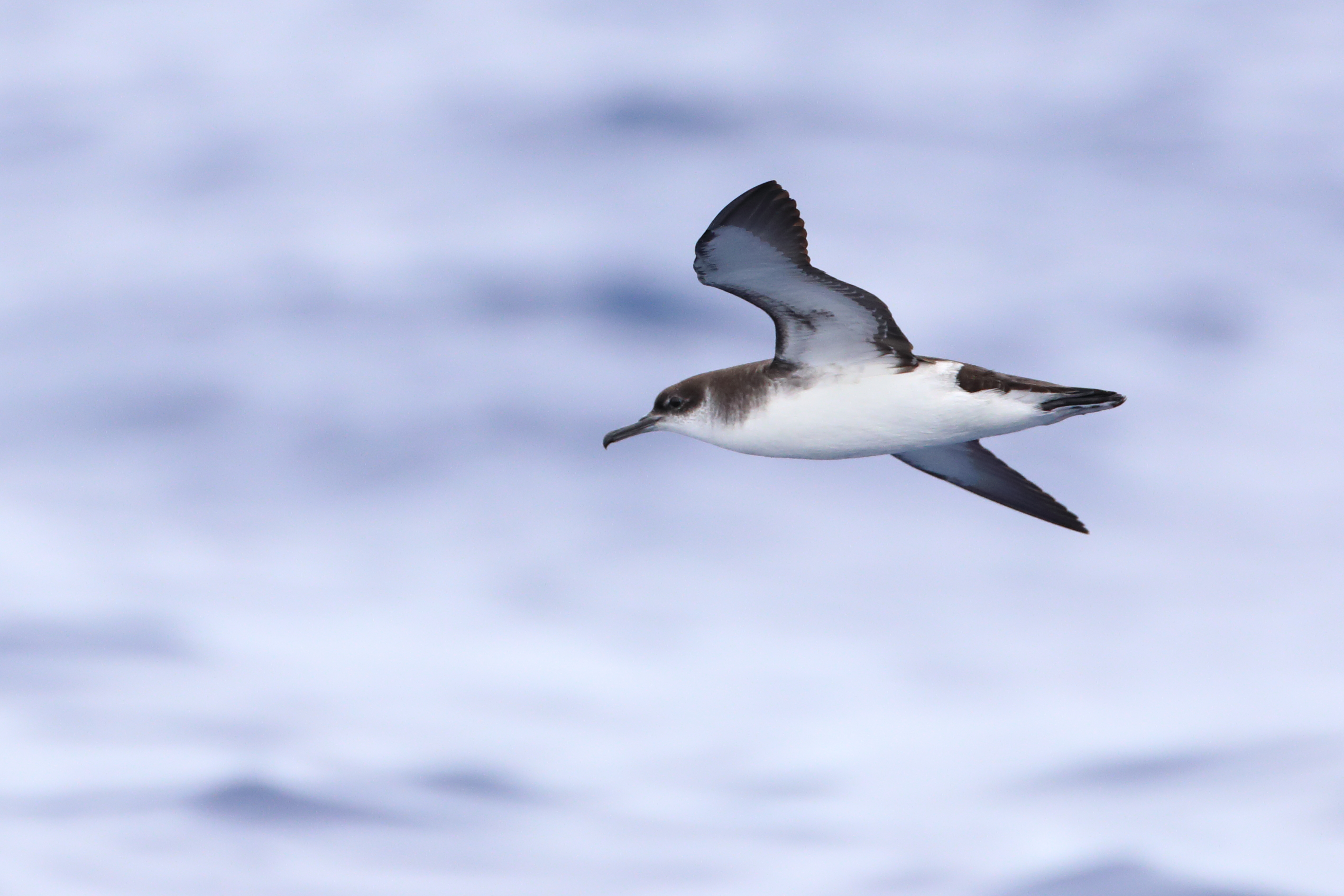
Cape Verde Petrel
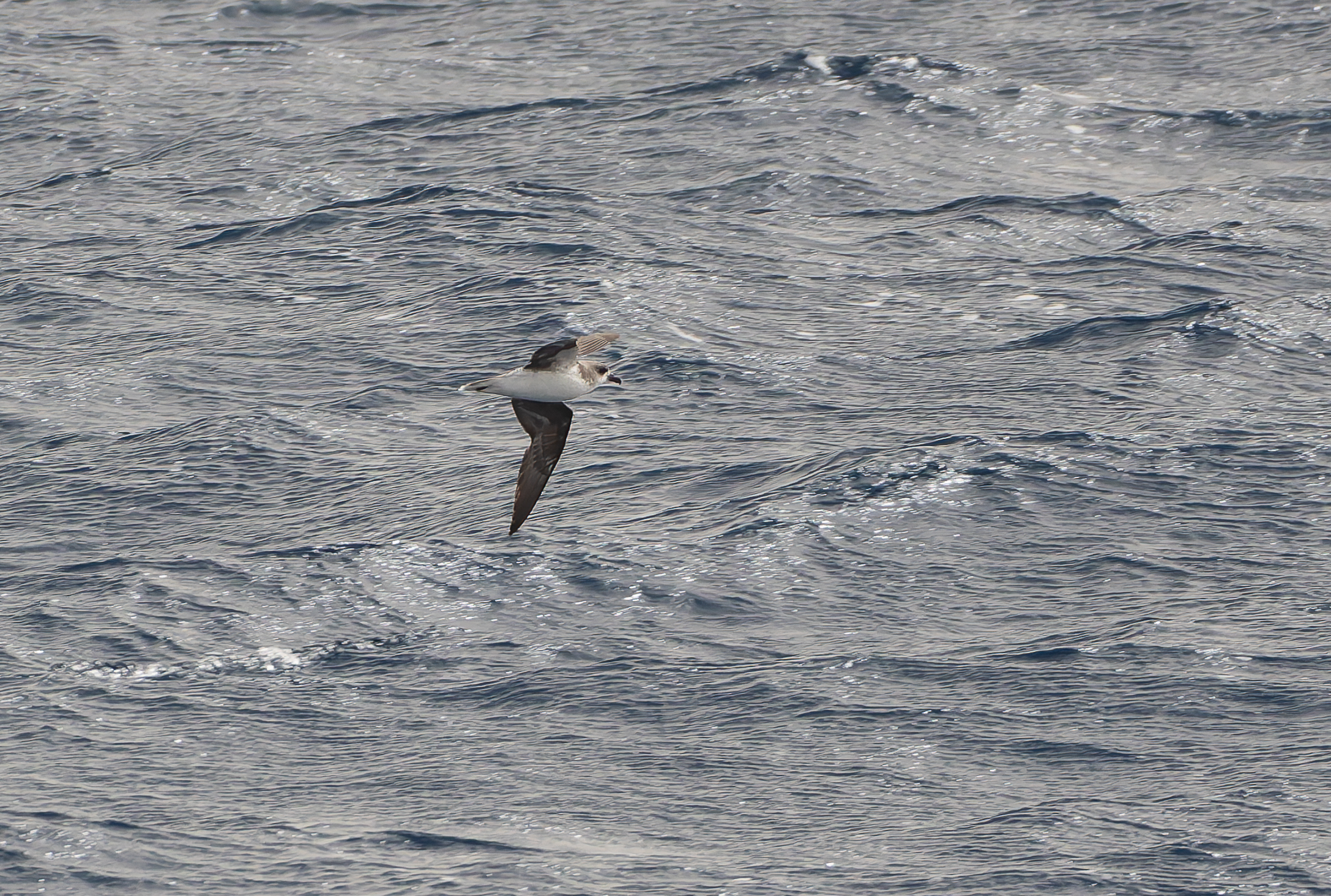
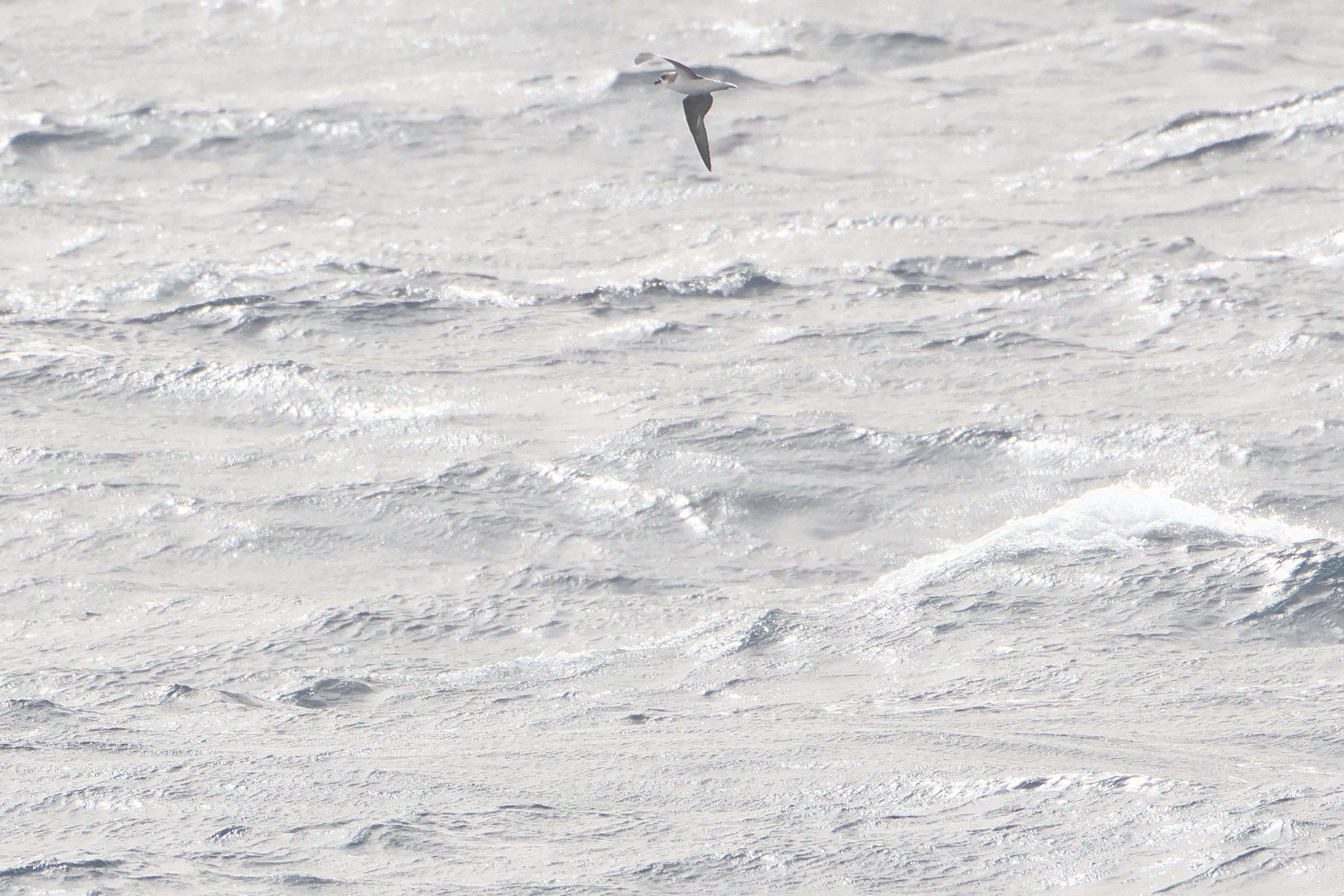
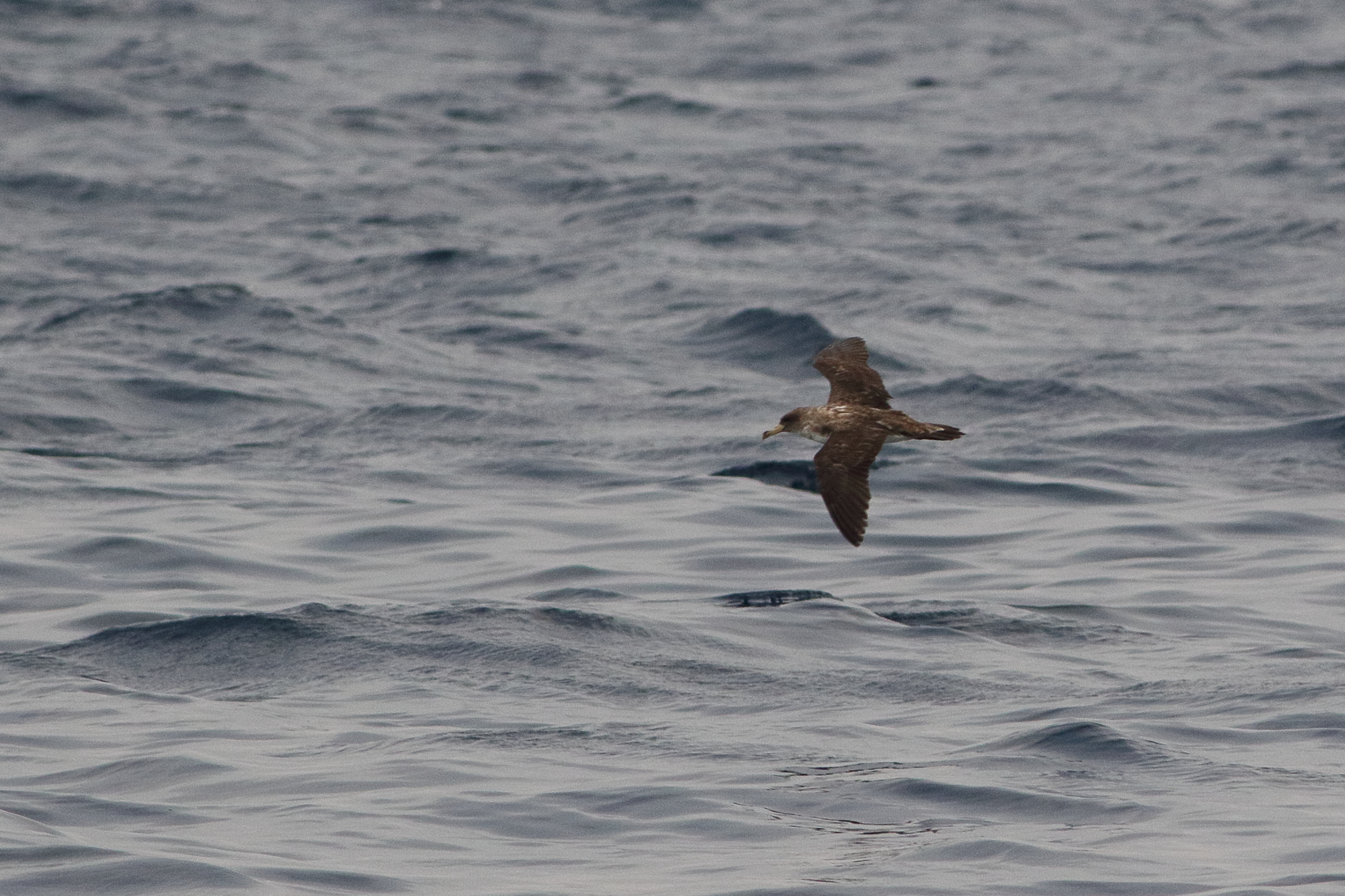
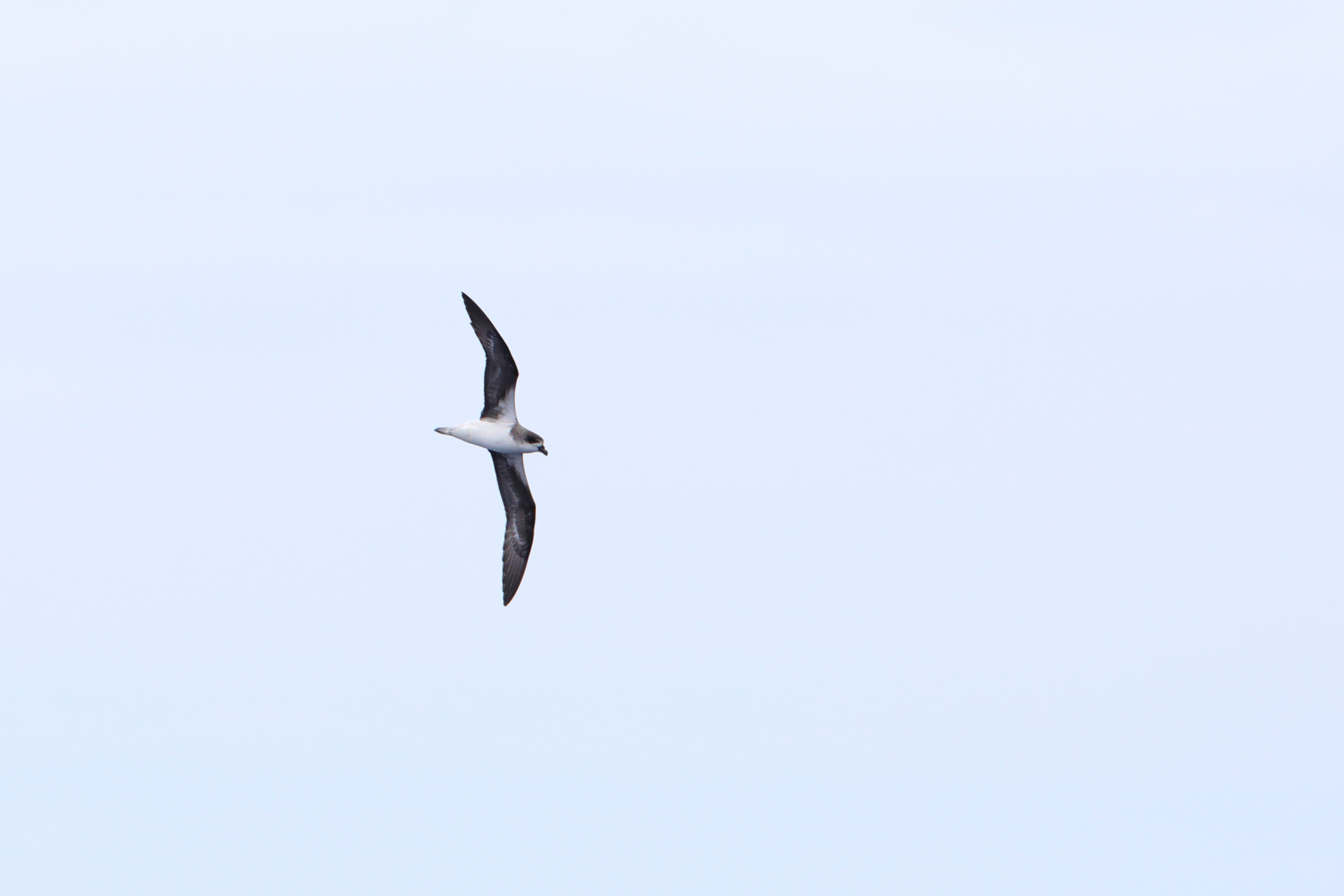
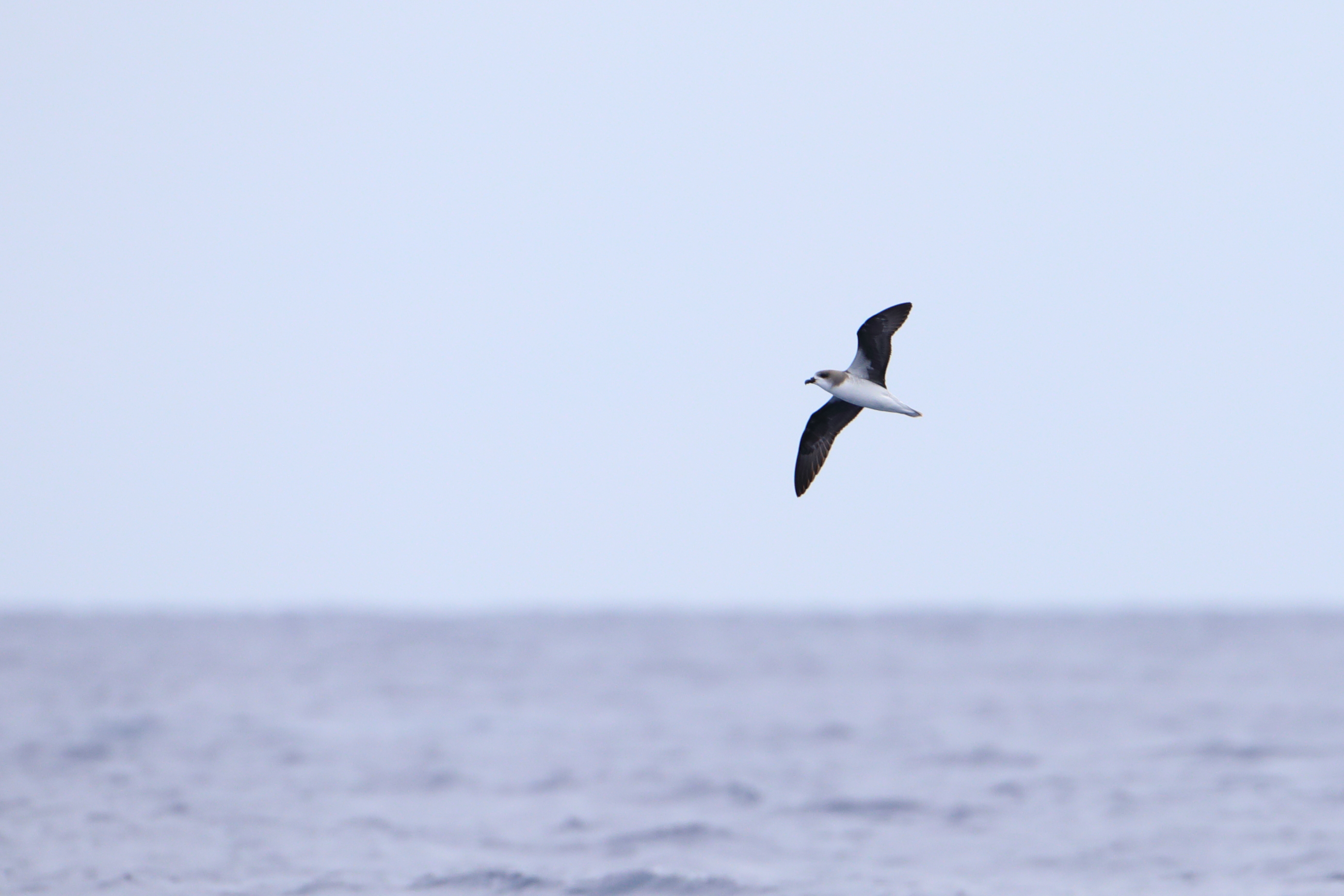
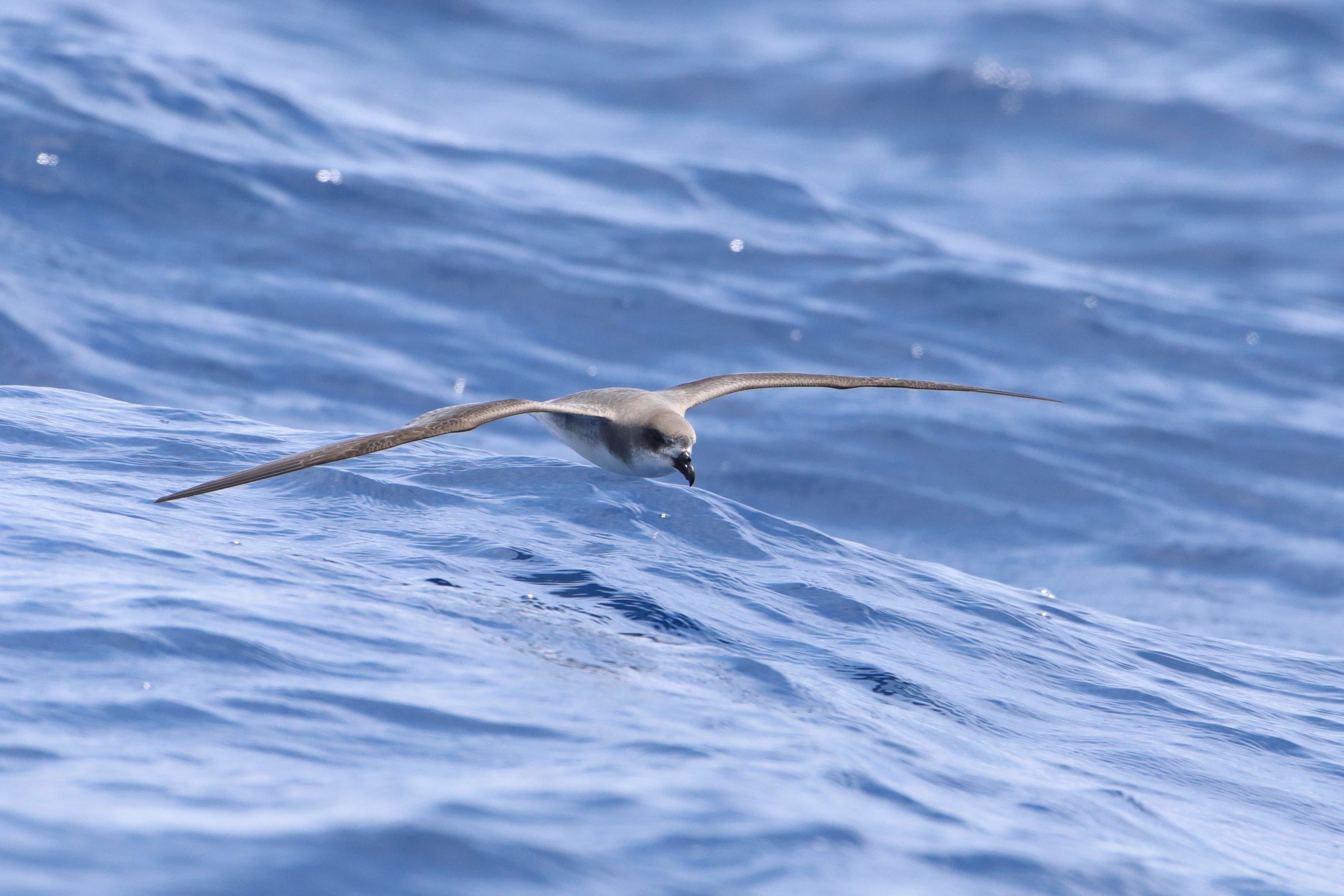
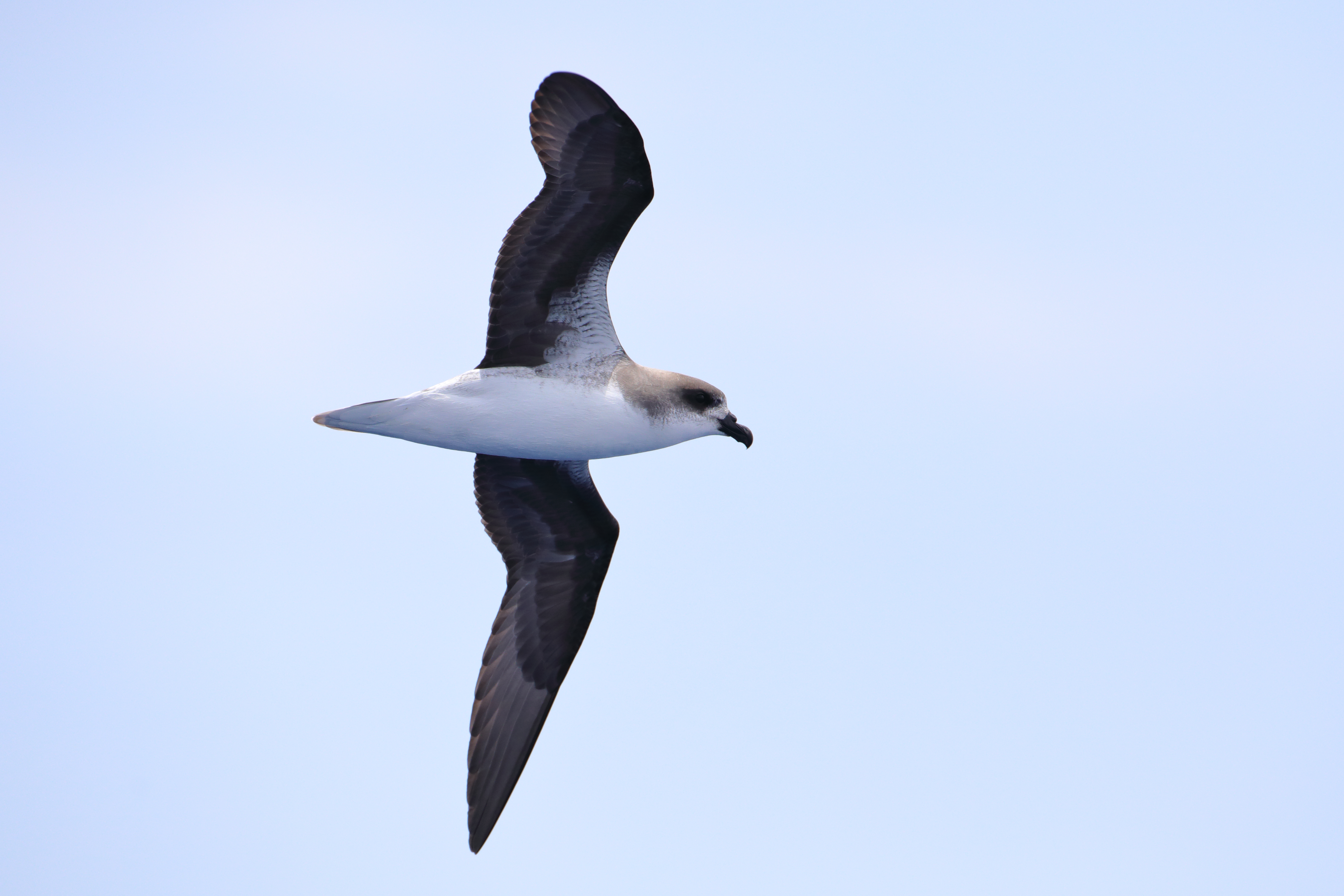
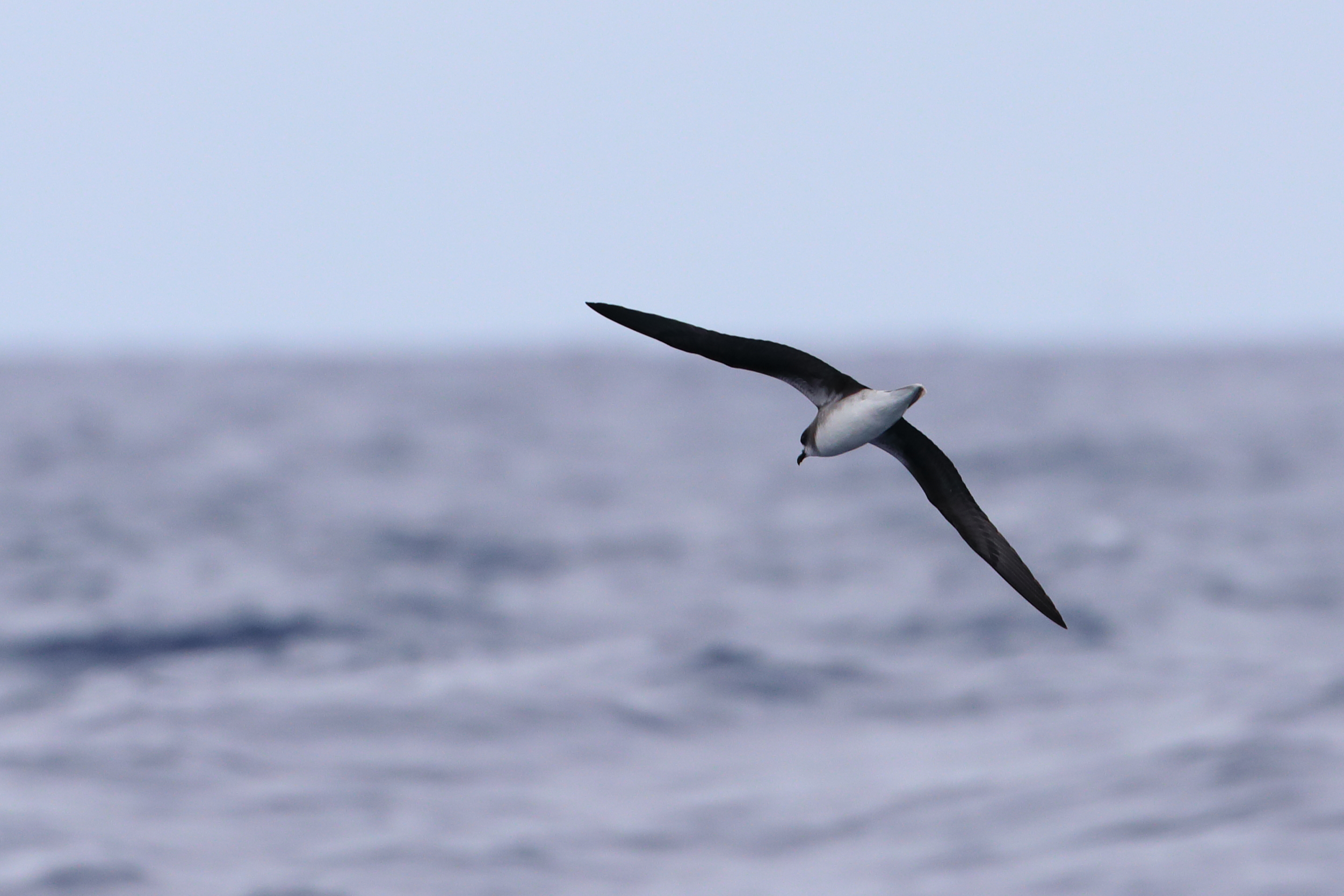
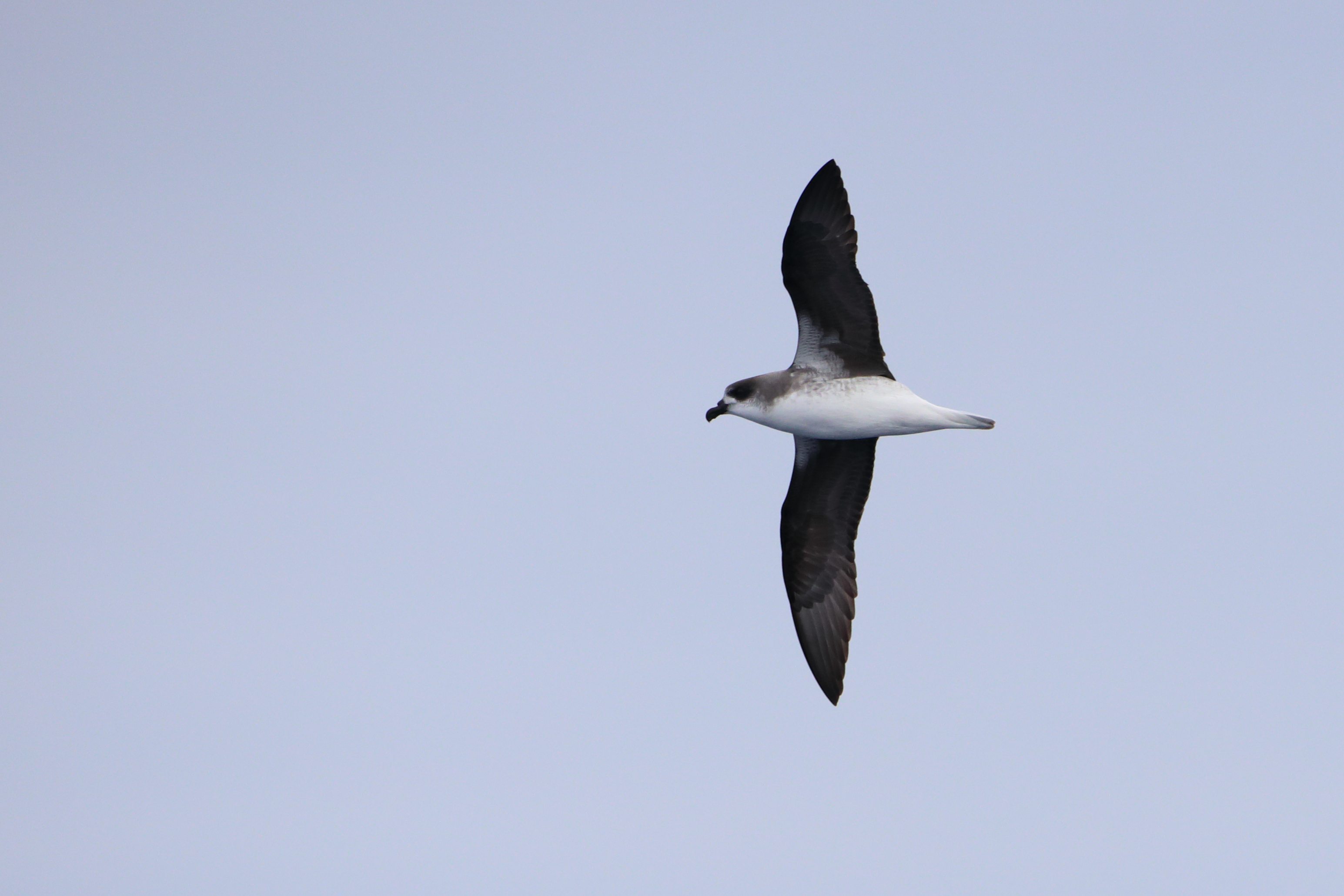
ID Features: Medium-sized gadfly petrel with long, angular wings and buoyant, banking flight. Smaller, slimmer, and more buoyant than Cory's Shearwater, which could be confused for petrel at a distance. Formerly known as Fea's Petrel, recently split into Cape Verde and Desertas, which are essentially indistinguishable at sea and best left unidentified away from the breeding grounds. Also nearly identical to Zino's Petrel, but Cape Verde tends to look larger-headed with a stouter bill. Underwing is mainly dark gray; this is a useful feature to help distinguish from almost all other shearwaters and petrels in range. Note Zino's Petrel can show substantially more white in the underwing, unlike Cape Verde. Wing molt primarily occurs from March to August, which may be a useful feature to distinguish Cape Verde from Desertas.
Habitat: Breeds on the Cape Verde islands and ranges widely in the North Atlantic.
Locations: Cape Verde


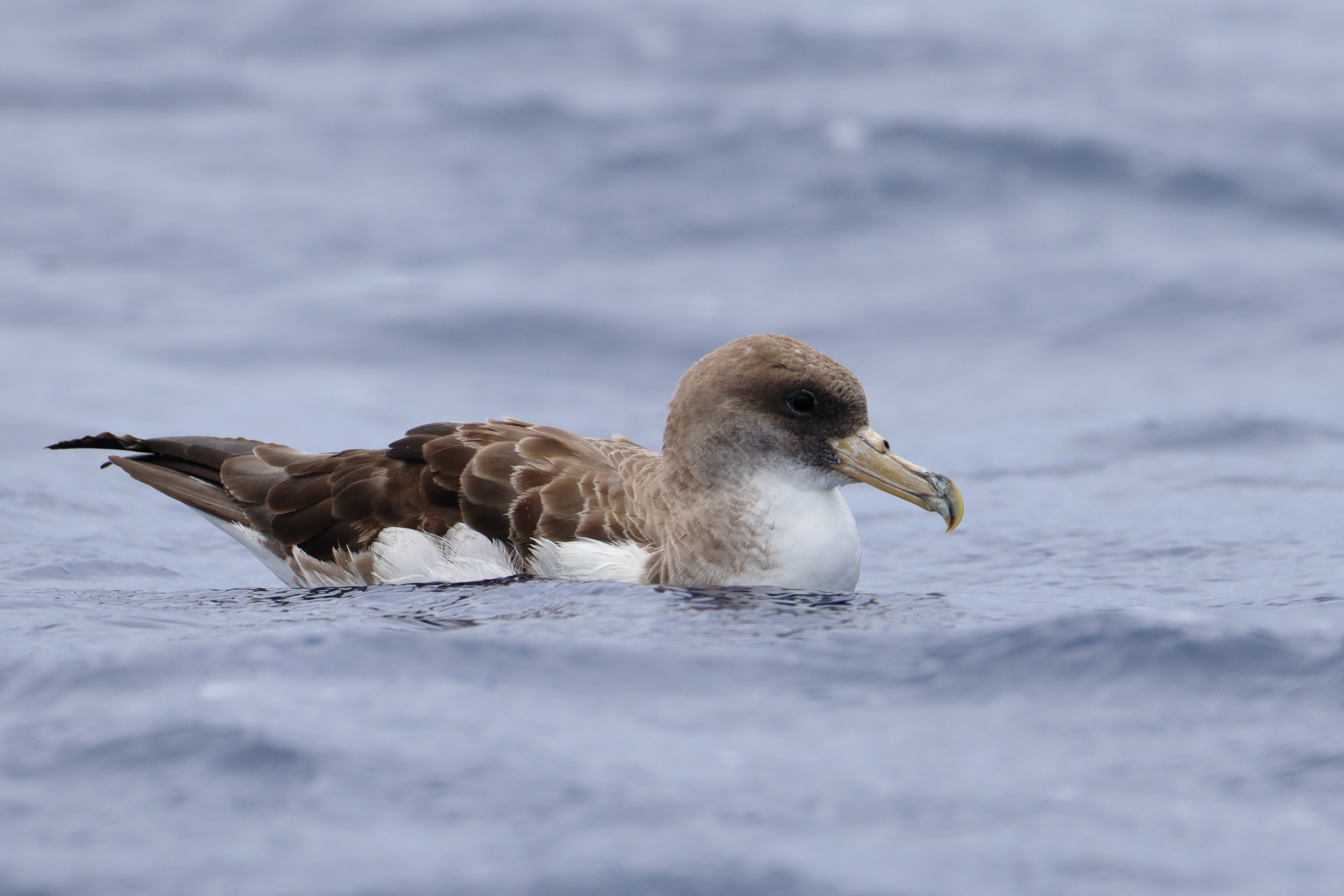
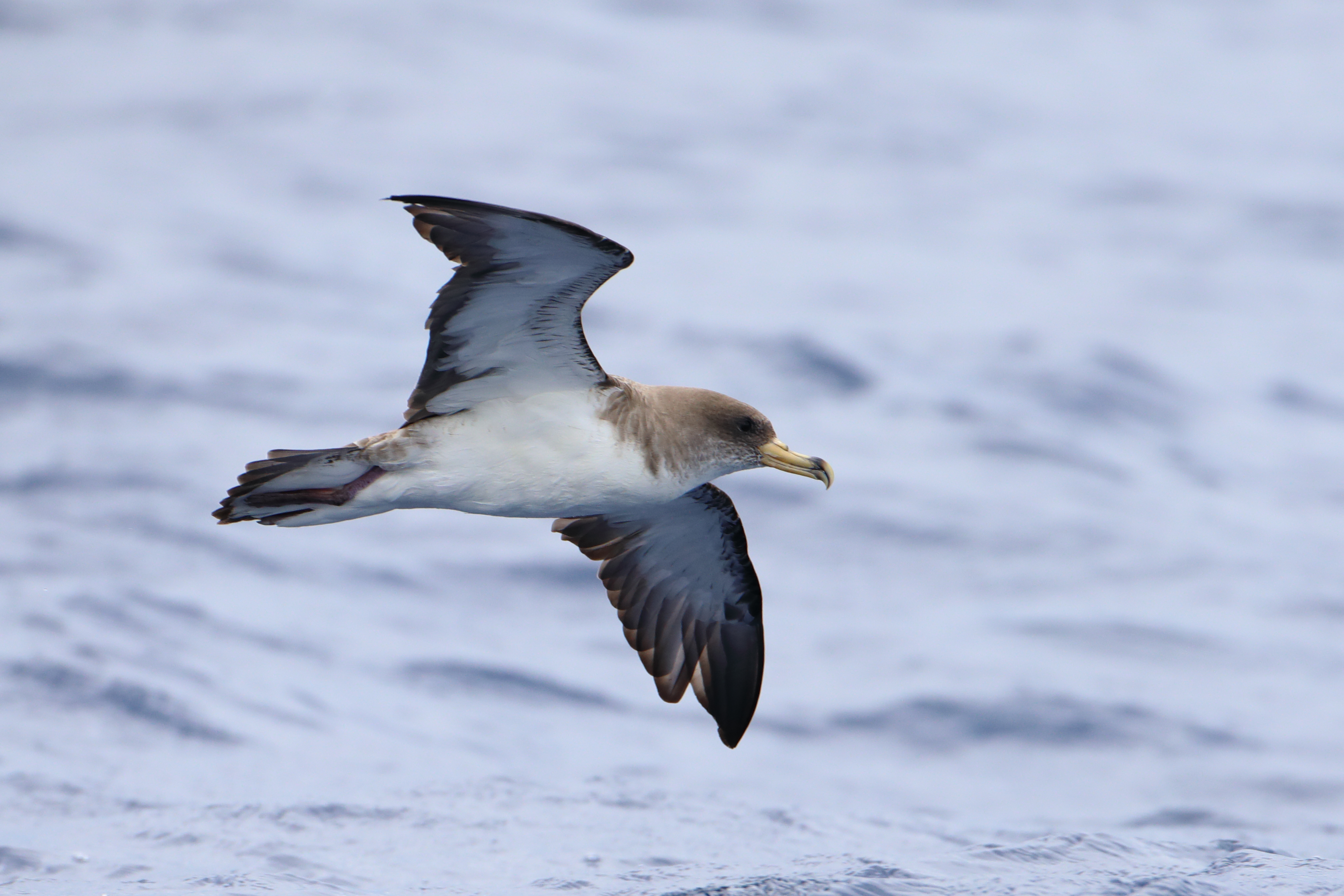
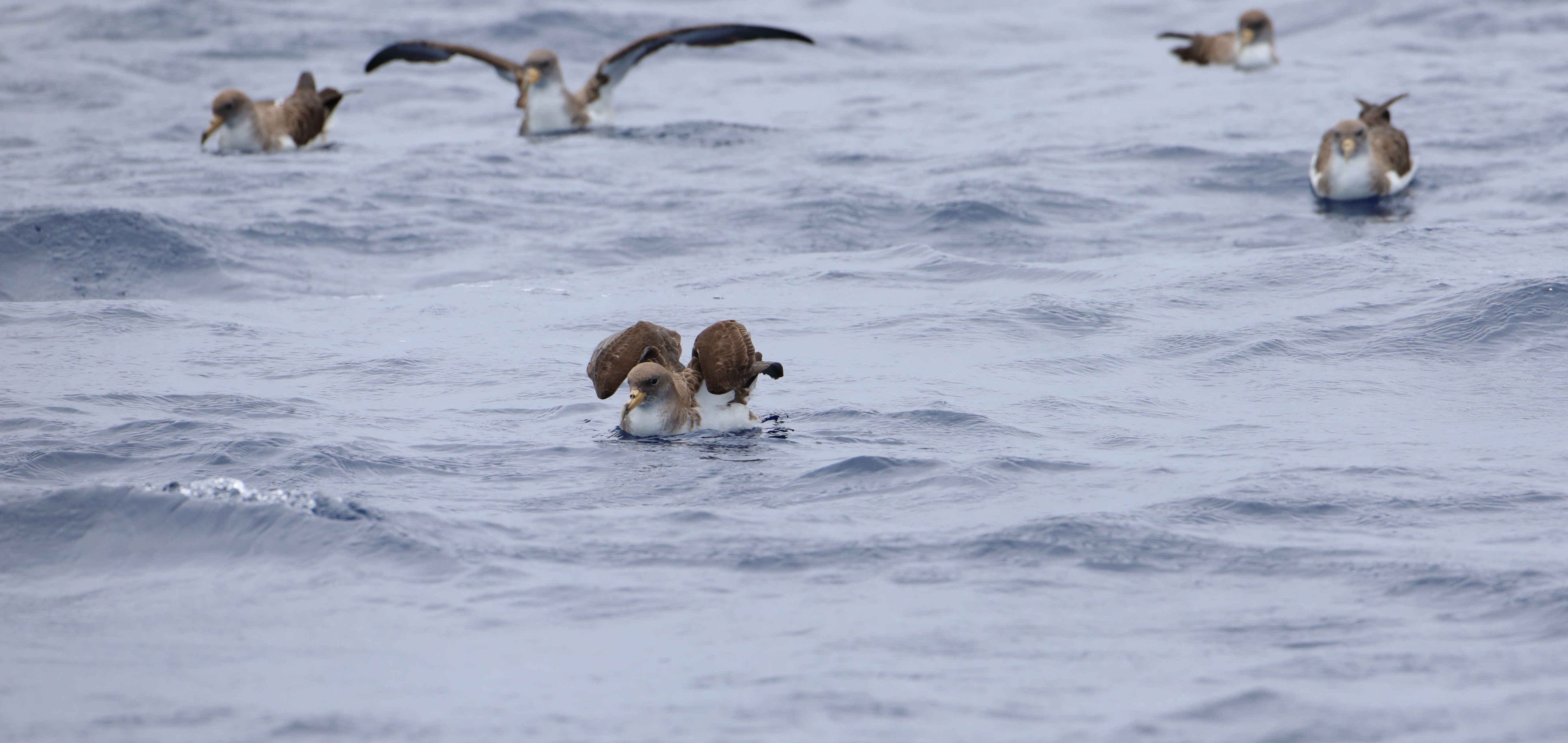
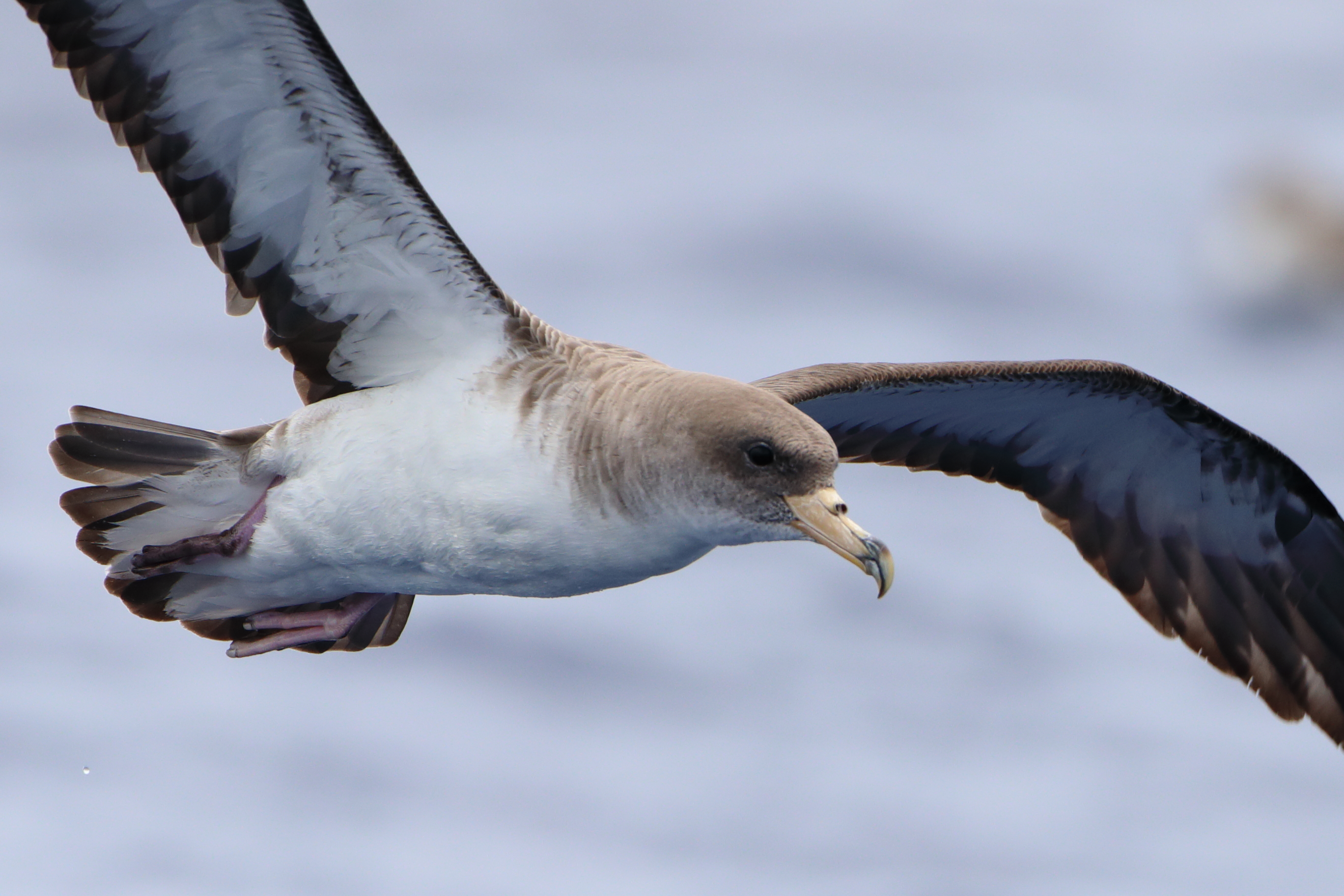
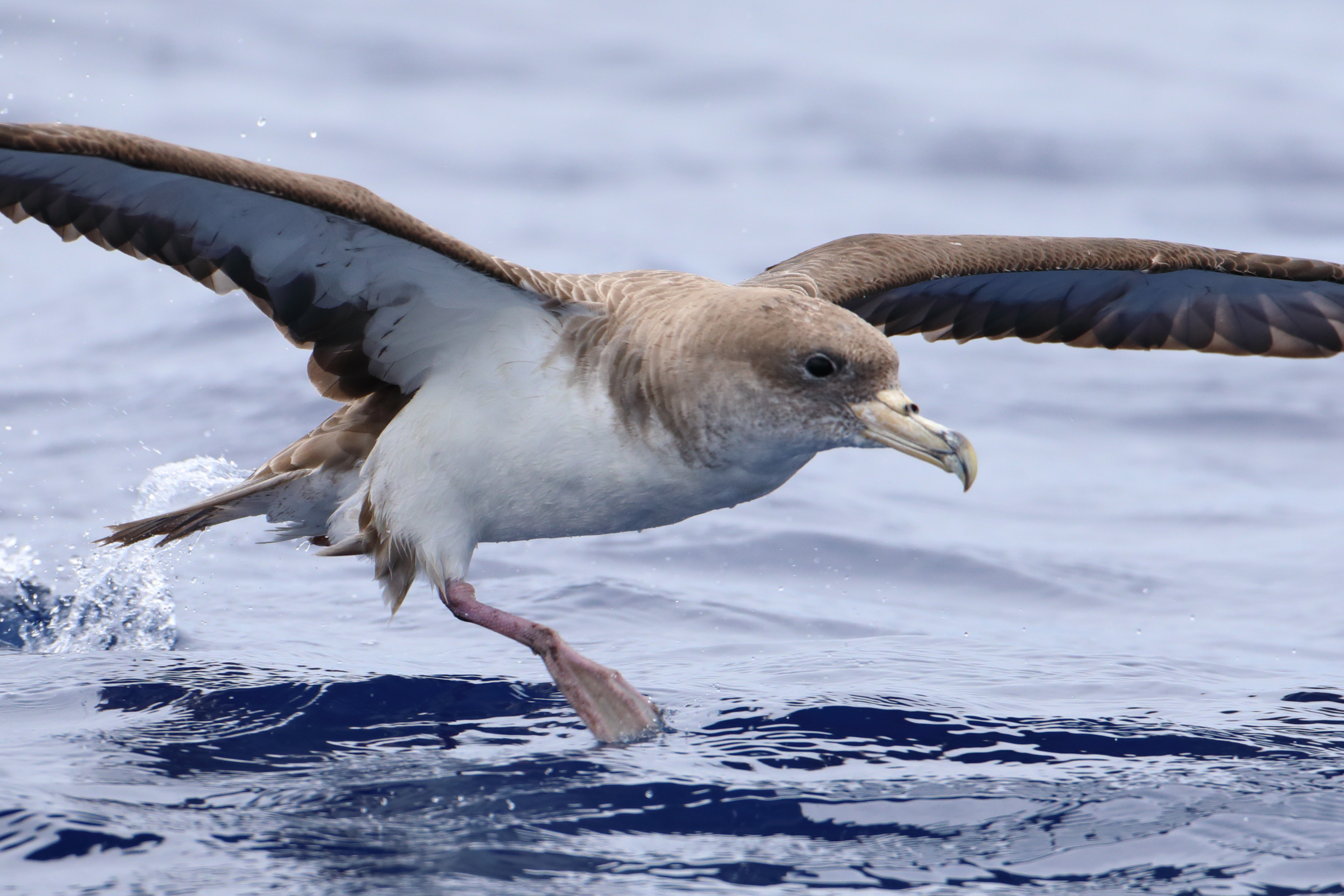
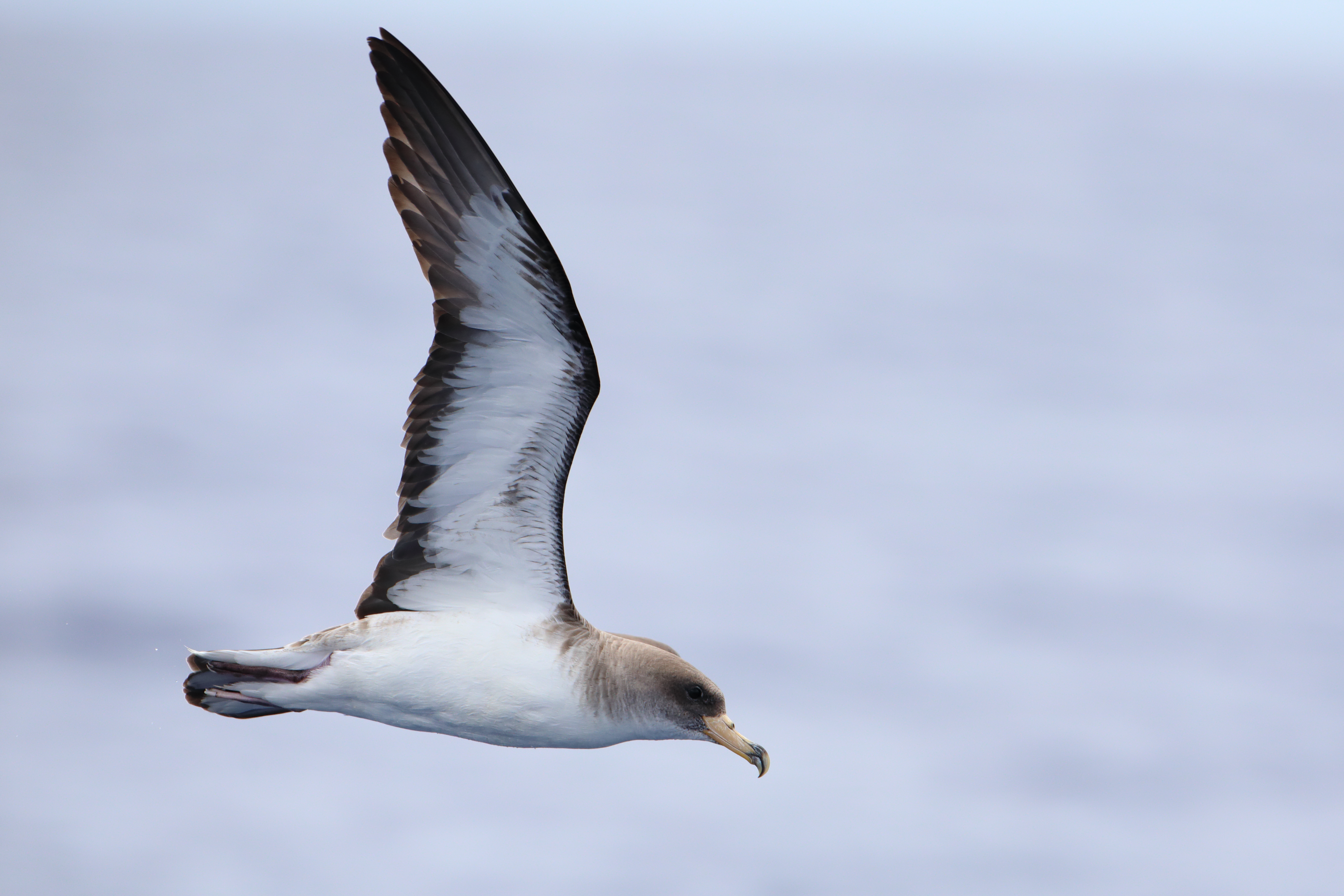
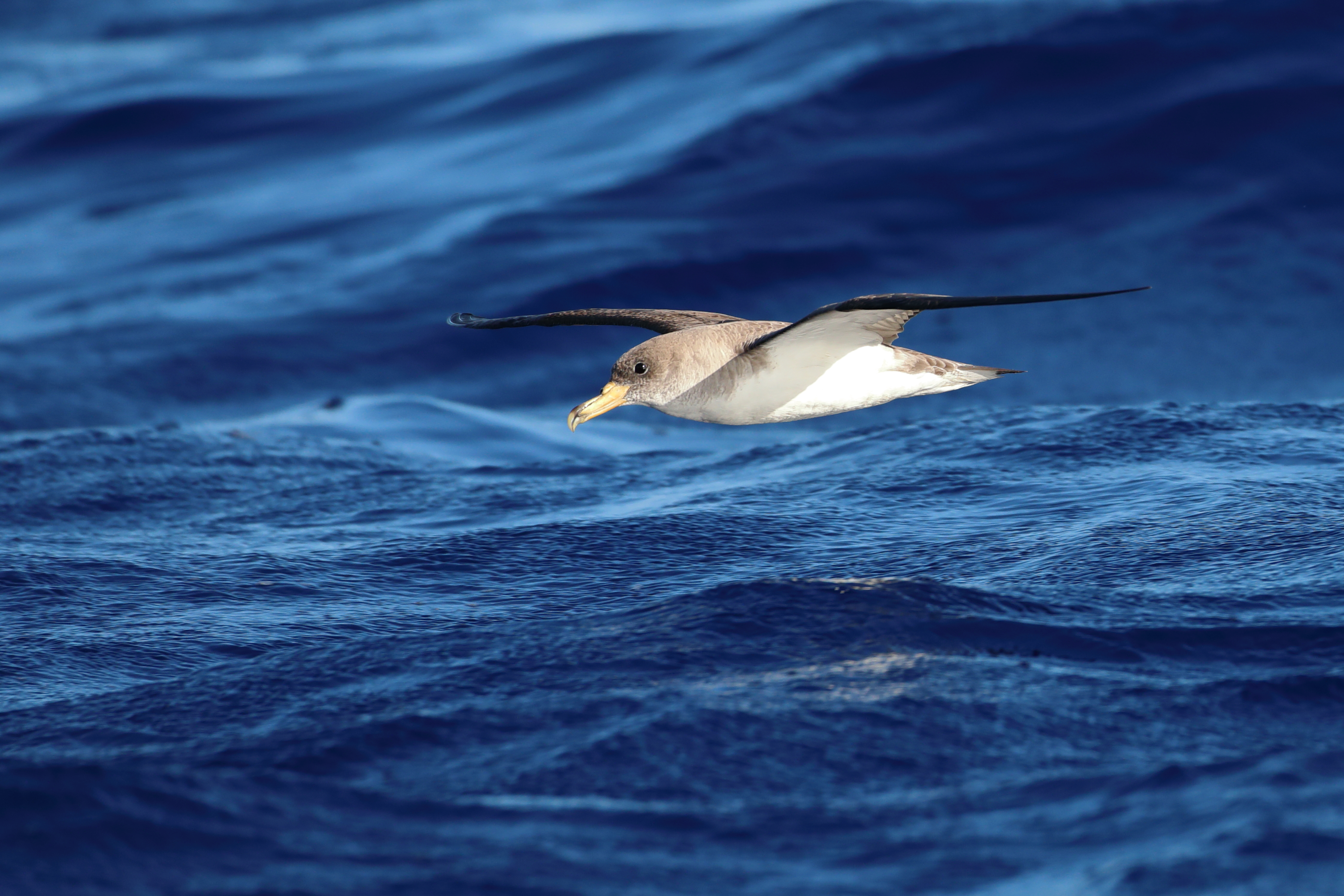
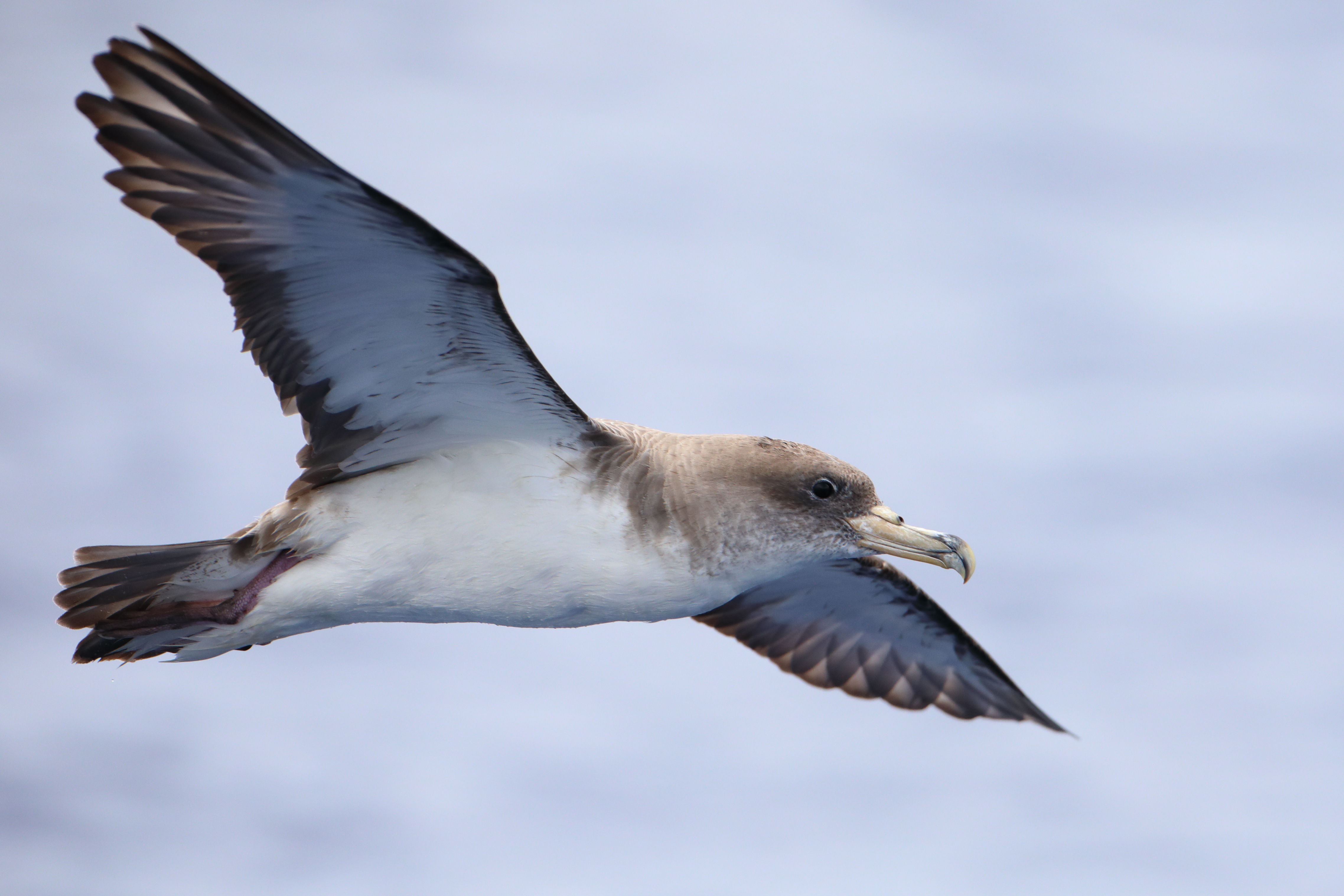
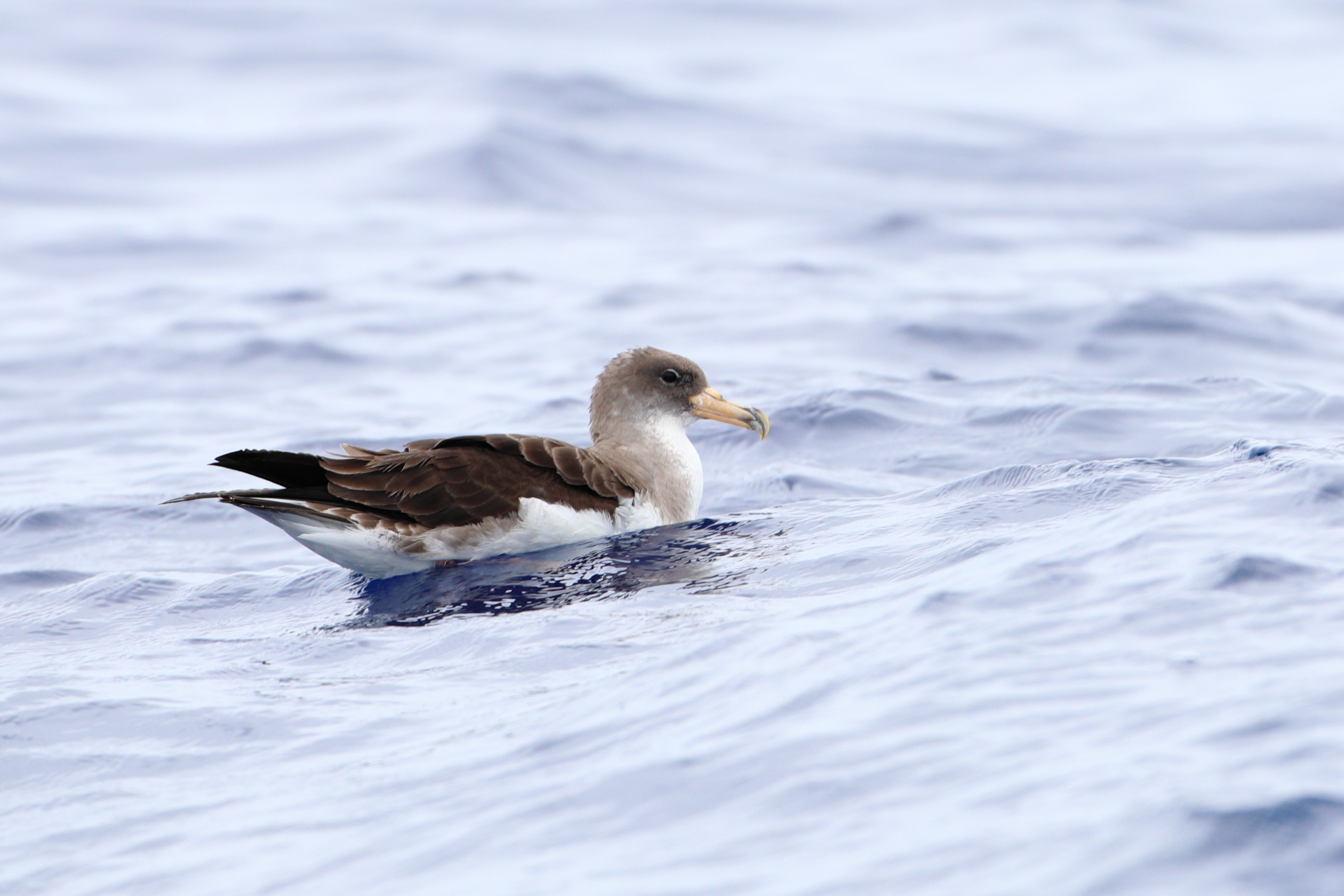
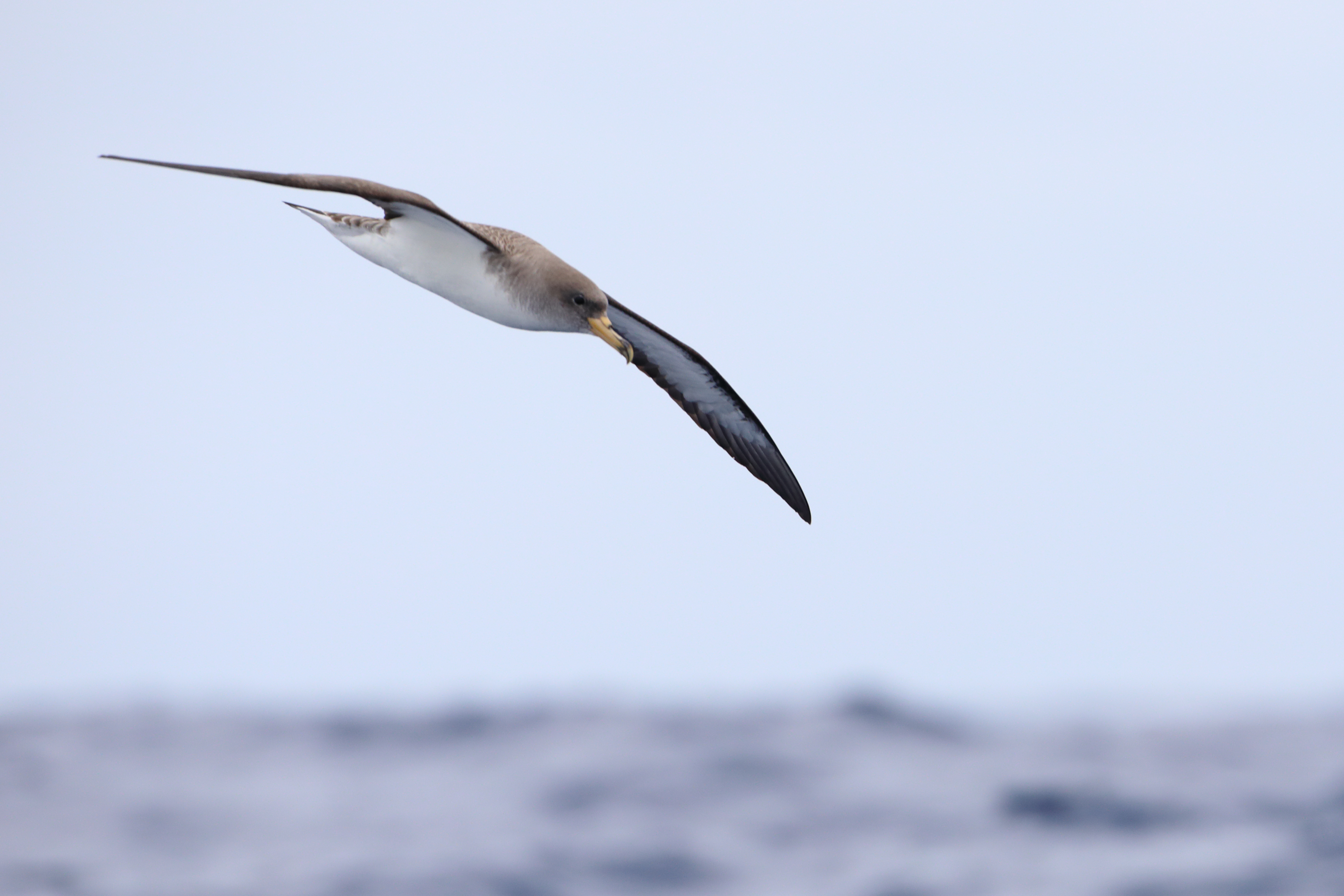
Cory's Shearwater
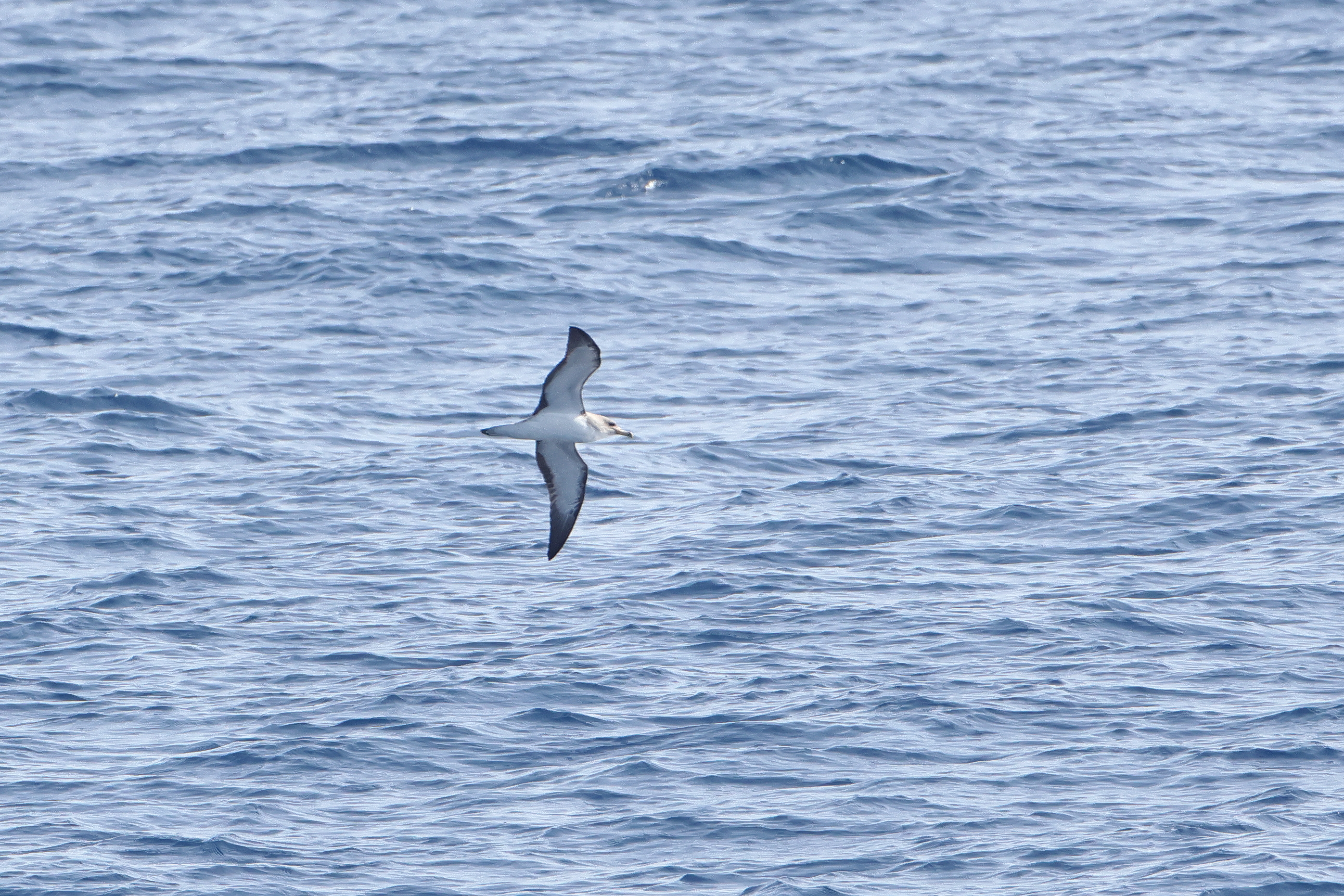
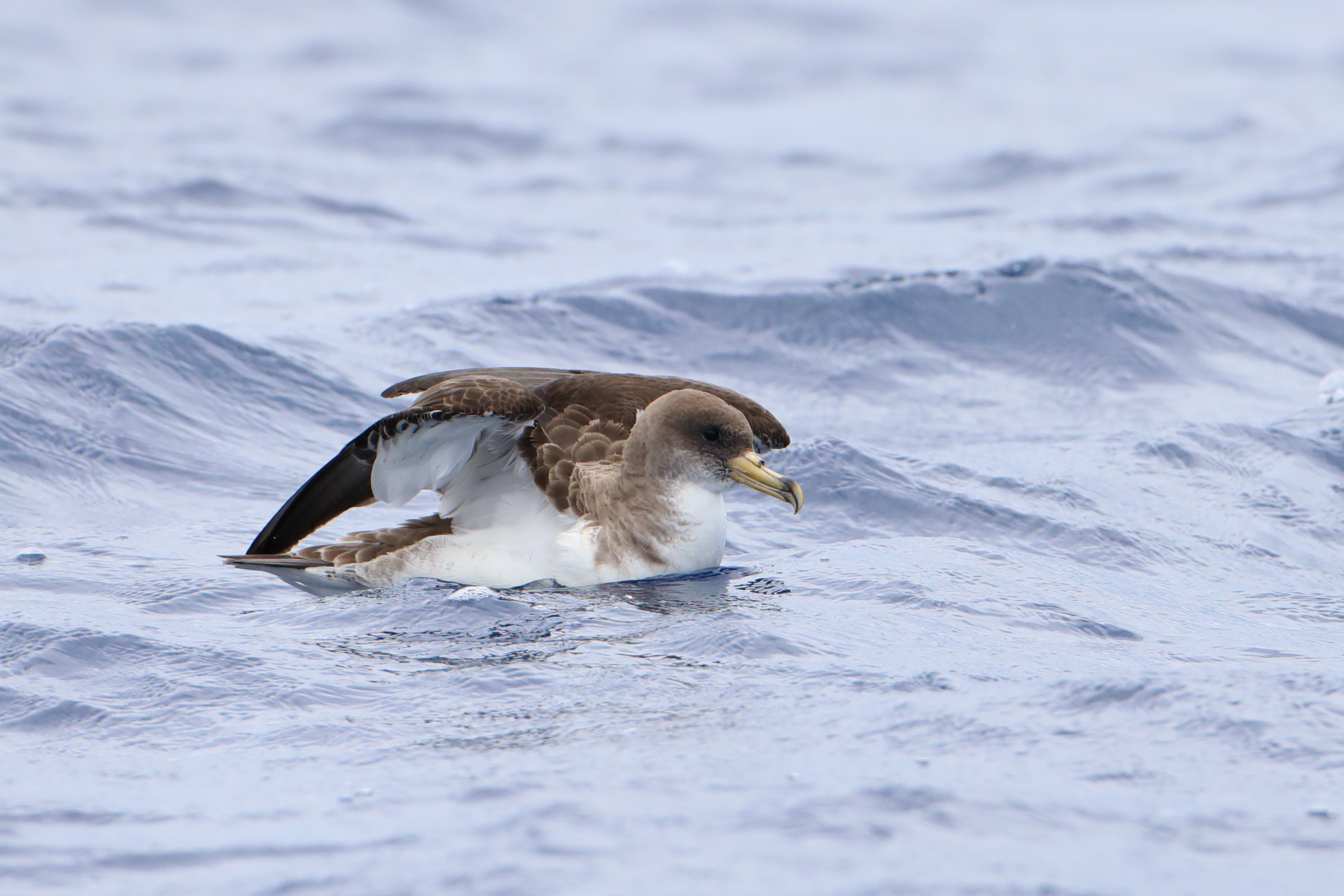
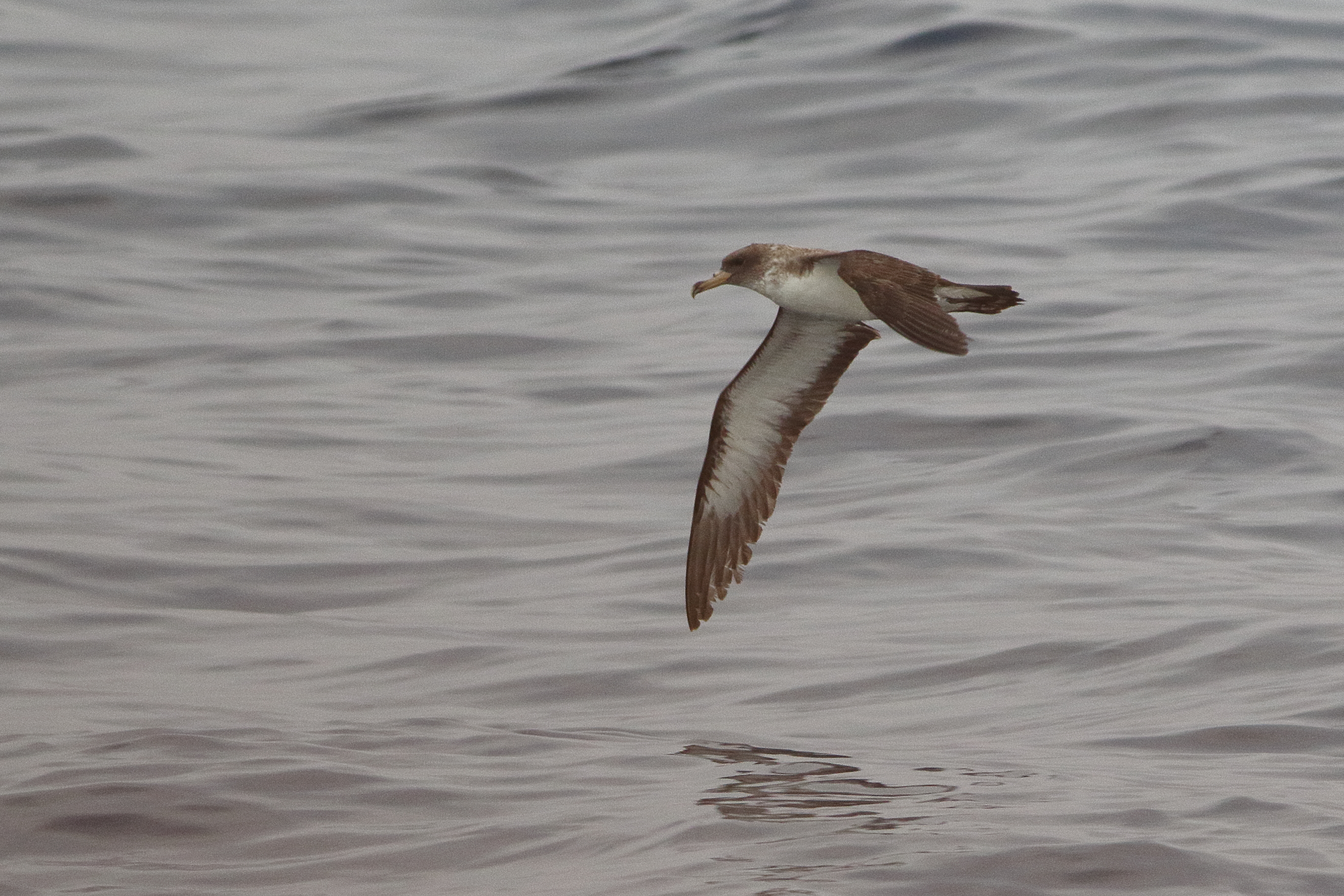
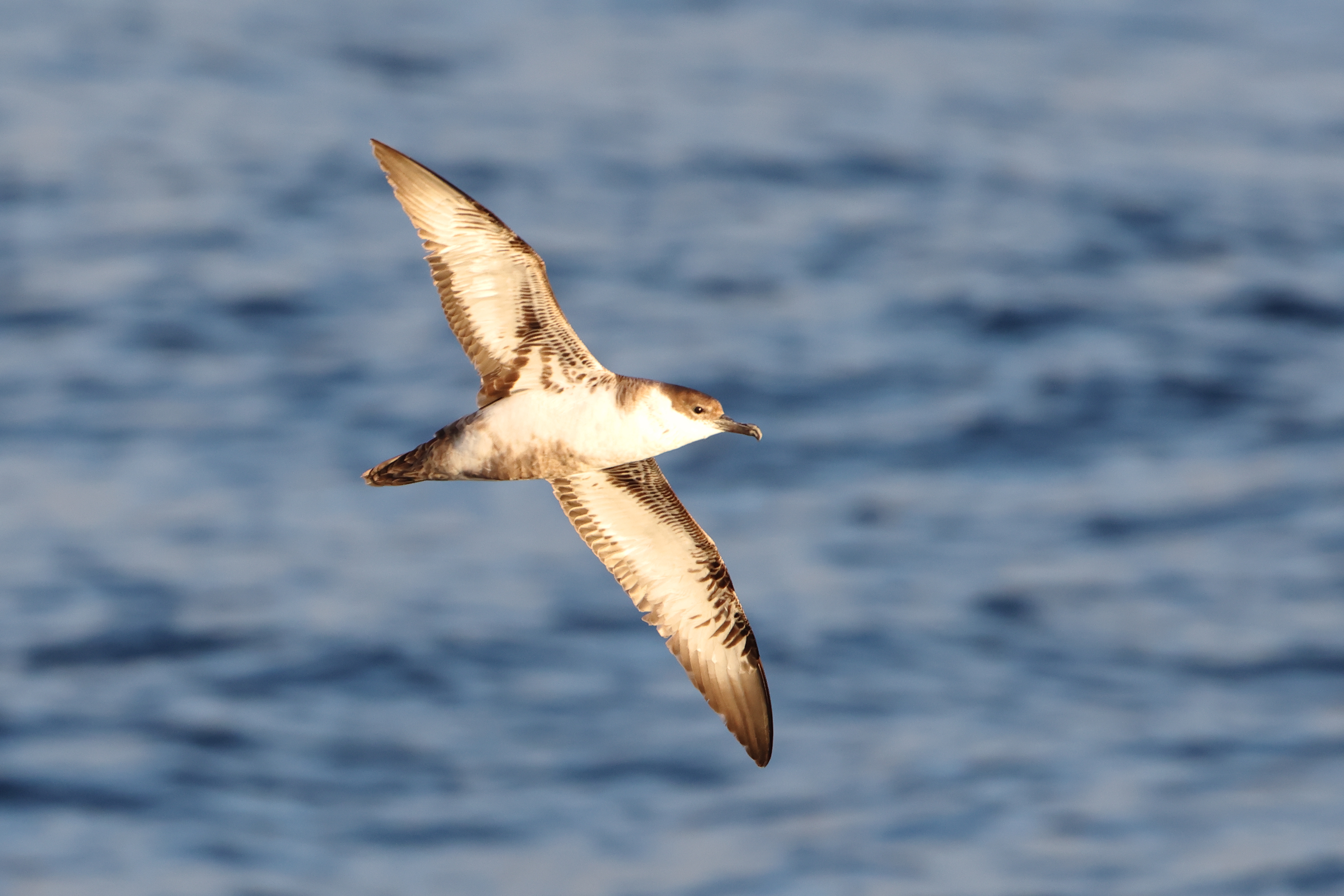
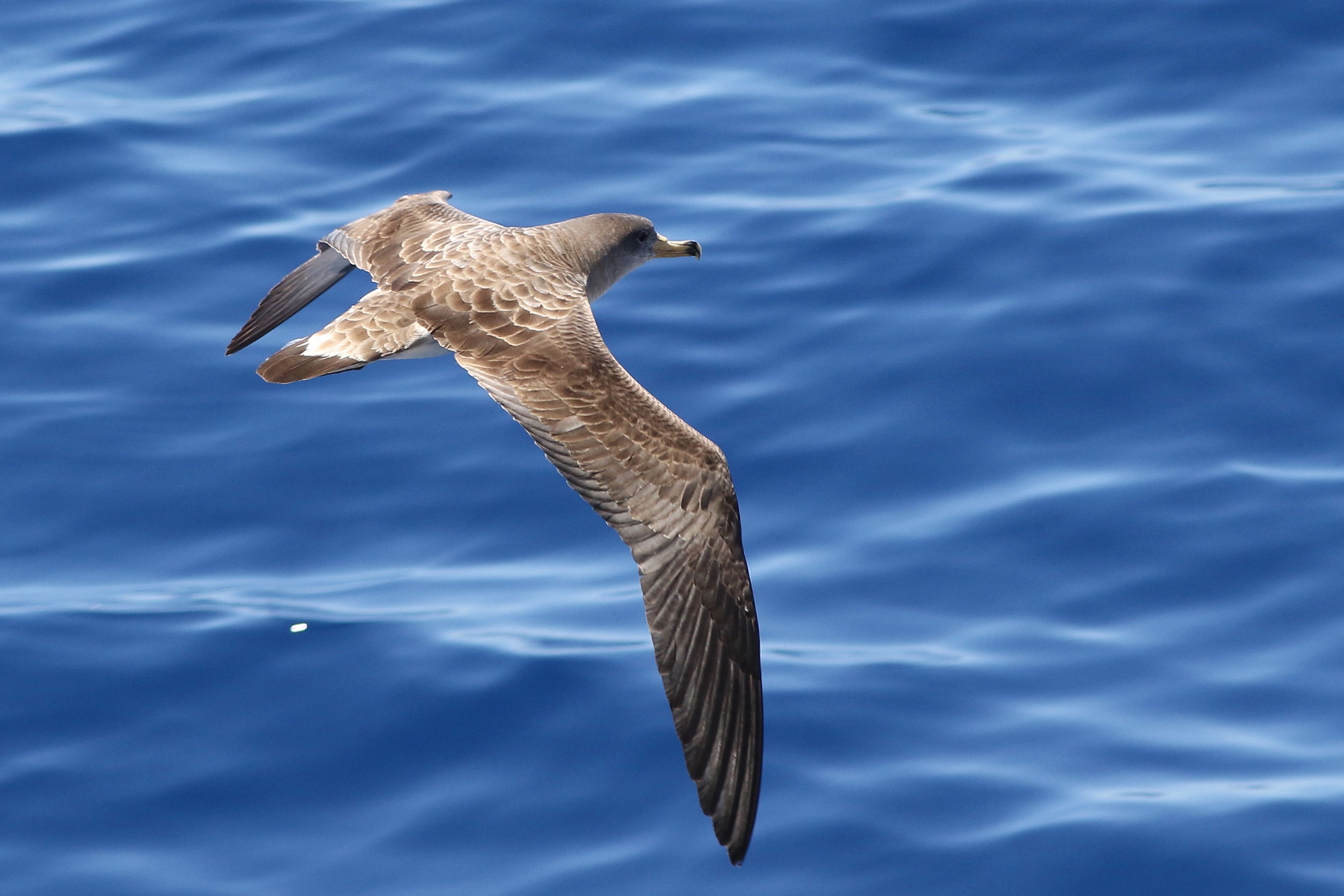
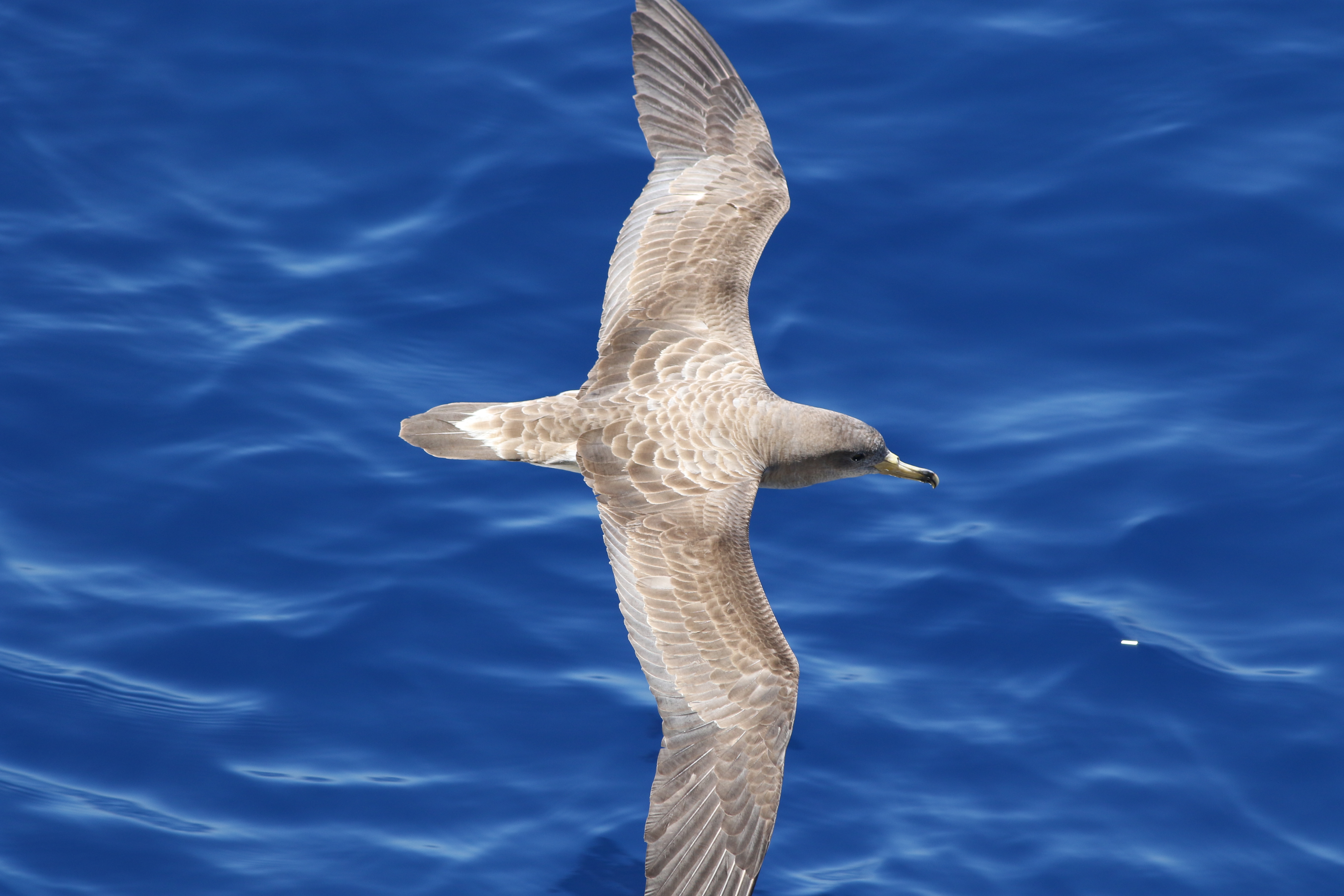
ID Features: Large, lumbering shearwater. Diagnostic yellow bill is often visible from quite a long distance. Look for warm pale brown upperparts and clean white belly and underwings. Also note little contrast between brown head and white throat (compare with distinct capped appearance of Great Shearwater). Lazier wingbeats than other large shearwaters, especially in calm conditions; wings look crooked with wrists pushed forward in flight. Forms mixed flocks with other shearwaters, especially when feeding. Very similar to closely related and recently split Scopoli's Shearwater. Can be identified with caution, and often by analysis of photographs, by the solidly dark outer part of the underwing.
Habitat: Fairly common in warm water in the Atlantic Ocean; increasingly frequent in cooler water, ranging further northward in recent years.
Locations: Cape Verde, Spain, South Africa


Desertas Petrel


ID Features: Medium-sized gadfly petrel with long, angular wings and buoyant, banking flight. Smaller, slimmer, and more buoyant than Cory's Shearwater, which could be confused for petrel at a distance. Formerly known as Fea's Petrel, recently split into Cape Verde and Desertas, which are essentially indistinguishable at sea. Note the largest-billed male Desertas may be identifiable at sea, but otherwise best left unidentified away from the breeding grounds. Also nearly identical to Zino's Petrel, but Desertas tends to look larger-headed with a stouter bill. Underwing is mainly dark gray; this is a useful feature to help distinguish from almost all other shearwaters and petrels in range. Note Zino's Petrel can show substantially more white in the underwing, unlike Desertas. Wing molt primarily occurs from October to April, which may be a useful feature to distinguish Desertas from Cape Verde.
Habitat: Breeds on Desertas islands just southeast of Madeira and ranges widely in the North Atlantic.
Locations: Currently none.


Zino's Petrel
ID Features: Typical gadfly petrel with long, angular wings, long tail, and rapid, banking flight. Very similar to Cape Verde and Desertas Petrel, but slightly smaller and has a smaller bill and a more rounded head. As in the other petrels mentioned above, underwing is mainly dark, underparts are white, and the hood is gray with darker eye-surround. Upperparts gray with darker W-shape across wings and mantle.
Habitat: Breeds on mountaintops in Madeira only. Forages at sea.
Locations: Currently none.


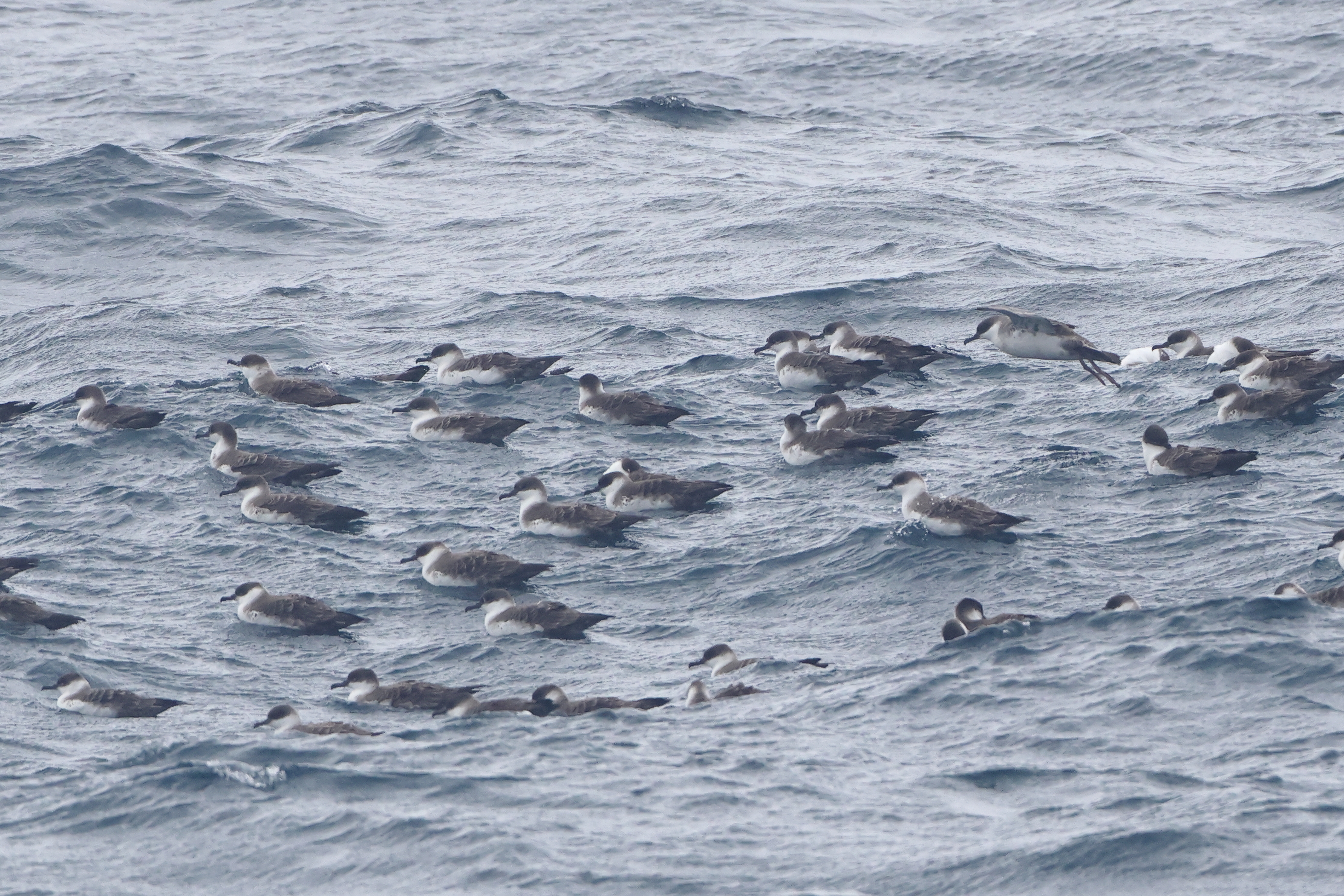
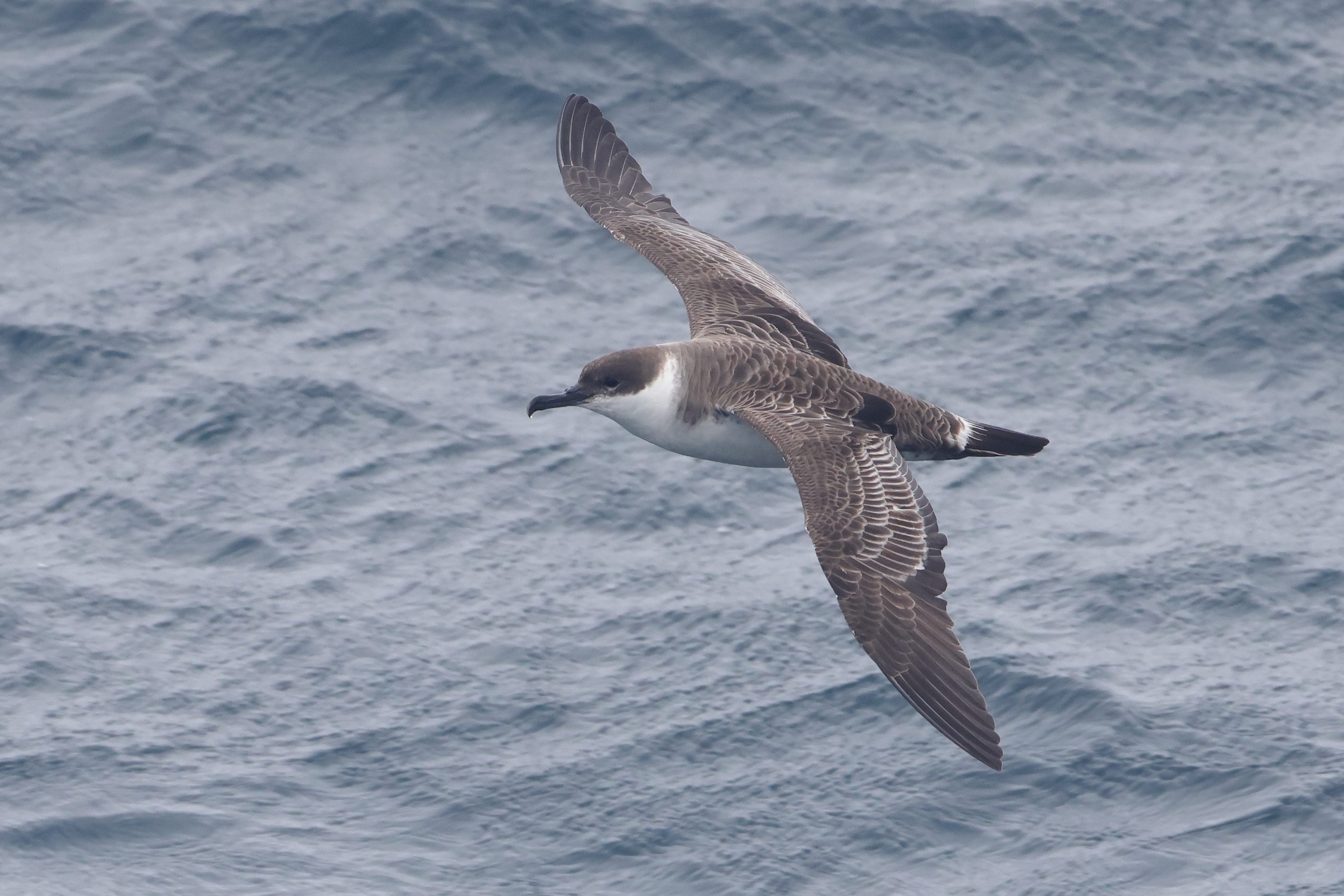
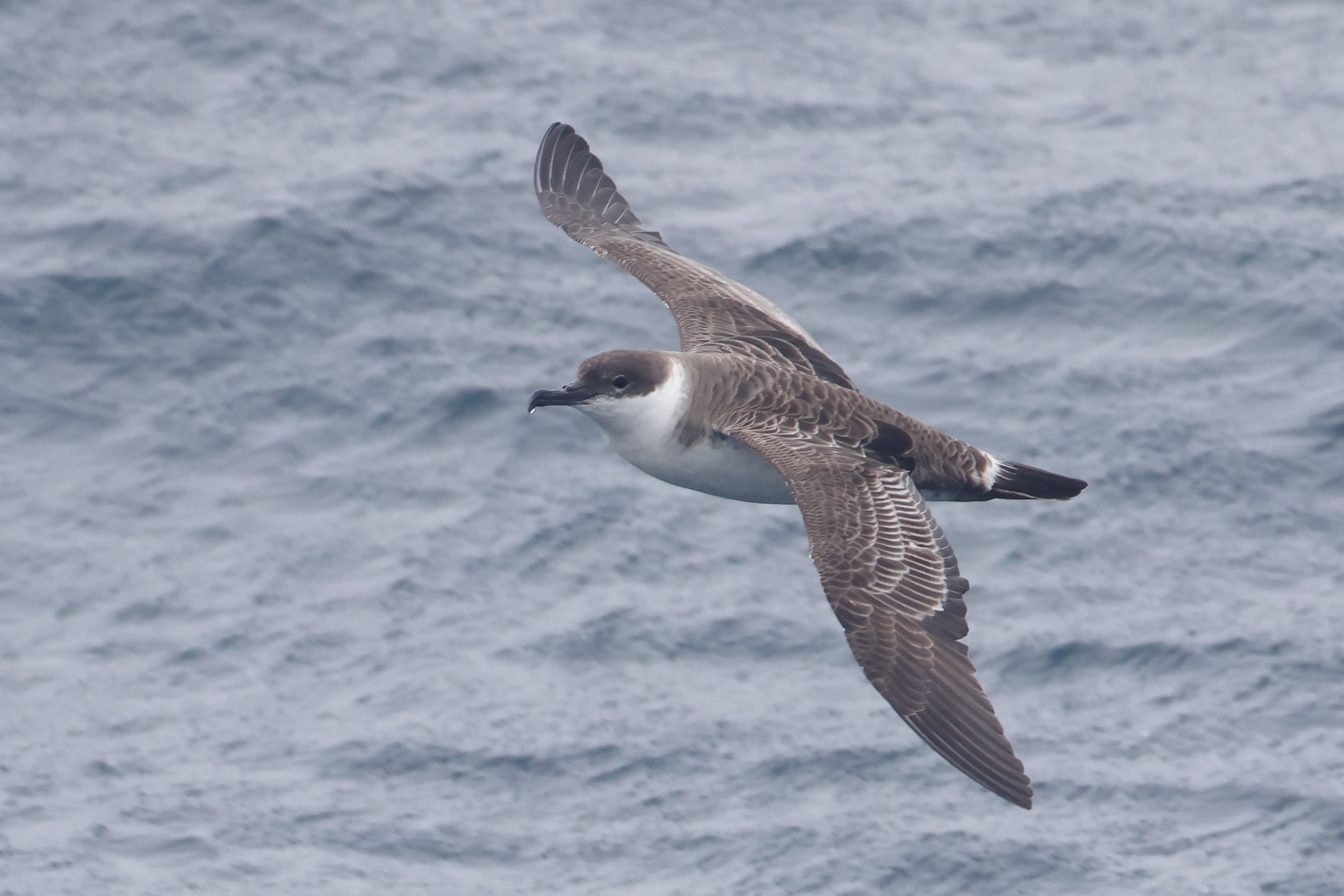
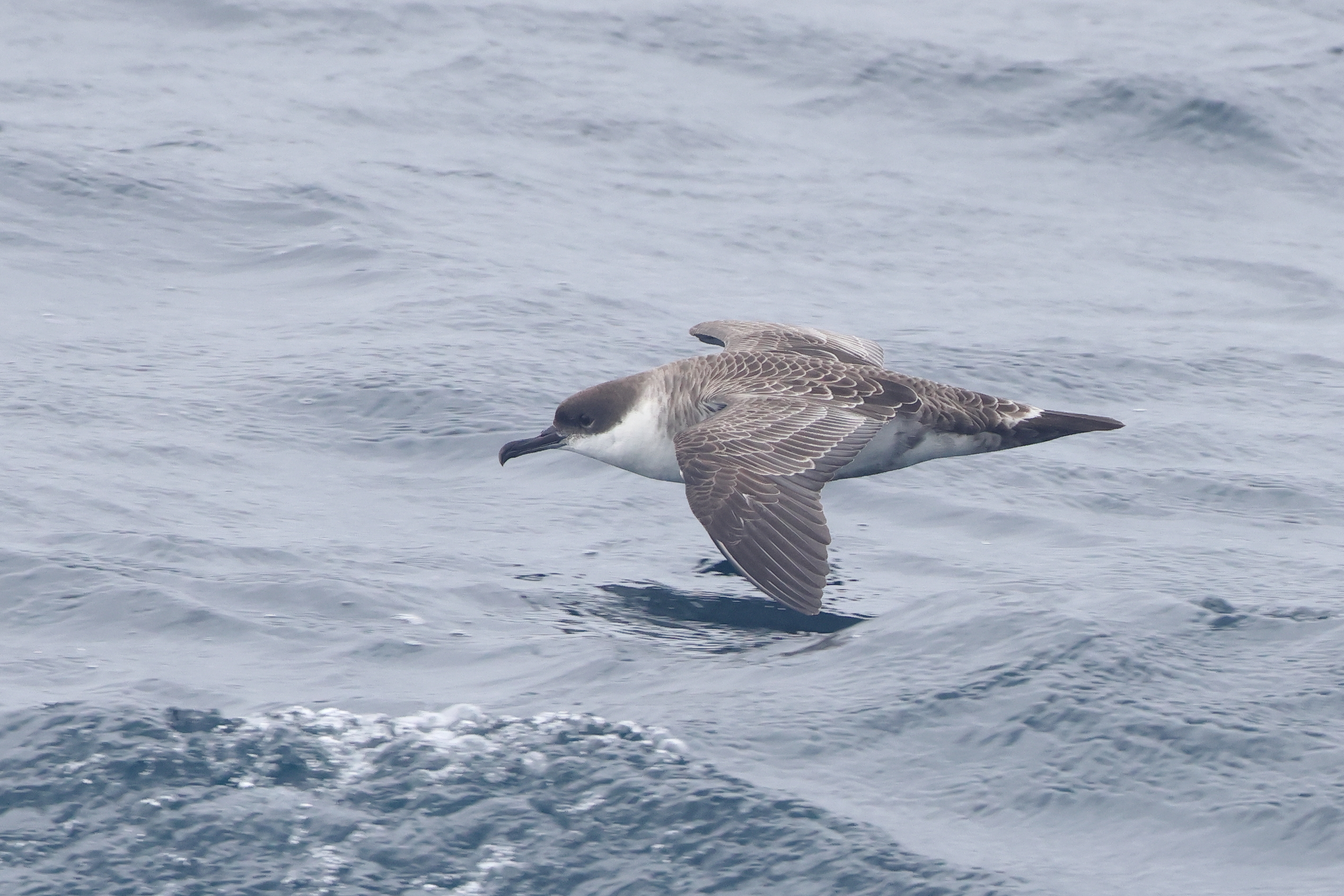
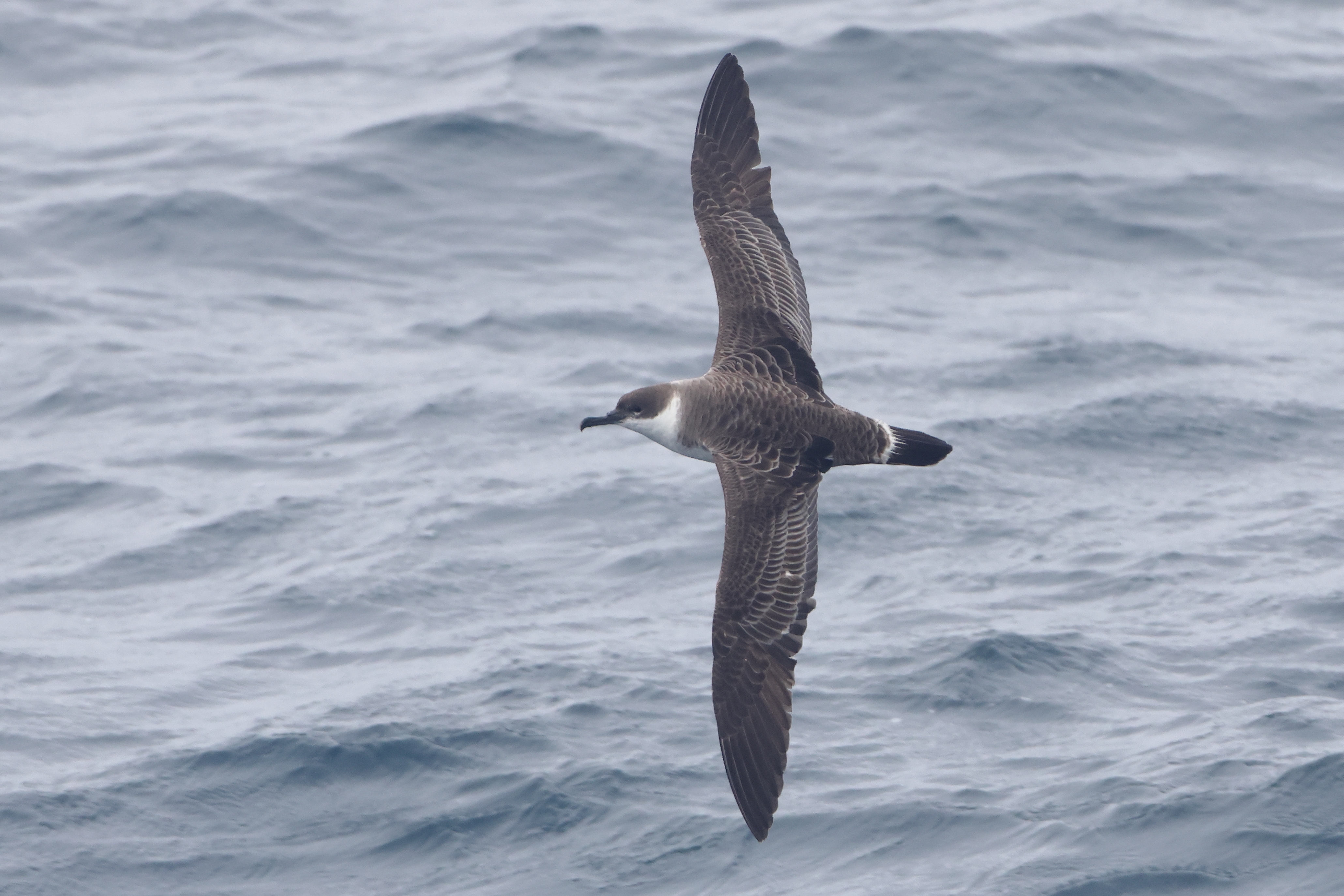
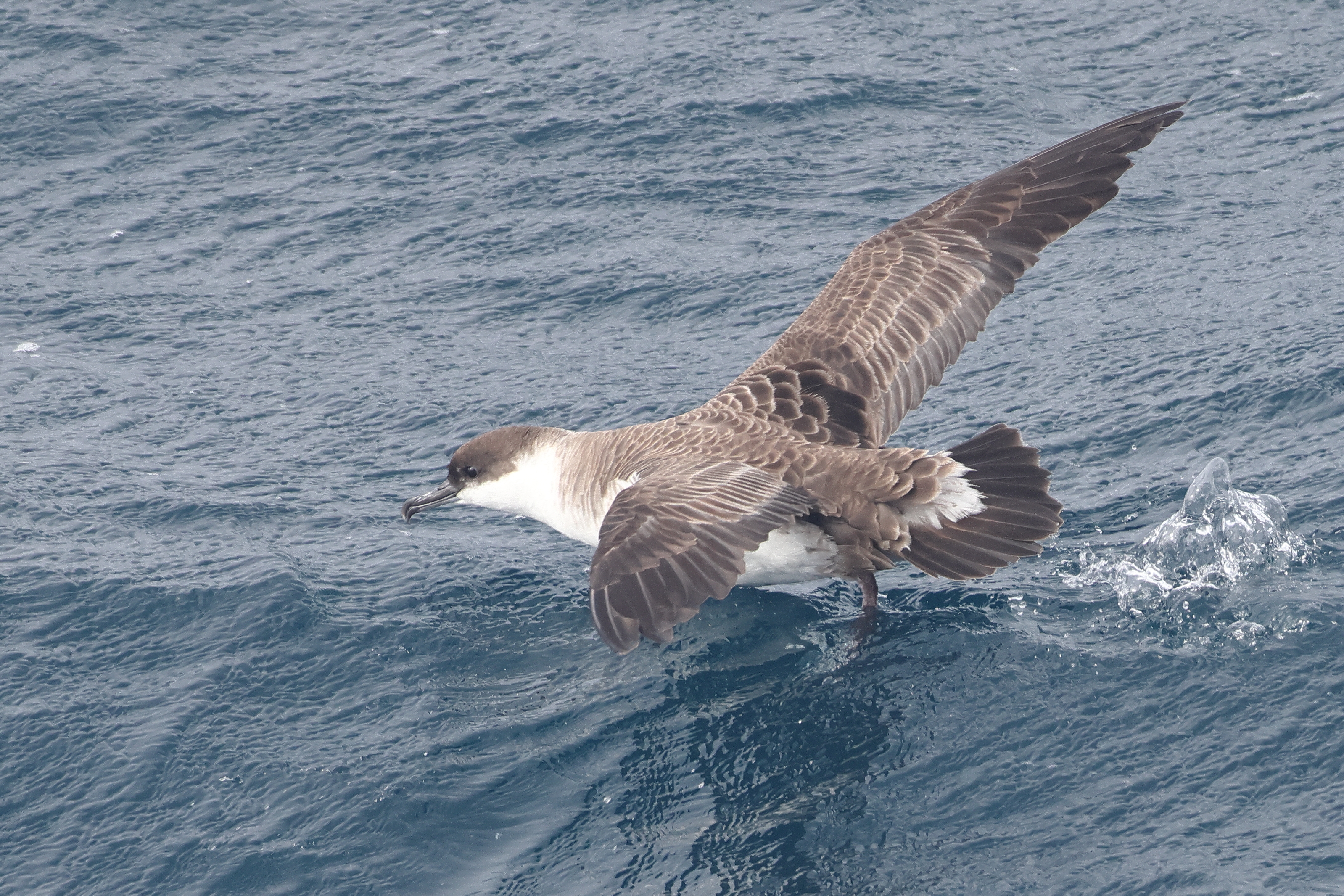
Great Shearwater


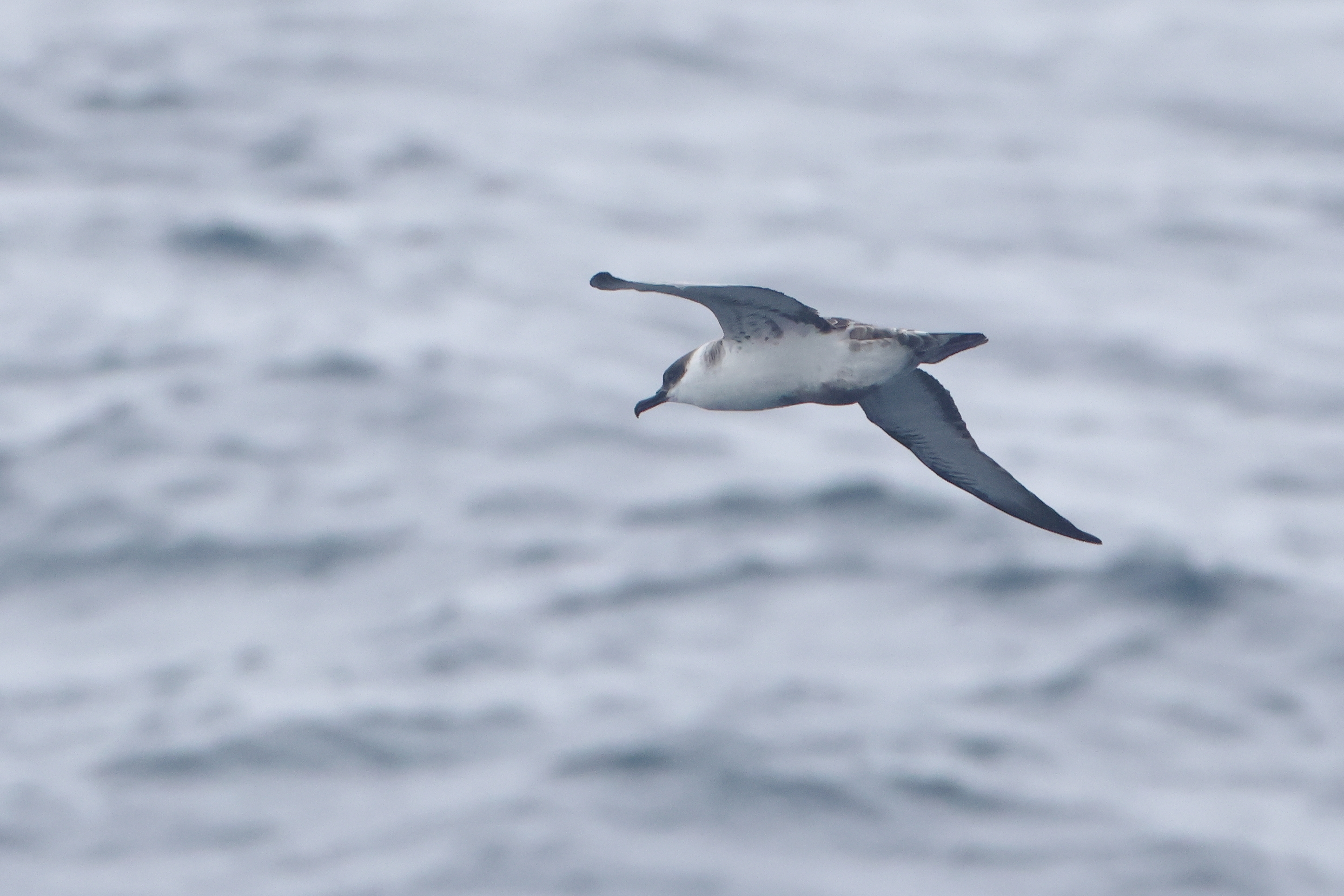
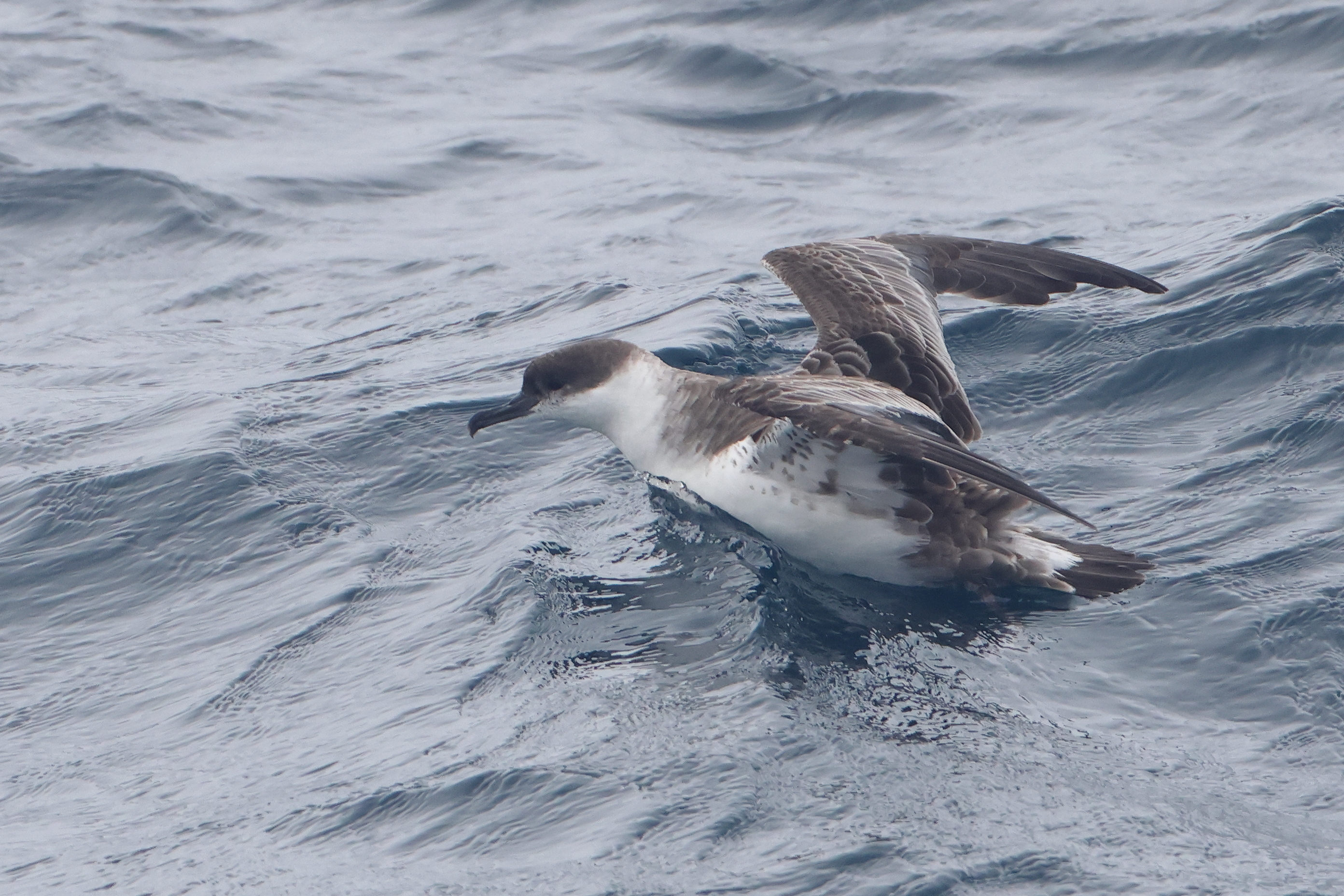
ID Features: Large shearwater with a crisp dark cap. Long, narrow wings are held quite straight when flying; wingbeats are stiff. Also look for messy brown patch on belly and dark markings on underwings. Notably larger and proportionally longer-winged than Manx Shearwater, and wingbeats are not as snappy. Also compare with Cory's Shearwater, but note all-black-bill, dark cap, and slightly quicker wingbeats and straighter wings on Great Shearwater.
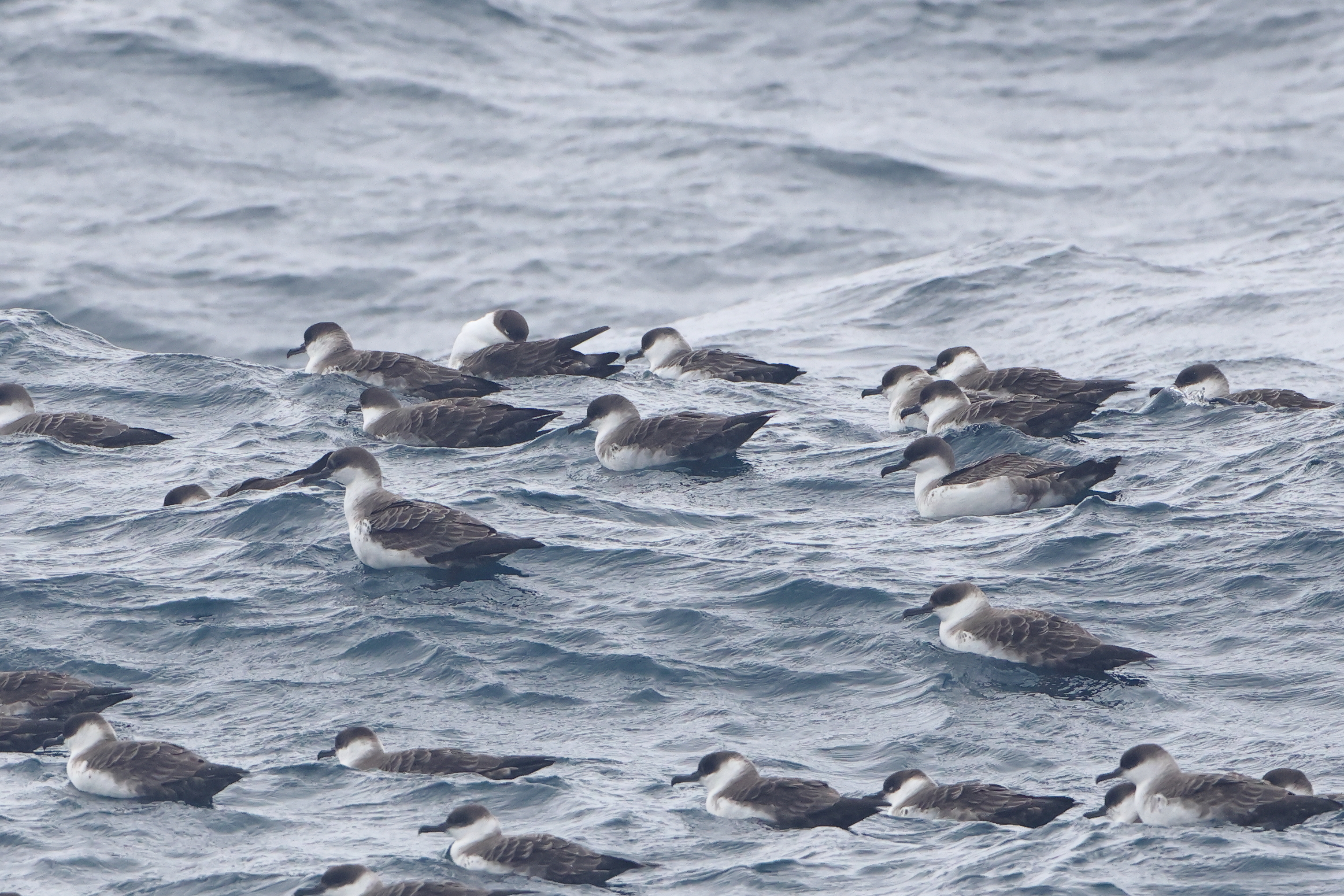
Habitat: Primarily an Atlantic species, breeding mainly on remote Tristan Island group in the Southern Hemisphere. Spends the nonbreeding season (May to November) in cool water in the North Atlantic, where it can gather in large flocks, often mixed with other shearwater species. Occasionally seen from land, but prefers to stay offshore.
Locations: Falkland Islands


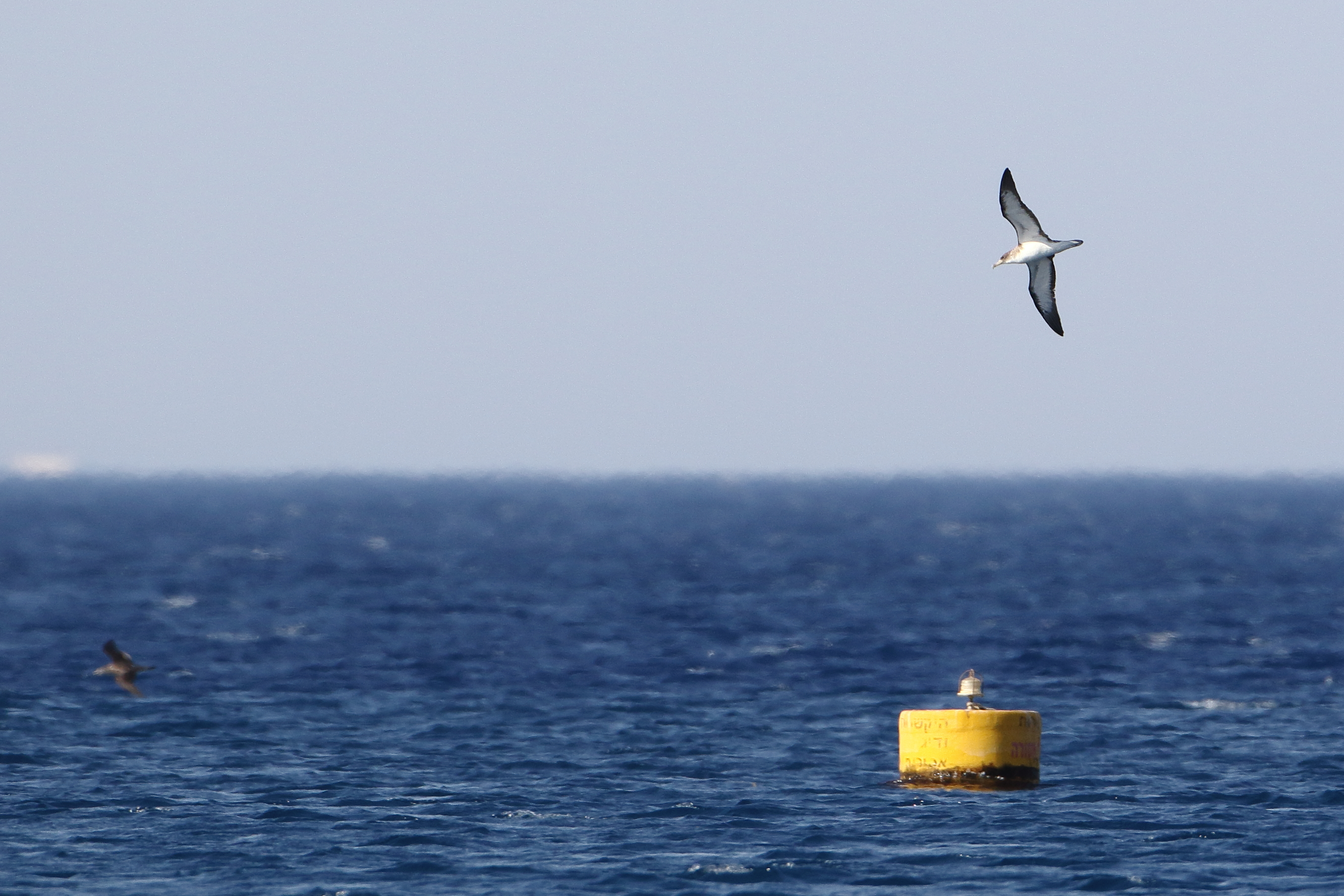
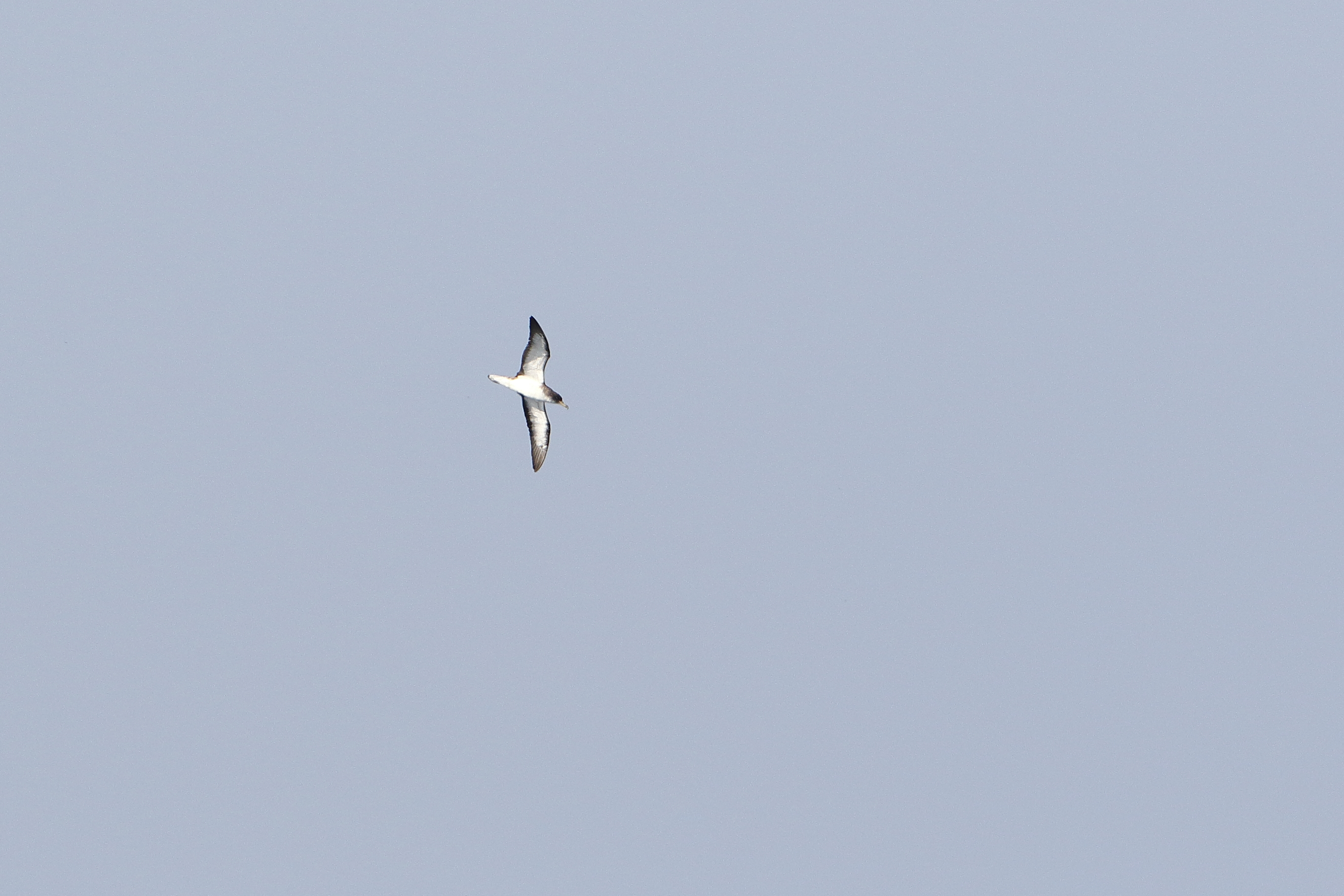
Scoploi's SHearwater
ID Features: Large, lumbering shearwater. Diagnostic yellow bill is often visible from quite a long distance. Look for warm pale brown upperparts and clean white belly and underwings. Also note little contrast between brown head and white throat (compare with distinct capped appearance of Great Shearwater). Lazier wingbeats than other large shearwaters, especially in calm conditions; wings look crooked with wrists pushed forward in flight. Forms mixed flocks with other shearwaters, especially when feeding. Very similar to closely related and recently split Cory's Shearwater. Can be identified with caution, and often by analysis of photographs, by the pale "tongues" extending into the otherwise dark outer part of the underwing.
Habitat: Fairly common in warm water; breeds in the Mediterranean and moves widely around the Atlantic when not breeding.
Locations: Israel, Turkey, Greece, France


Manx Shearwater
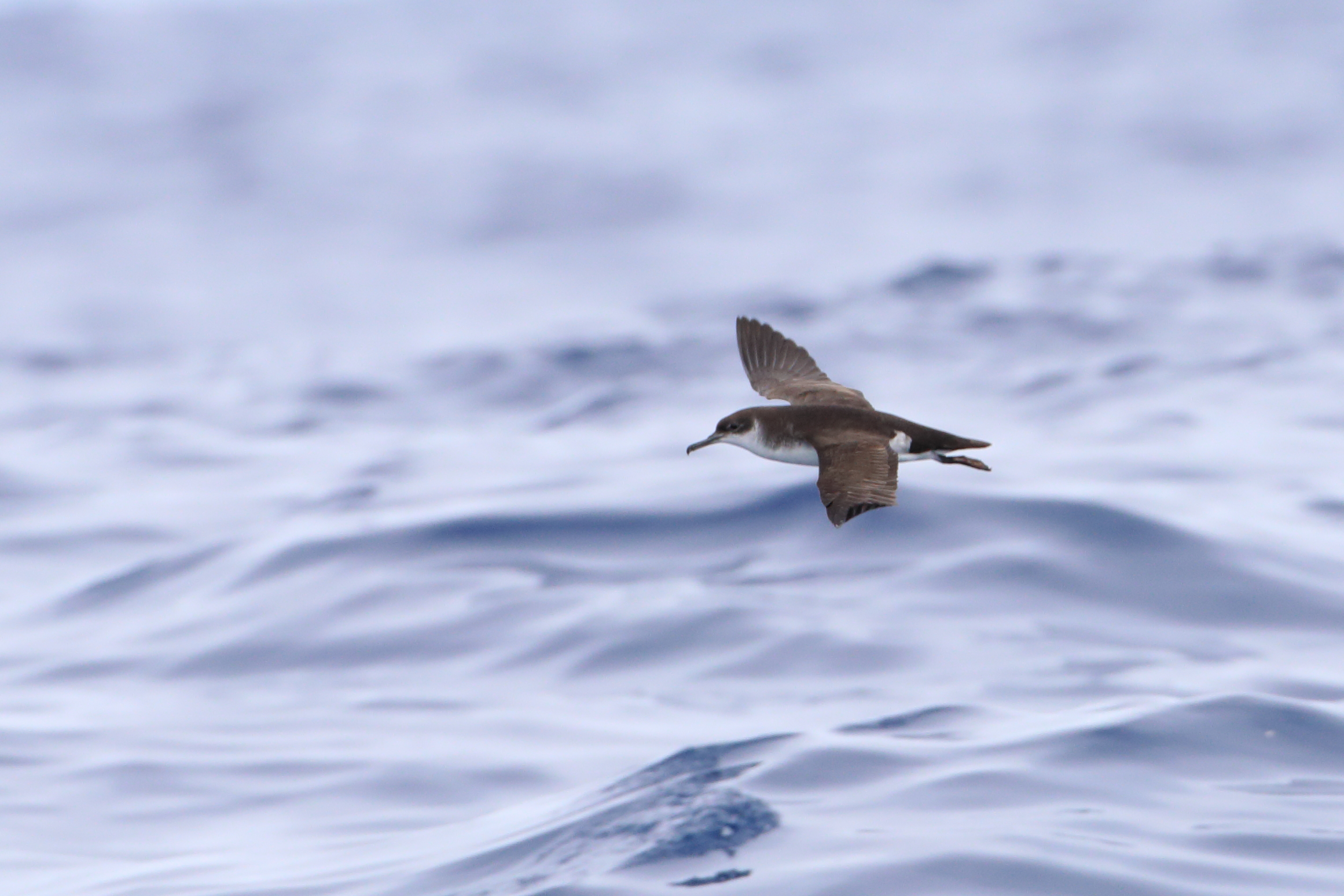
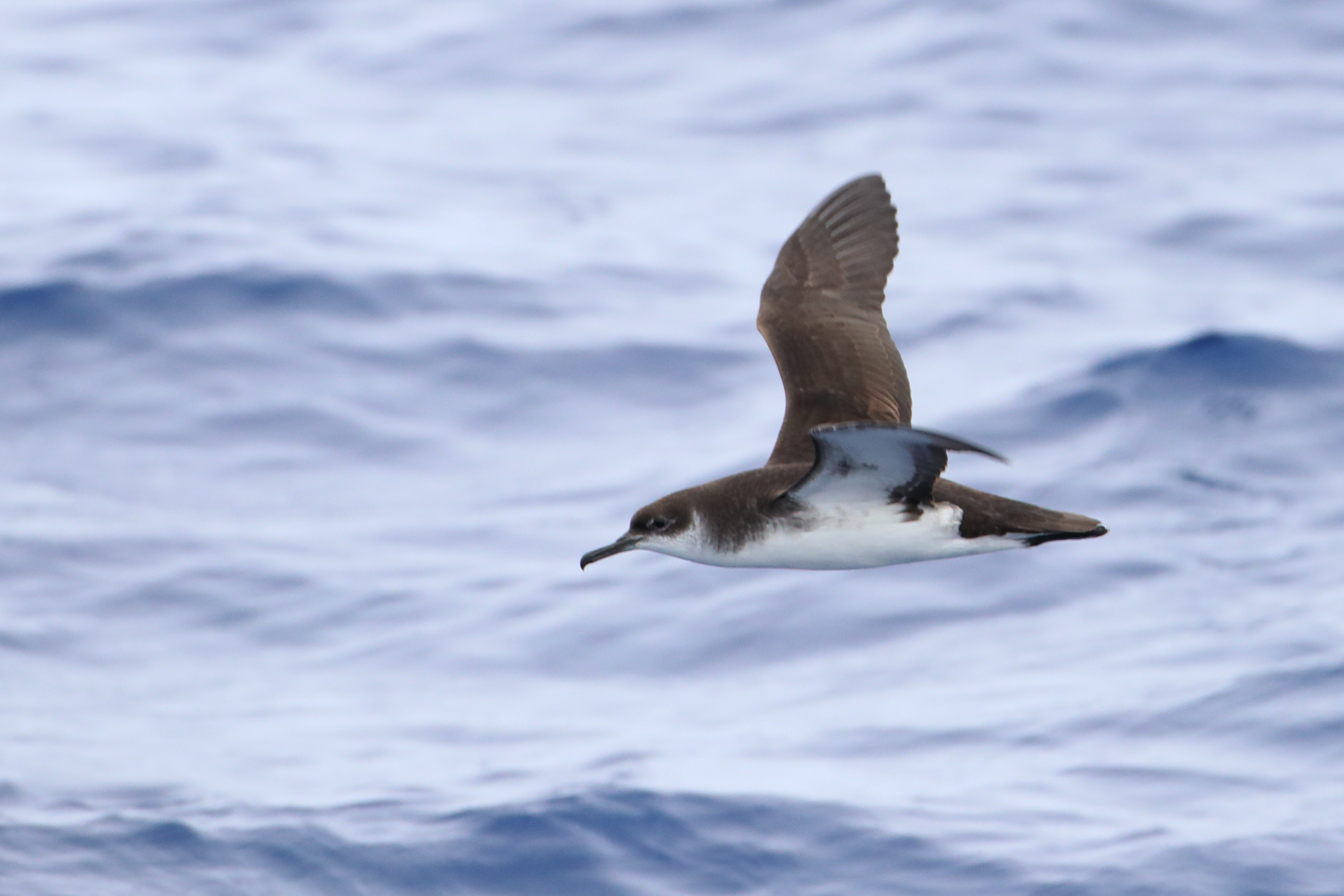
ID Features: Small black-and-white shearwater that flies with snappy wingbeats. Pay attention to its face pattern: typically quite dark and smudgy, with white curling up behind the cheek. Underwing is mostly white, sometimes with dark markings. Flies low above the water with quick wingbeats, almost recalling an alcid; occasionally arcs up high in strong wind. Found singly or in small flocks, sometimes with other shearwaters. in Caribbean and western Atlantic, most similar to Audubon's Shearwater but shorter-tailed and darker-faced, with white under the tail.
Habitat: Prefers cooler ocean waters in the North and South Atlantic; rarely seen from land. Rare but seemingly increasing in the Pacific.
Locations: Spain, Brazil, South Africa