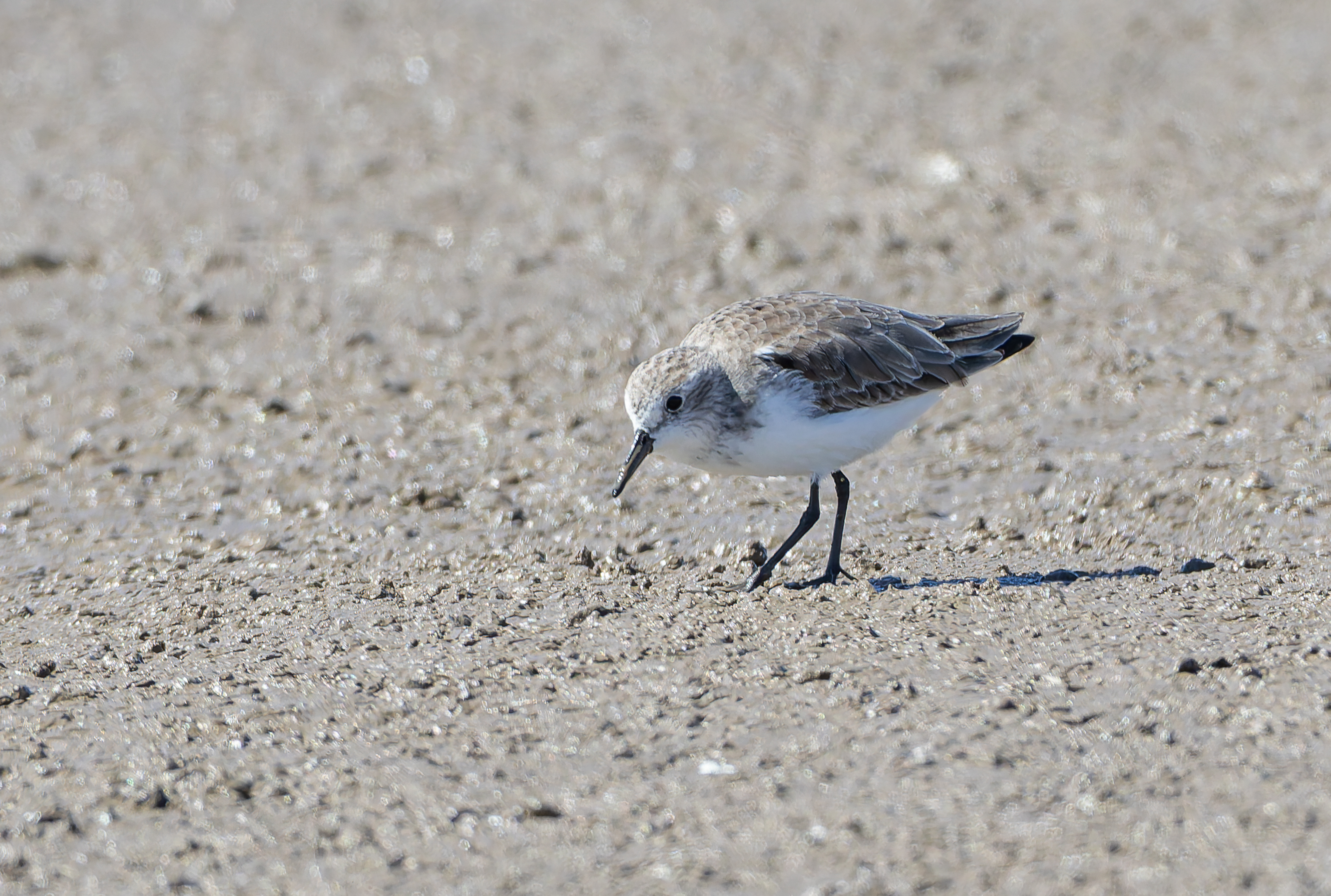
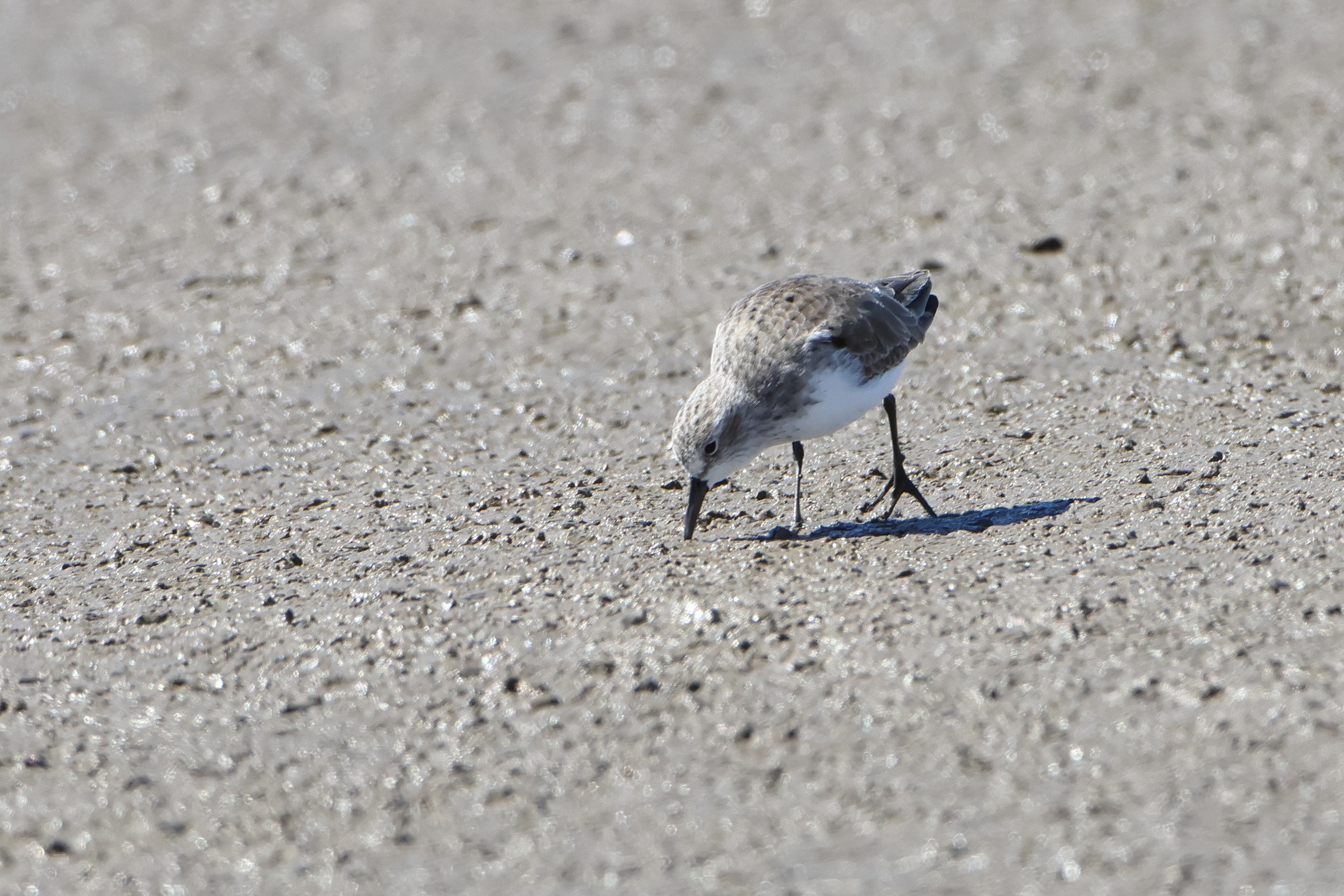
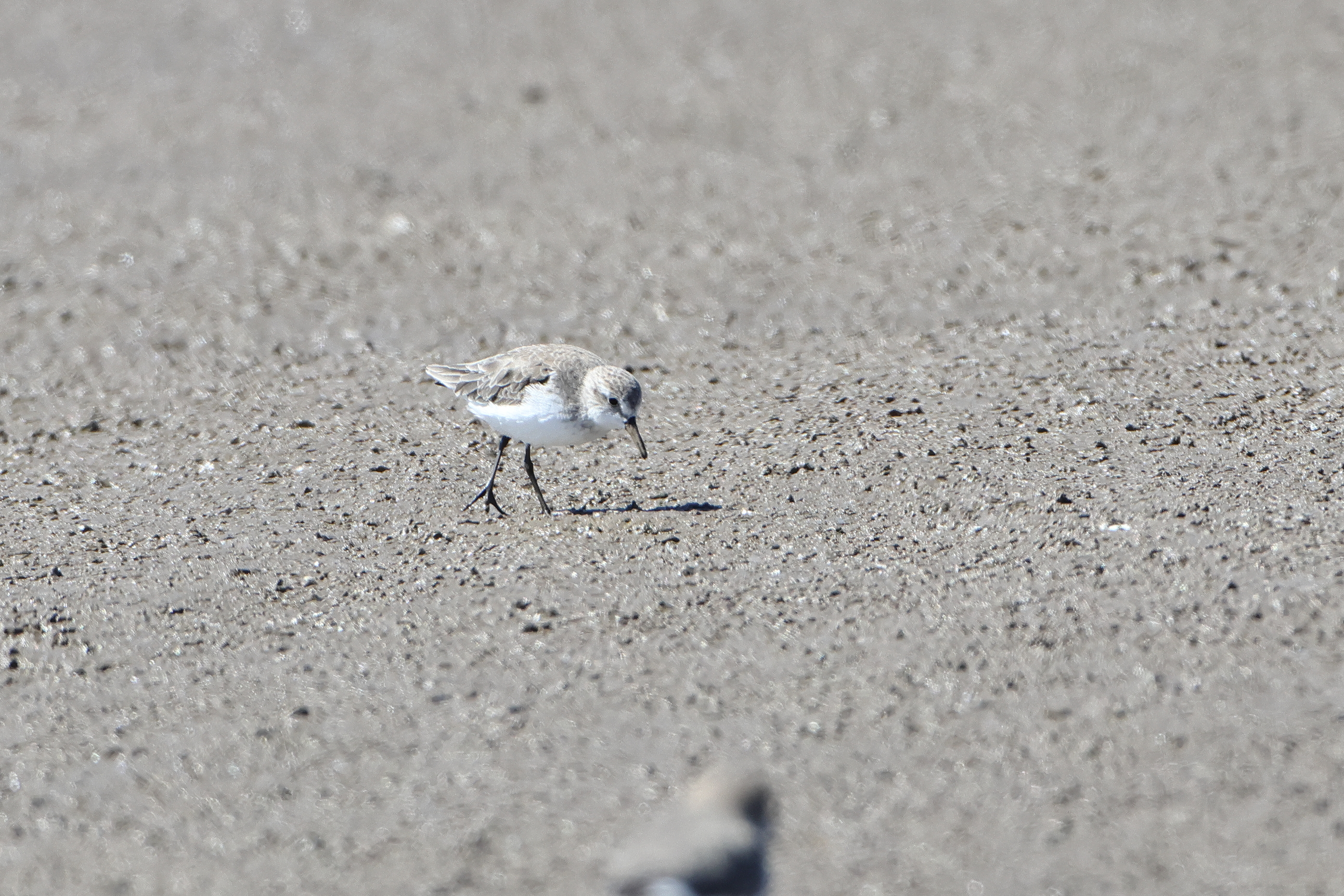
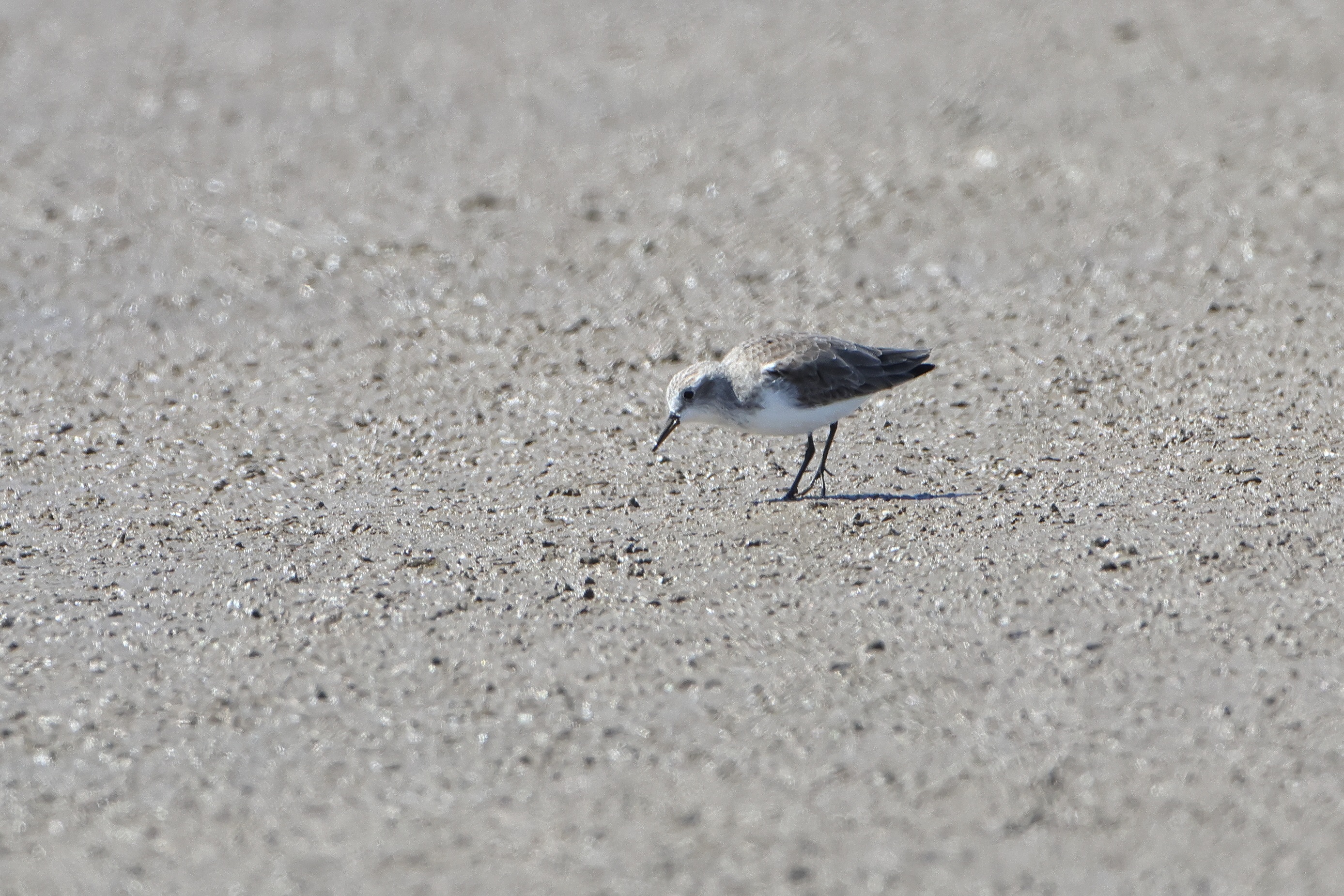
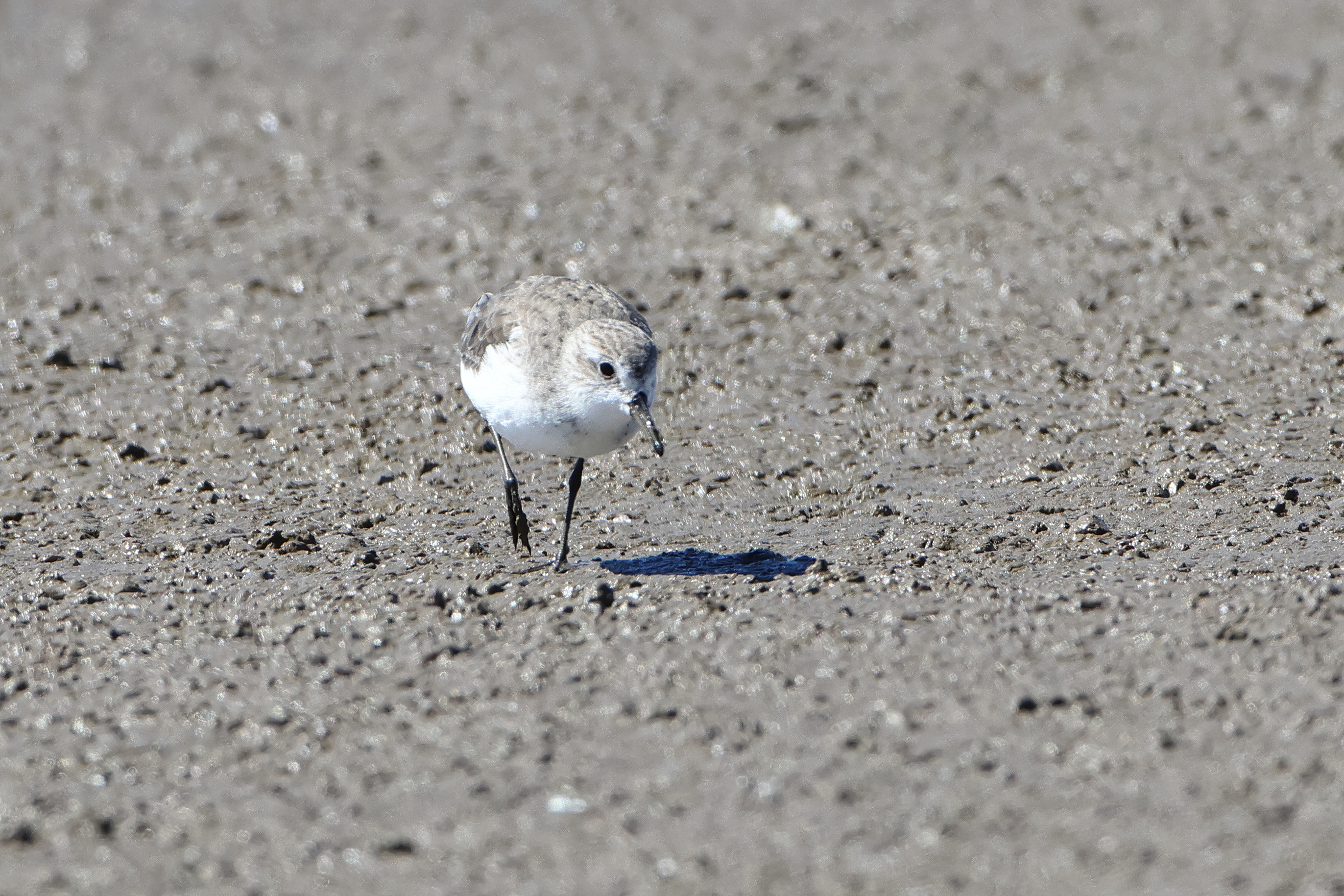
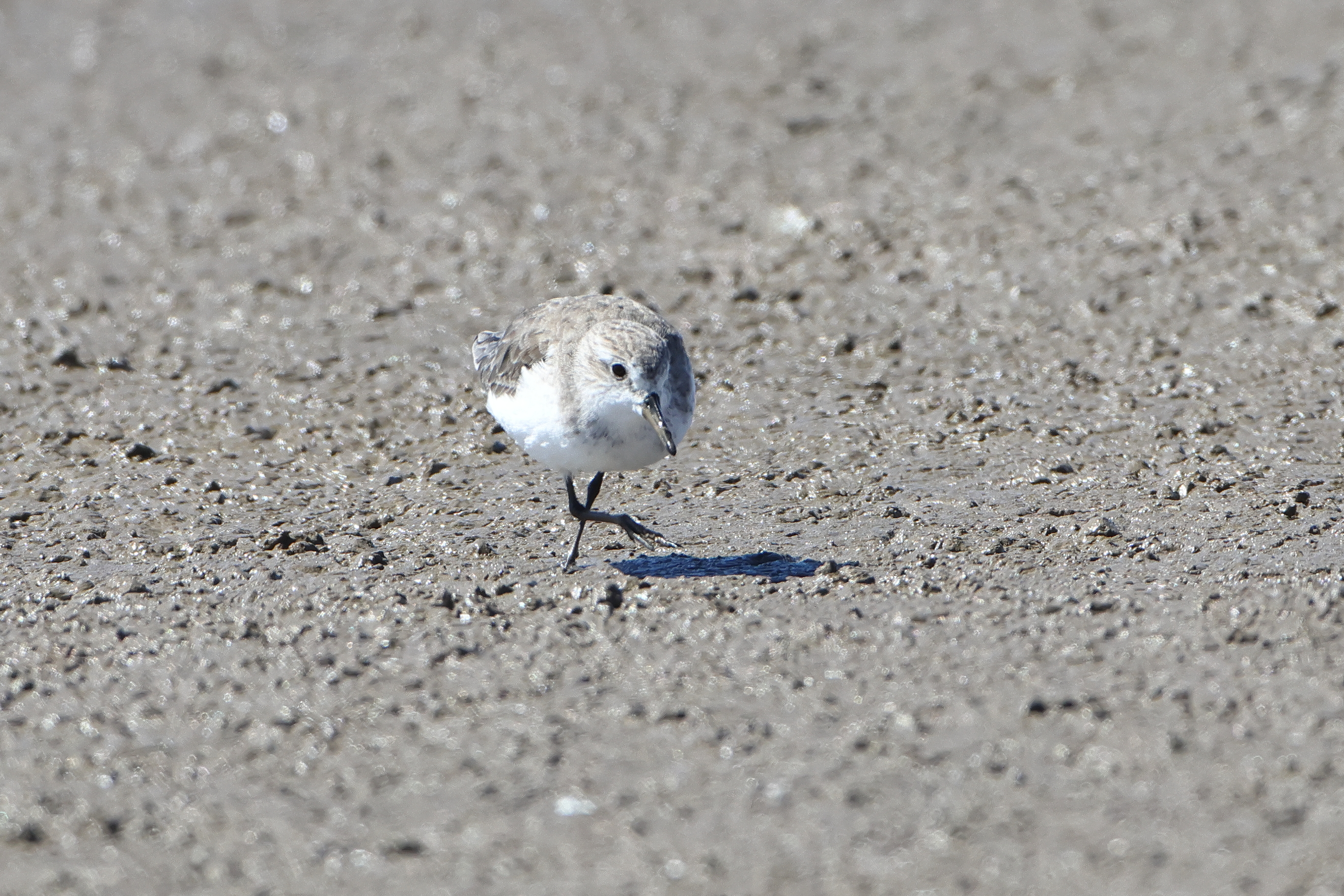
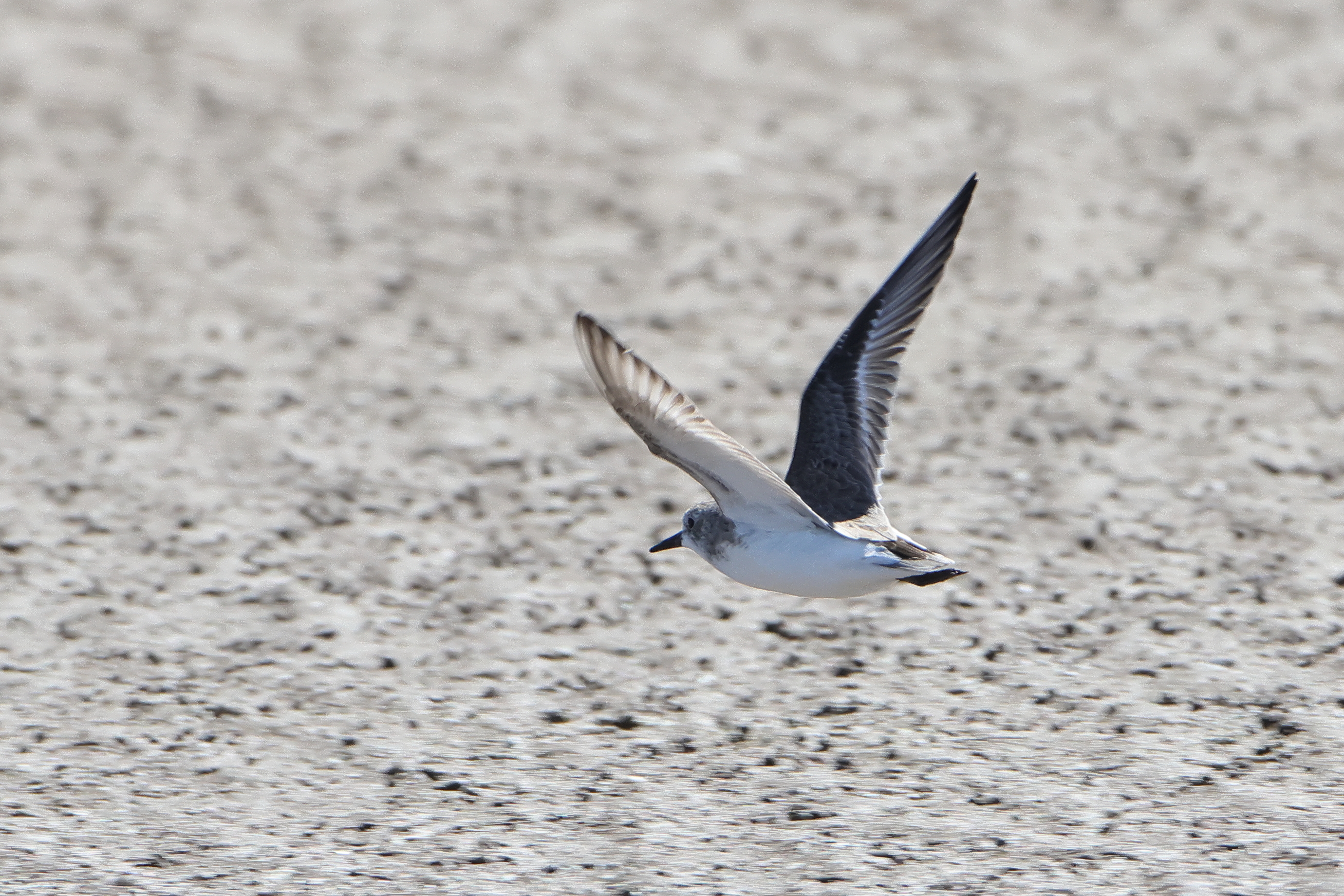
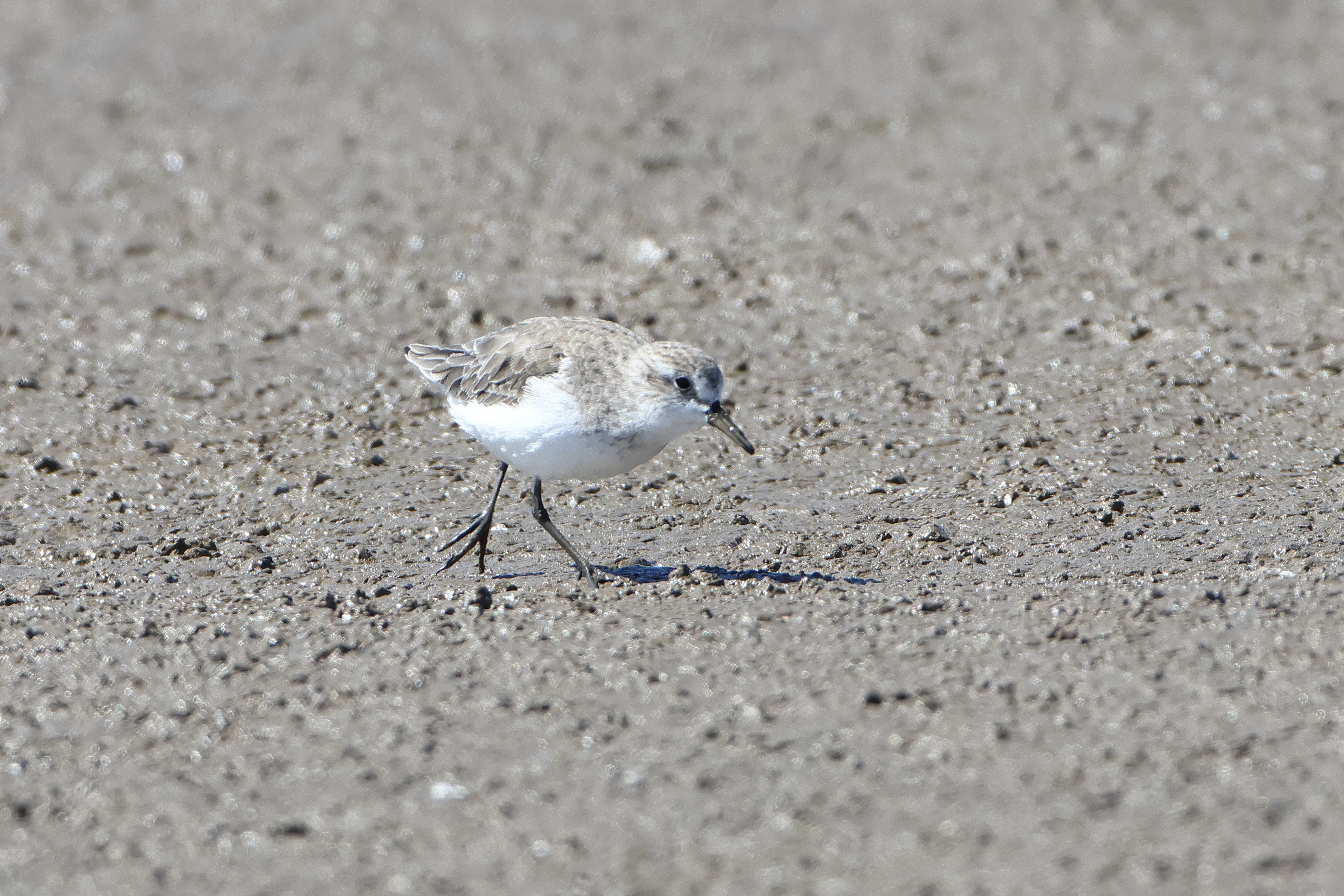
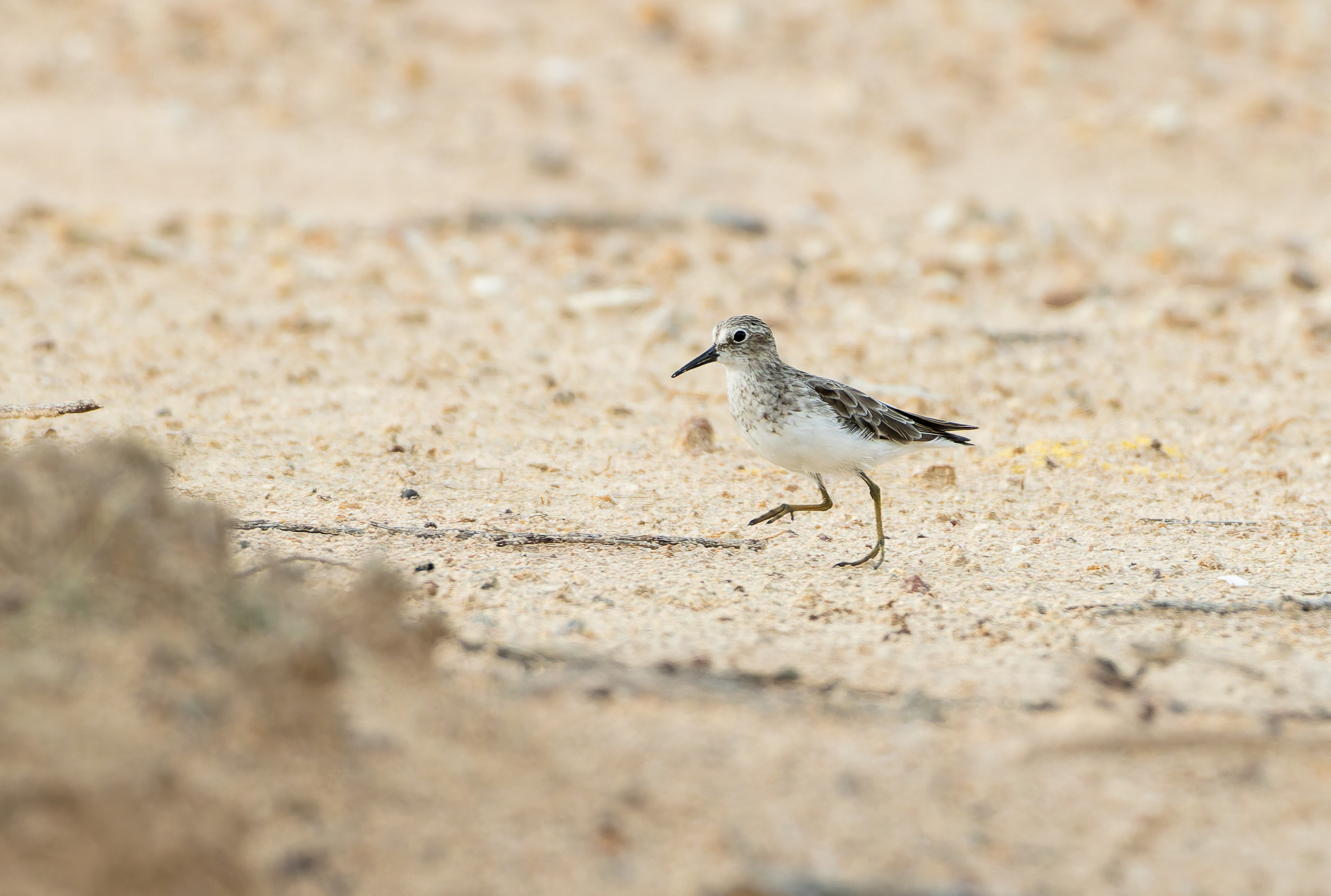
Semipalmated Sandpiper
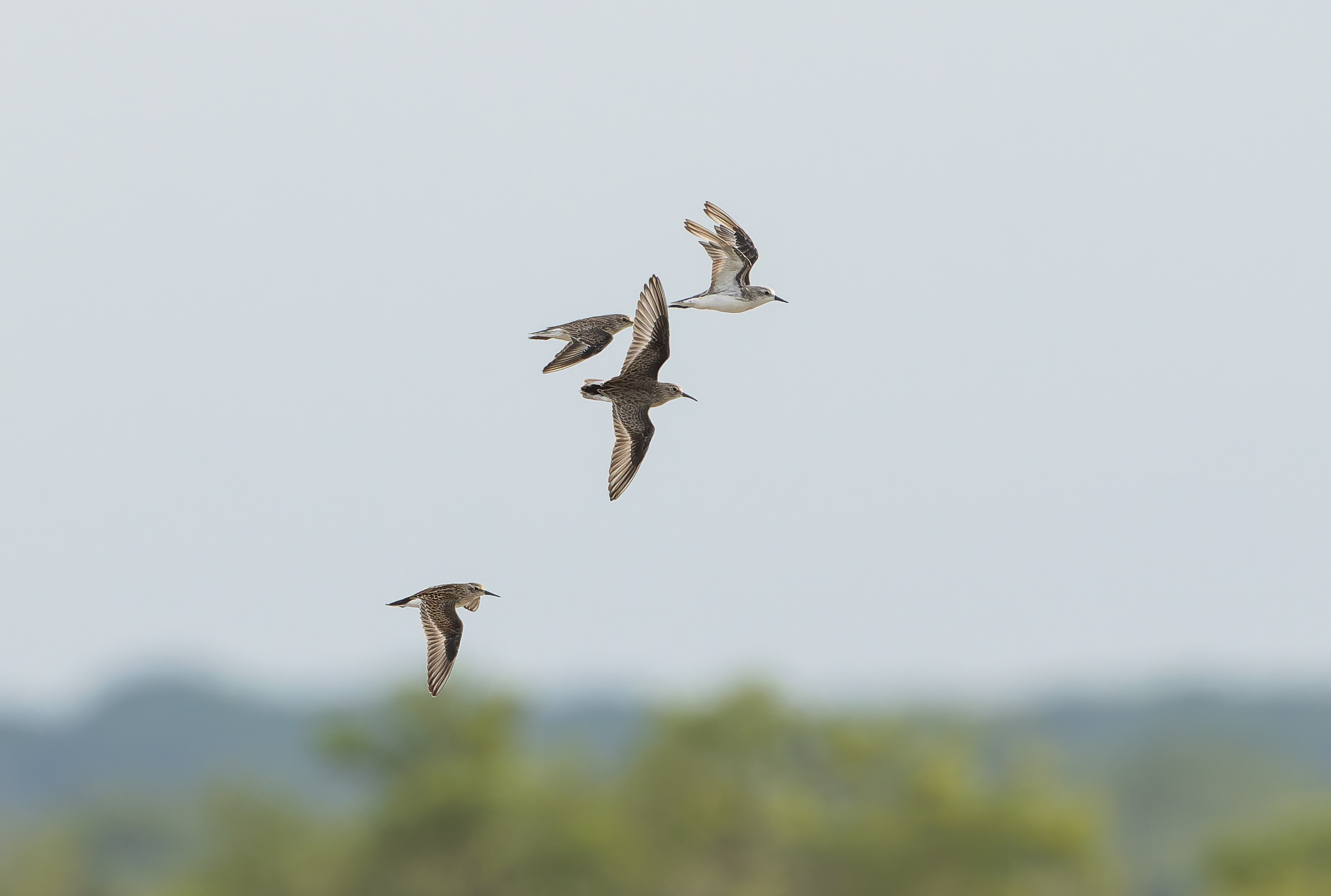
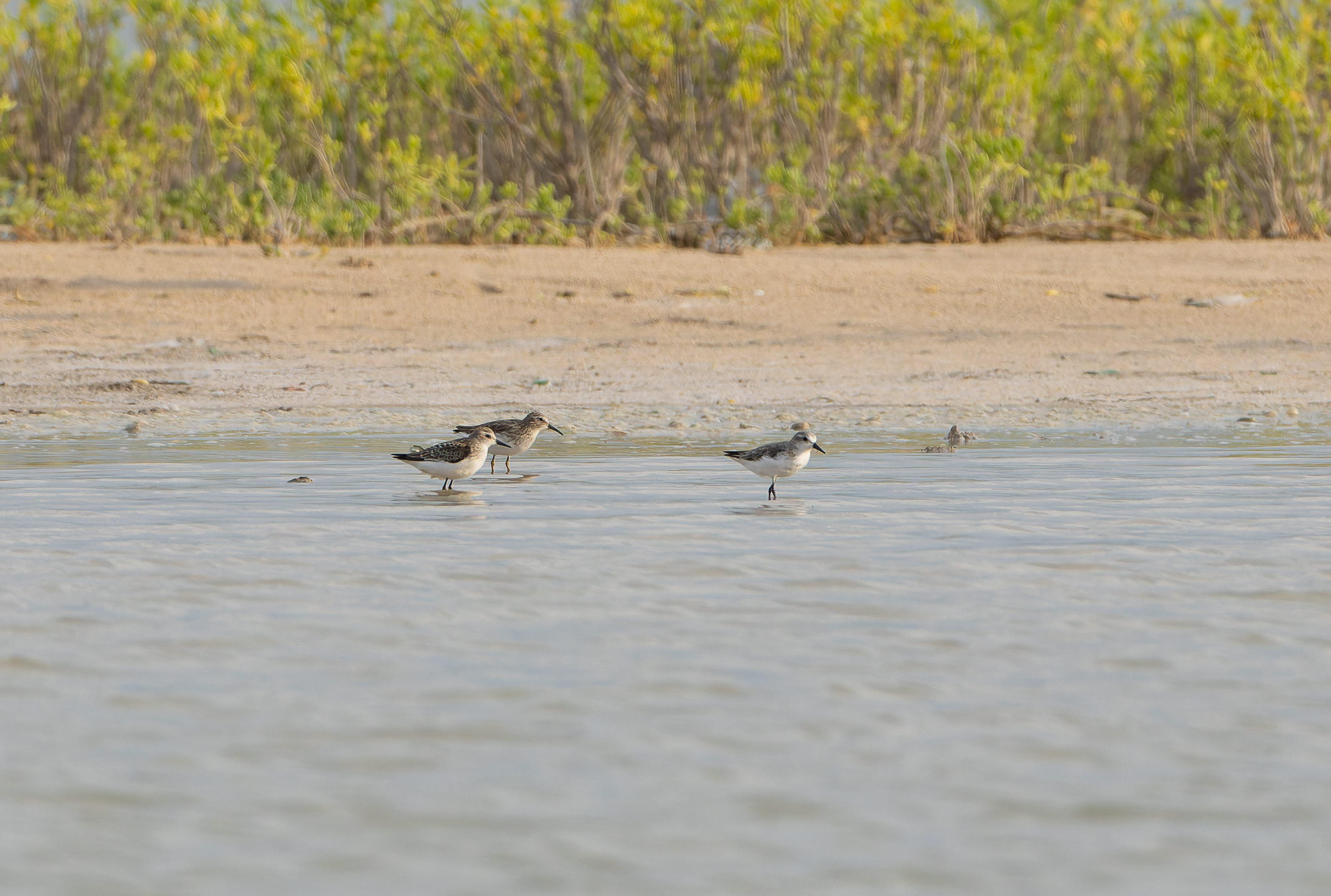
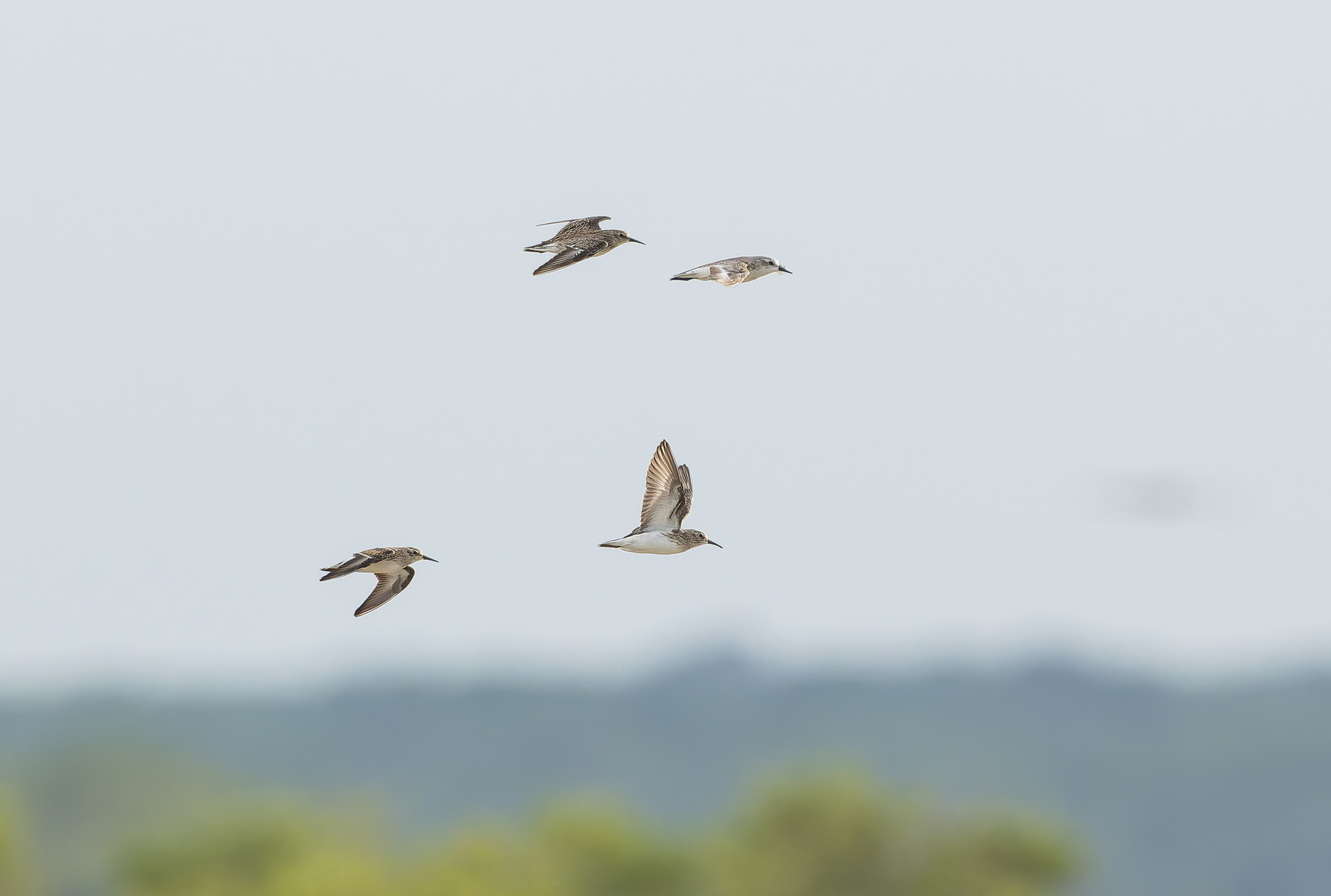
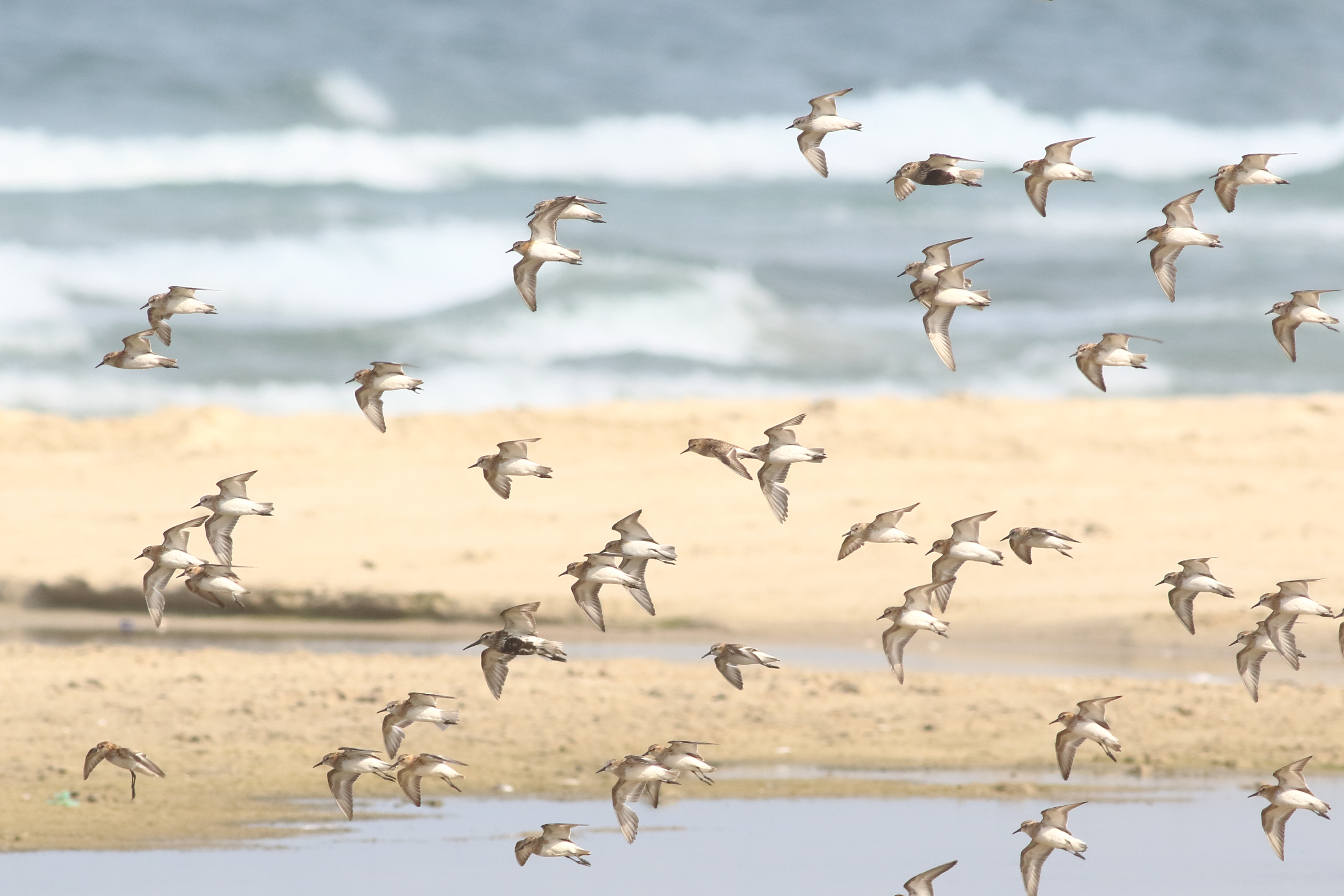
ID Features: Small, grayish-brown sandpiper. Typically shows relatively short, blunt-tipped bill, but this varies across the breeding range: western populations are shortest-billed, eastern populations are longest, and females have longer bills than males. Also note blackish legs, although they can appear dull gray or greenish. In breeding plumage, fairly pale grayish brown, sometimes with brighter rusty cap and cheek. Nonbreeding is plain gray above and white below. Juveniles have attractive scaly pattern on upperparts, and variable coloration: usually grayish with some buffy areas, occasionally brighter rufous. Most similar to Western and Least Sandpipers. Western averages slightly larger and longer-billed, with brighter rufous on breeding adults and juveniles; nonbreeding birds paler but extremely similar to Semipalmated. Least Sandpiper is darker and browner.
Habitat: Breeds on high Arctic tundra. Migrates to South America for the winter; very rarely lingers in the U.S. past November, unlike Western Sandpiper. Usually found in flocks, sometimes in very large numbers. Prefers open mudflats, but also found in marshes and beaches.
Locations: Dominican Republic, Chile, Colombia, Costa Rica, Ecuador, United States, Brazil, Guyana




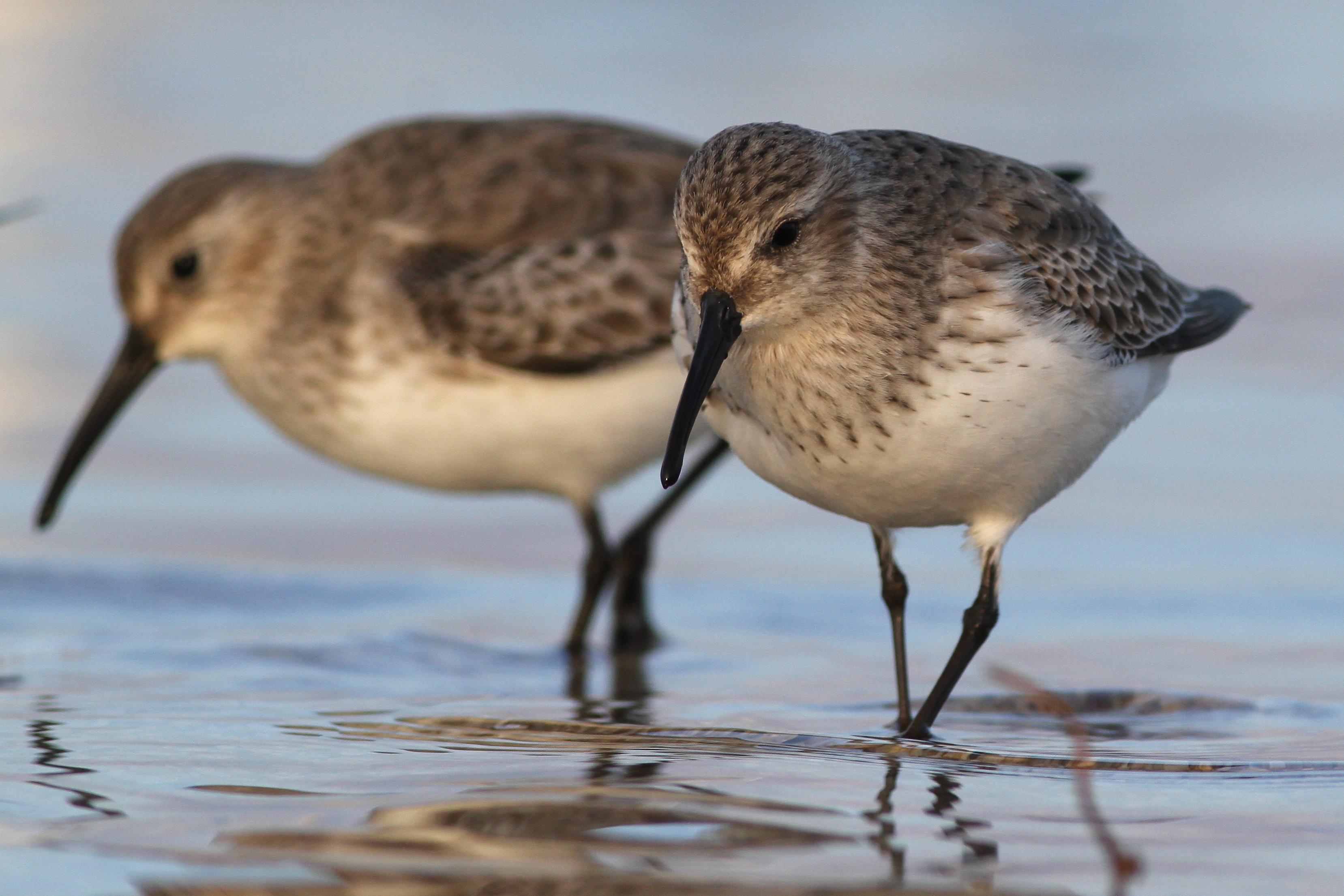
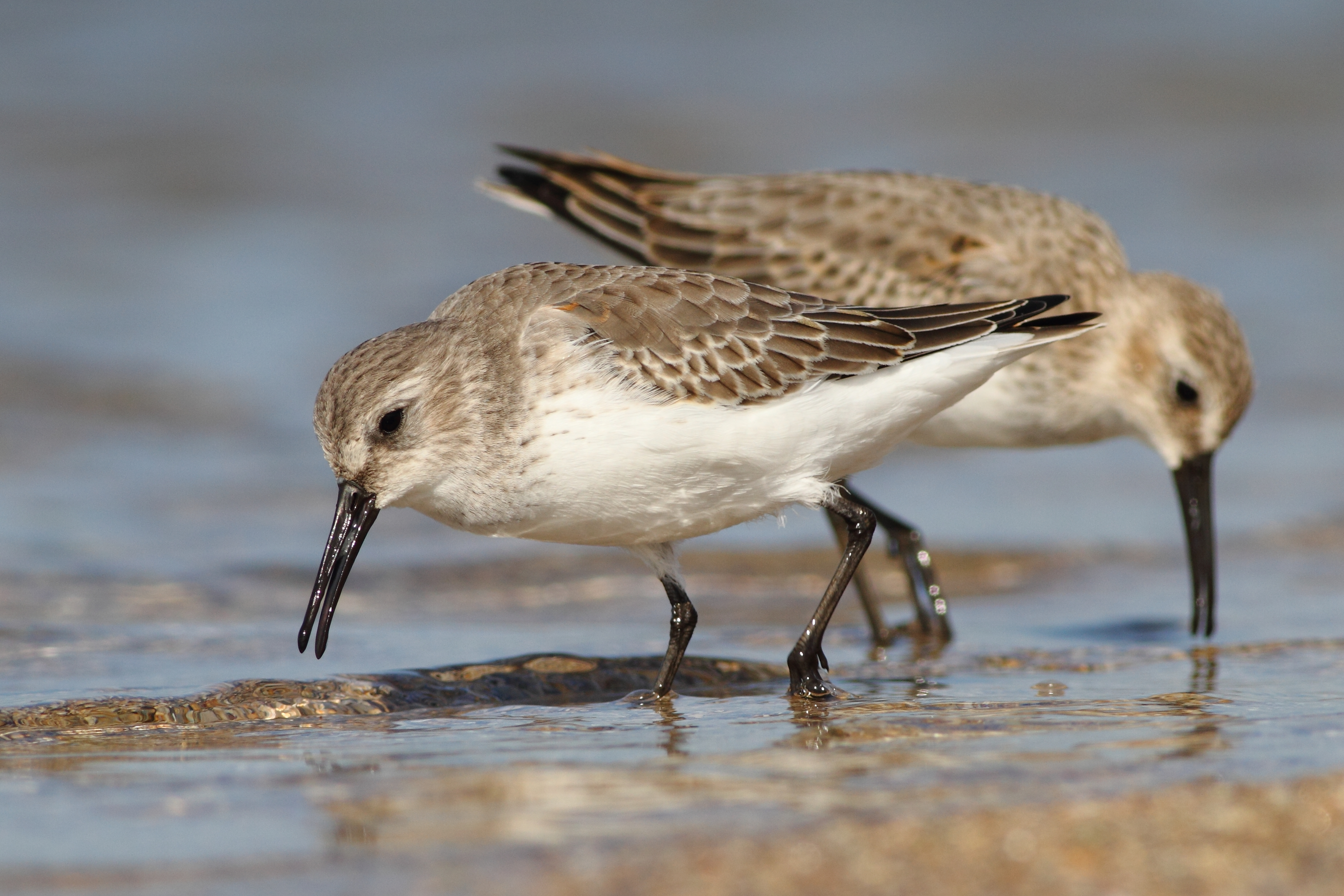
Western Sandpiper
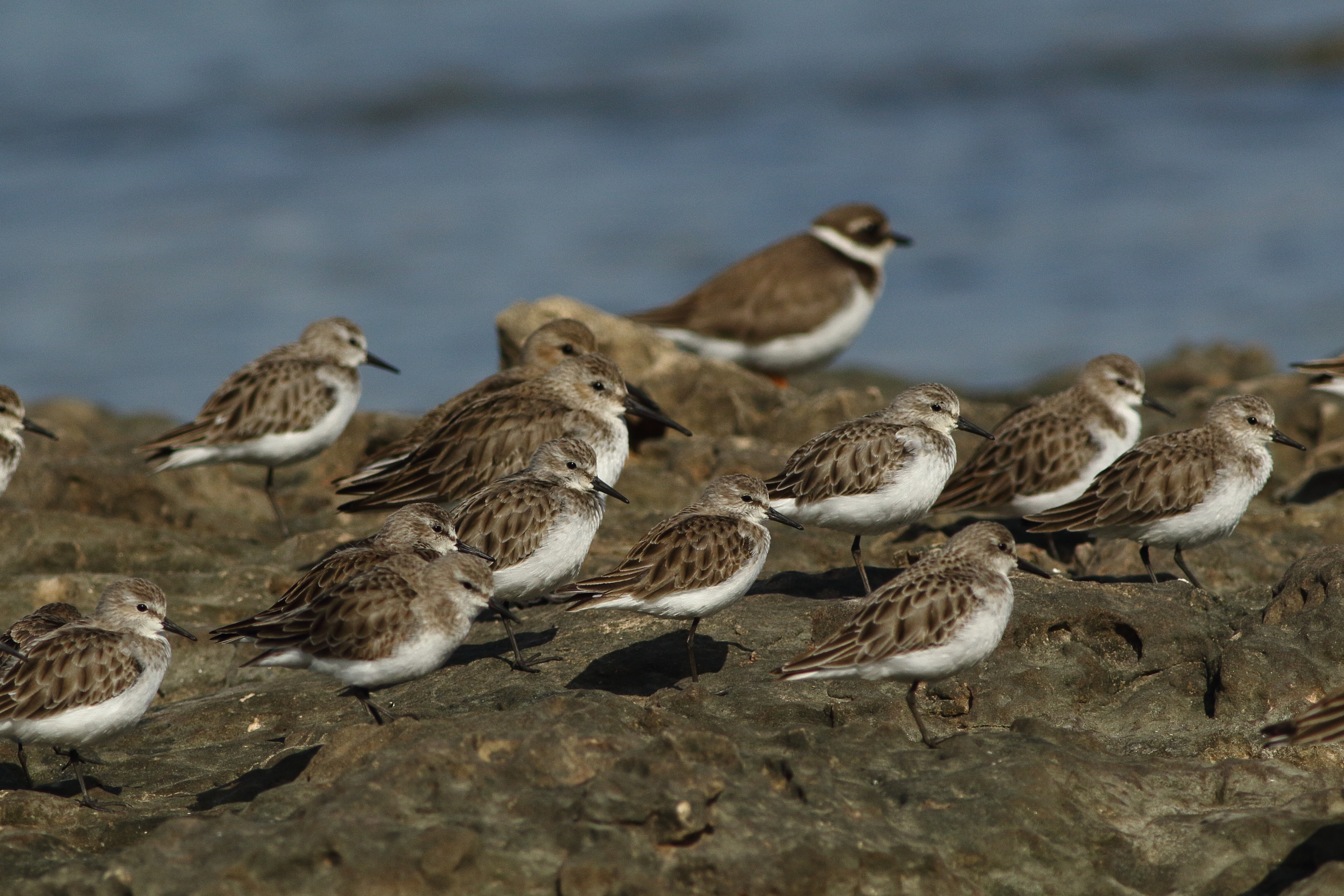
ID Features: Small sandpiper with relatively long, droopy bill (longer on females). In breeding plumage, shows rich rufous tones on shoulders, cheeks, and crown. Nonbreeding is plain pale gray above and white below. Juveniles look pale-faced and have a bright strip of rufous feathers on the upper edge of the wings. Most similar to Semipalmated Sandpiper, which averages shorter-billed and duller-grayish brown overall. Extremely difficult to distinguish in winter; note Western is somewhat larger-headed and more front-heavy. Droopy bill might recall Dunlin, but Western is smaller and paler.
Habitat: Breeds on high Arctic tundra in Alaska. In migration and winter, occurs in large flocks on mudflats and beaches. Much more common in western North America; uncommon to rare on the east coast. Occurs on the winter in the U.S., unlike Semipalmated Sandpiper; regularly winters as far south as Peru, rare to Chile.
Locations: Mexico, Peru, Chile, Costa Rica, Ecuador, United States


Least Sandpiper
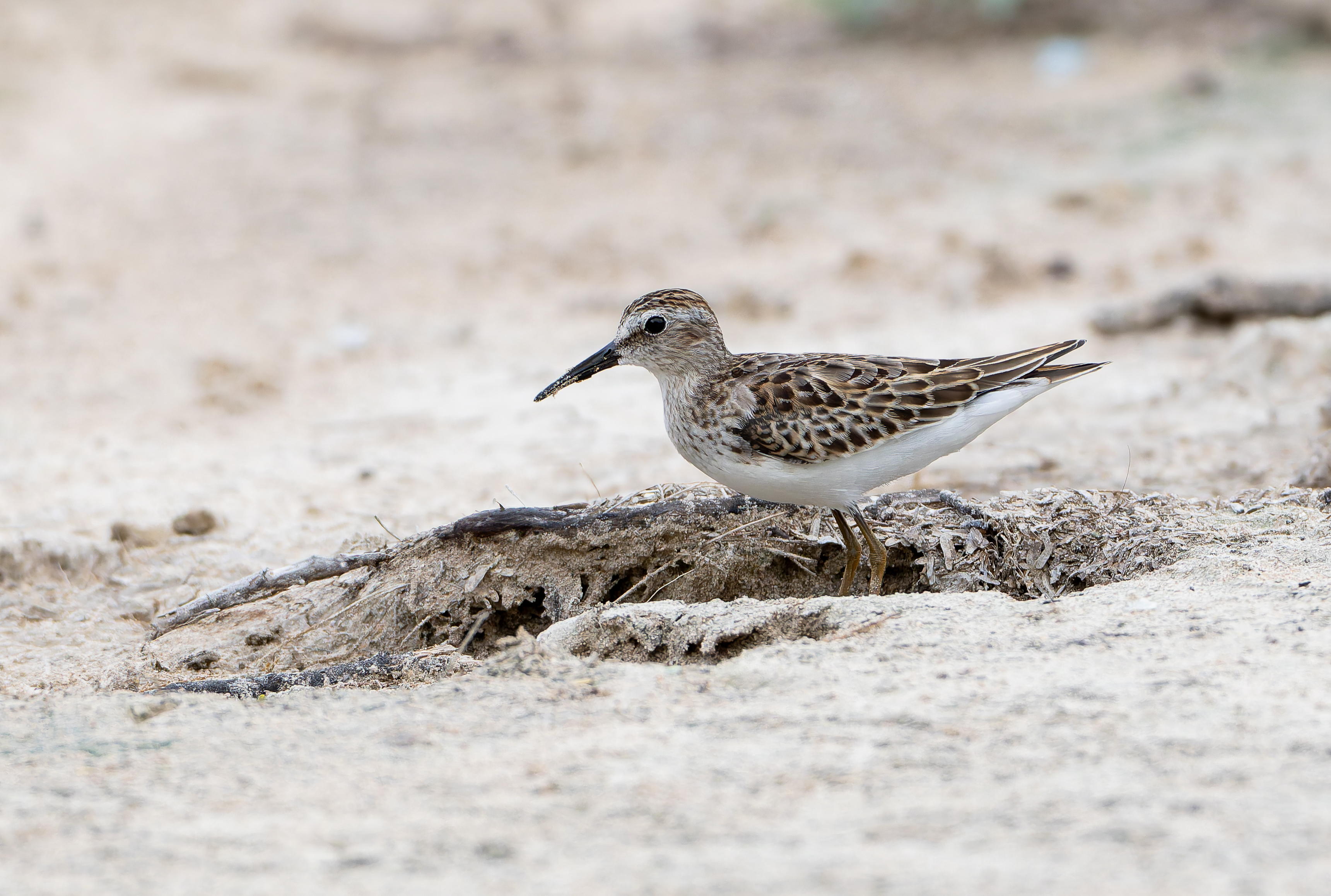
ID Features: Tiny brownish sandpiper. At all ages, most easily distinguished from other small sandpipers by darter, more brownish coloration. Juveniles are particularly bright with rusty tones on the upperparts. Also note fine-tipped bill and yellowish legs, but beware kegs can be covered with dark mud and other peeps (like Semipalmated Sandpiper) can rarely show slightly greenish legs. Typically forages in a crouches posture with bent legs, picking for invertebrates in the mud. Listen for high-pitched, rolling "greeep" calls.
Habitat: Often in small loose groups, but not in large, tight flocks like Semipalmated or Western Sandpipers. Prefers drier mud, often on the higher edges of mudflats or small patches of water in marshes. Widespread and common, especially inland. Breeds in various wetland habitats throughout Alaska and Canada. Winters from the southern U.S. to South America.
Locations: Mexico, Peru, Cuba, United States, Belize, Brazil, Dominican Republic, Trinidad & Tobago, Mauritania


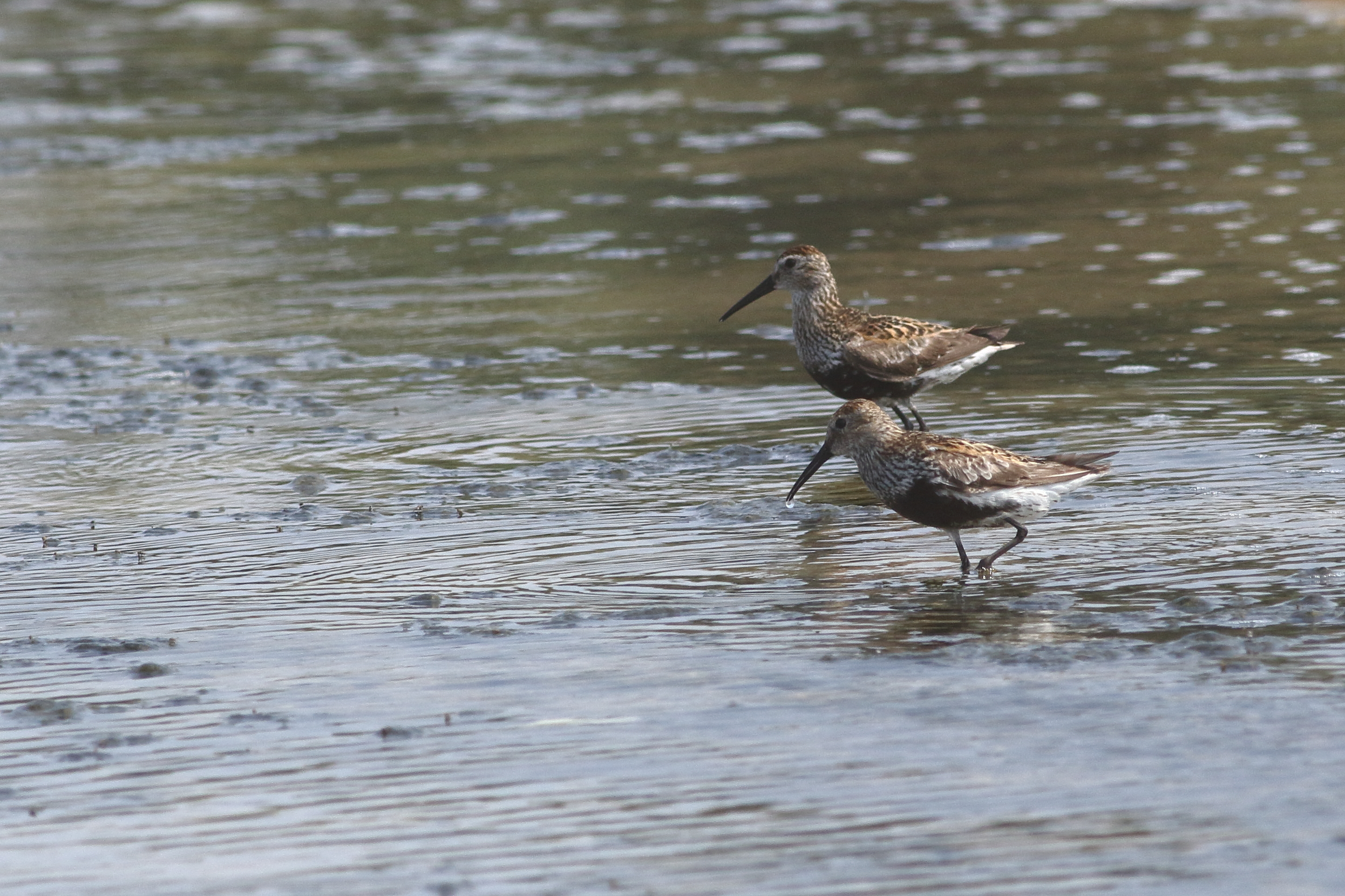
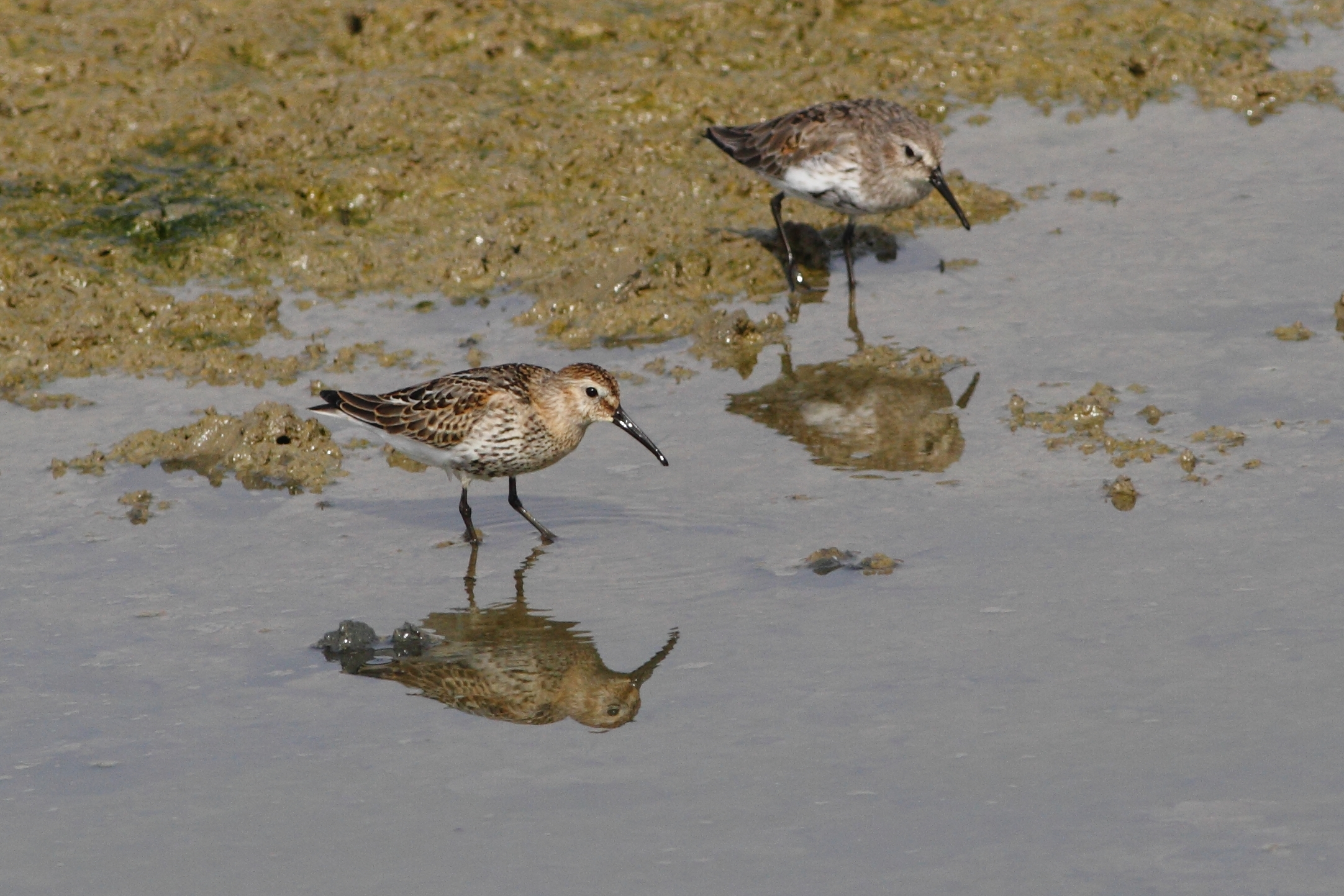
Dunlin
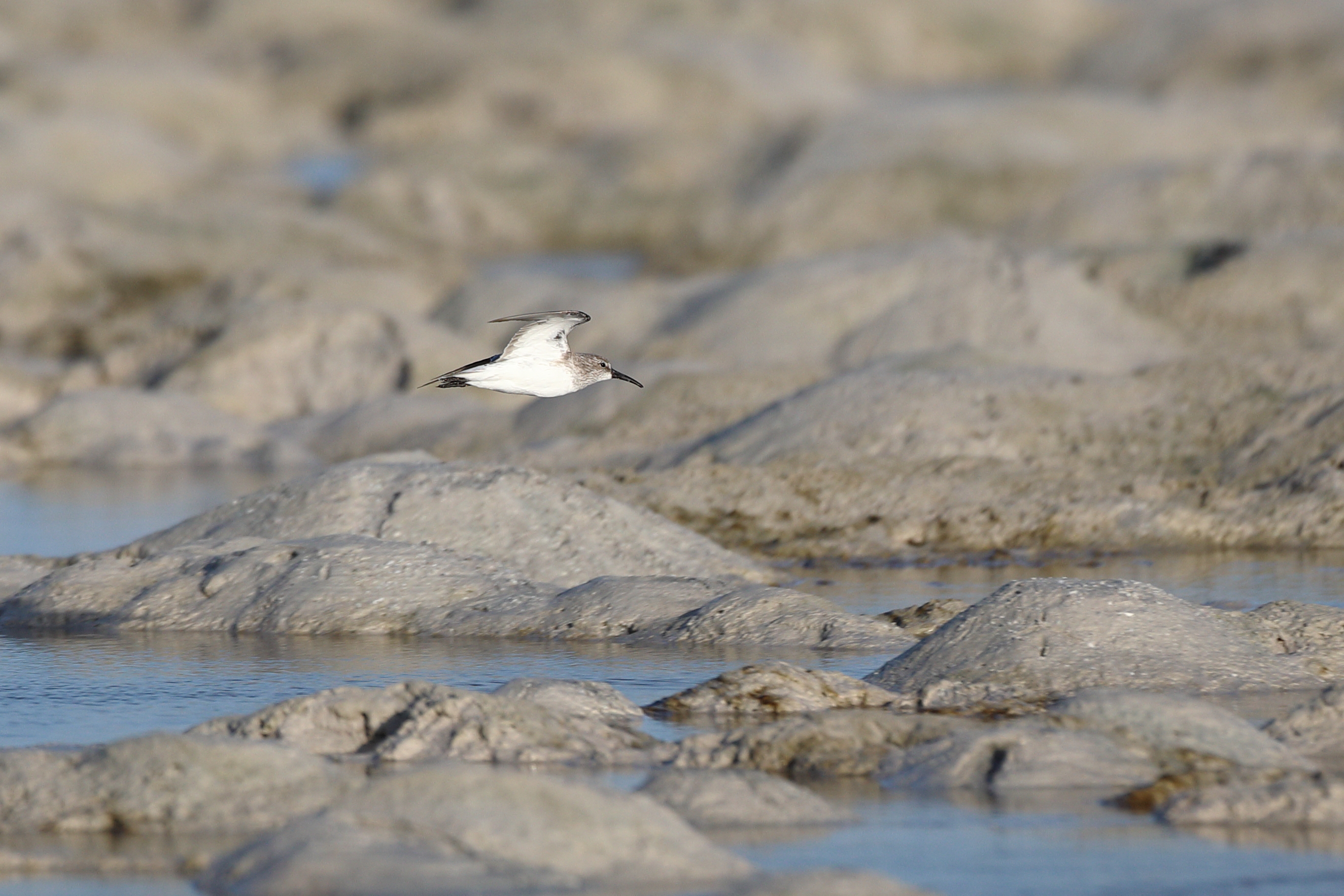
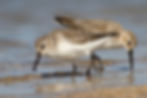
ID Features: Small, plump shorebird with droopy bill. Breeding plumage is distinctive with rufous or brown back and black belly. In fall and winter, plain grayish-brown above with white belly. Often in large flocks on mudflats and beaches, sometimes mixing with other shorebirds. Very similar to Curlew Sandpiper in nonbreeding plumage, but Dunlin is more compact, shorter-winged and shorter-legged, and darker. Droopy bill might recall Western Sandpiper, but Dunlin is larger and darker. Also compare with Purple Sandpiper, which is even darker and more spotted and has orange legs. Listen for loud, slightly buzzy "dzeer!" calls.
Habitat: Breeds on Arctic tundra; winters on coastlines throughout the Northern Hemisphere; typically less common inland. A late migrant, especially in fall; lingers longer at higher latitudes than most other small shorebirds.
Locations: Norway, Spain, Oman, France, Kazakhstan, Russia, UAE, Iceland, Ireland, United States, Bulgaria, Belgium, Denmark, United Kingdom, Turkey, Kuwait, Mauritania,



Curlew Sandpiper
ID Features: Medium-sized water with a long, slightly downcurved bill. Slightly larger than Dunlin, with longer and finer bill, longer legs. In flight note large white rump patch. Breeding Plumage deep rusty on head and body (like Red Knot). Non-breeding birds are grayish-brown above with white eyebrows and belly. Juvenile is grayish above with neat scaly feather edgings, whitish below with variable buffy wash on breast.
Habitat: Breeds in Russian tundra and winters in Africa, Australia, and South and Southeast Asia. Mainly in coastal wetland habitats, often with flocks of Dunlin.
Locations: Israel, Mauritius, Madagascar, Mongolia, Morocco, Namibia, Seychelles, Spain, Oman, France, Russia, Thailand, UAE, Bulgaria, South Africa, India, Taiwan, Turkey, Greece

Red Knot
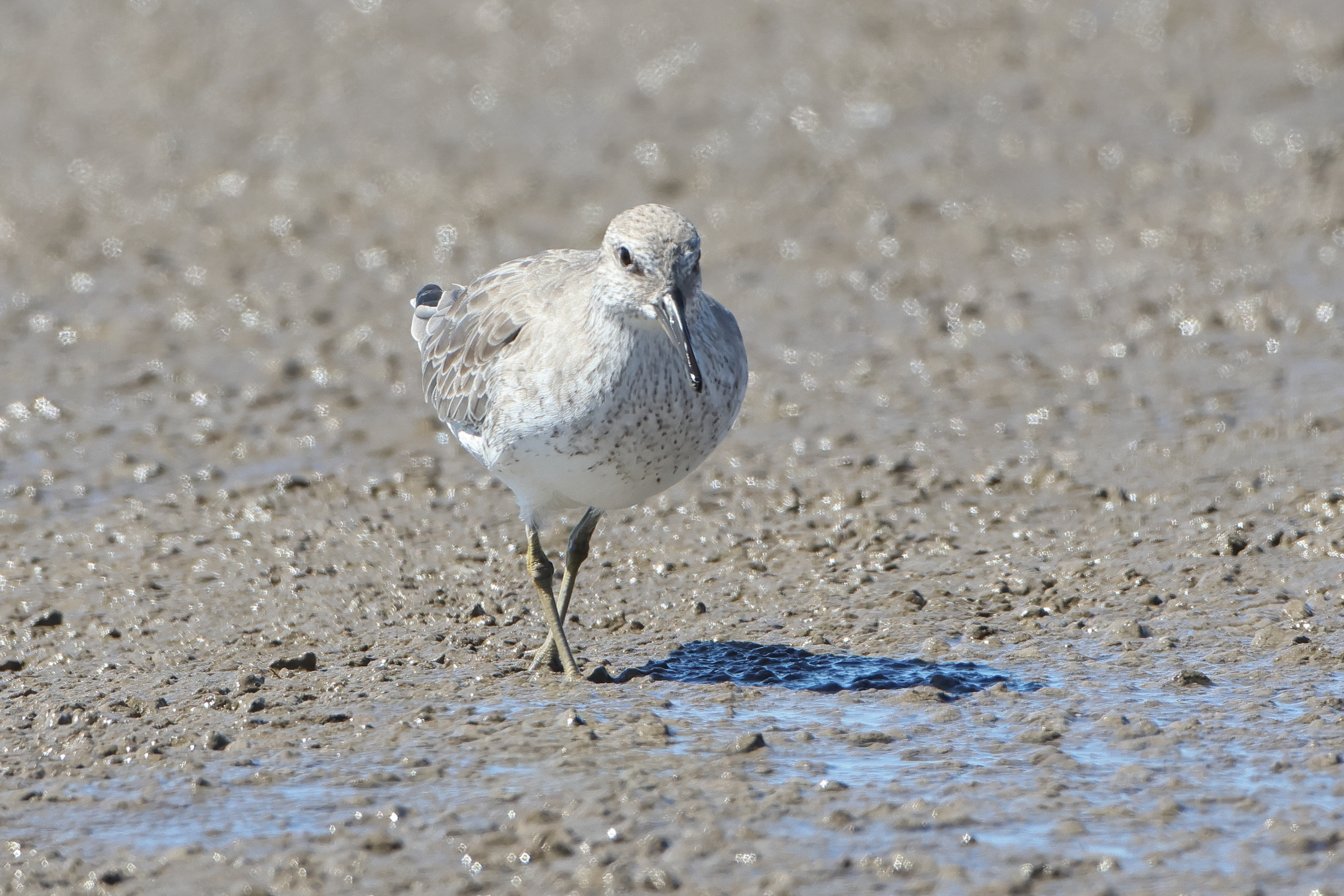
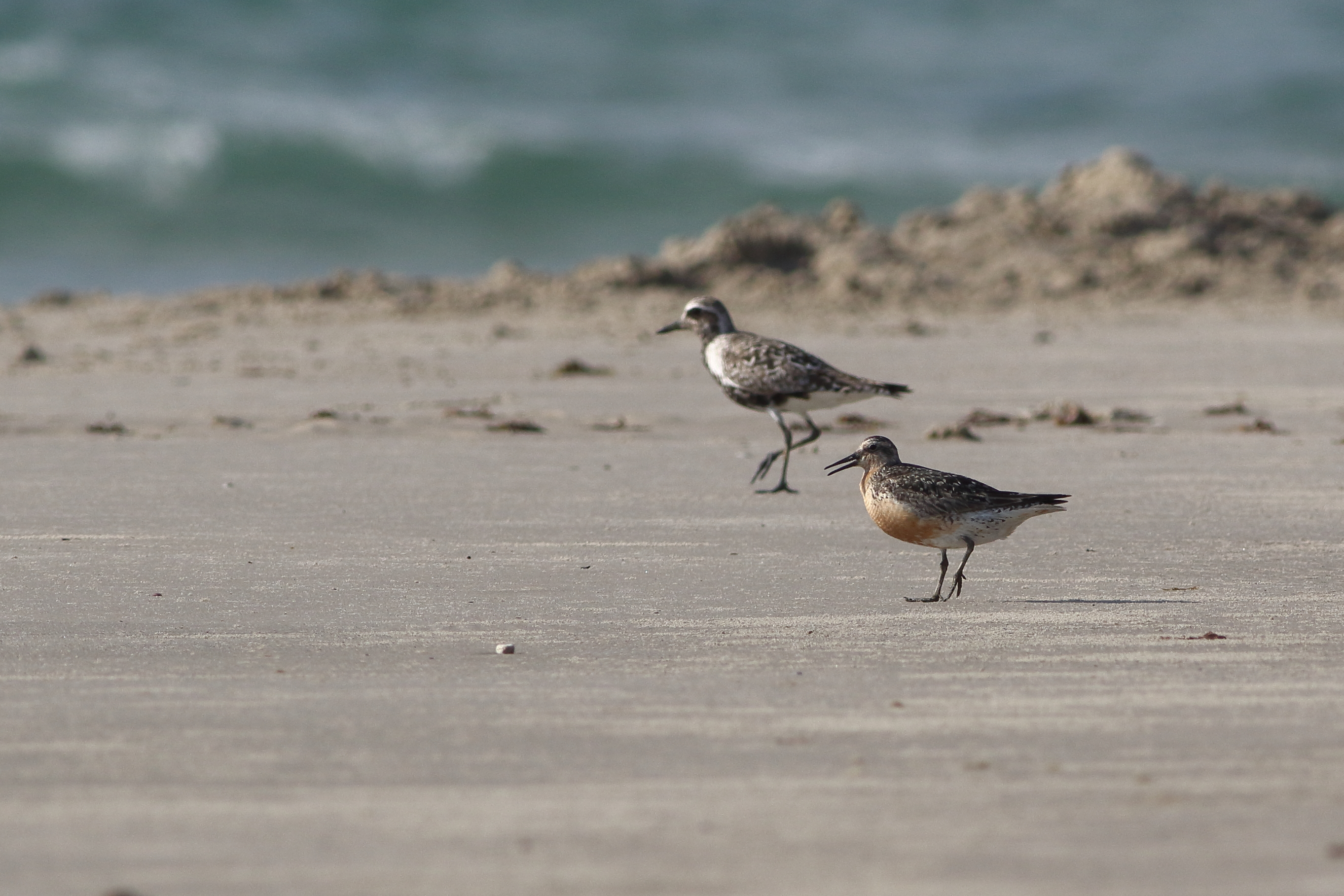
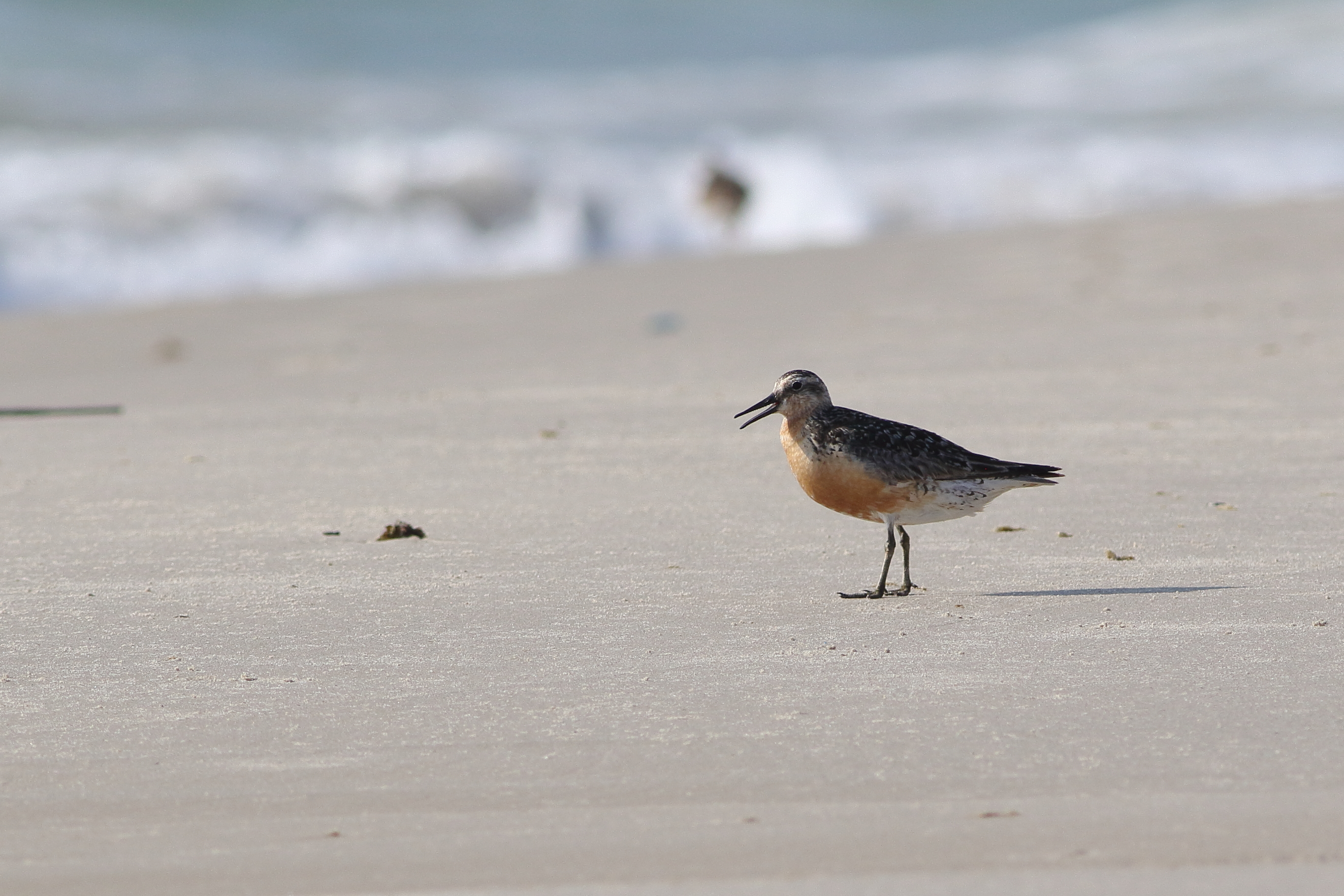
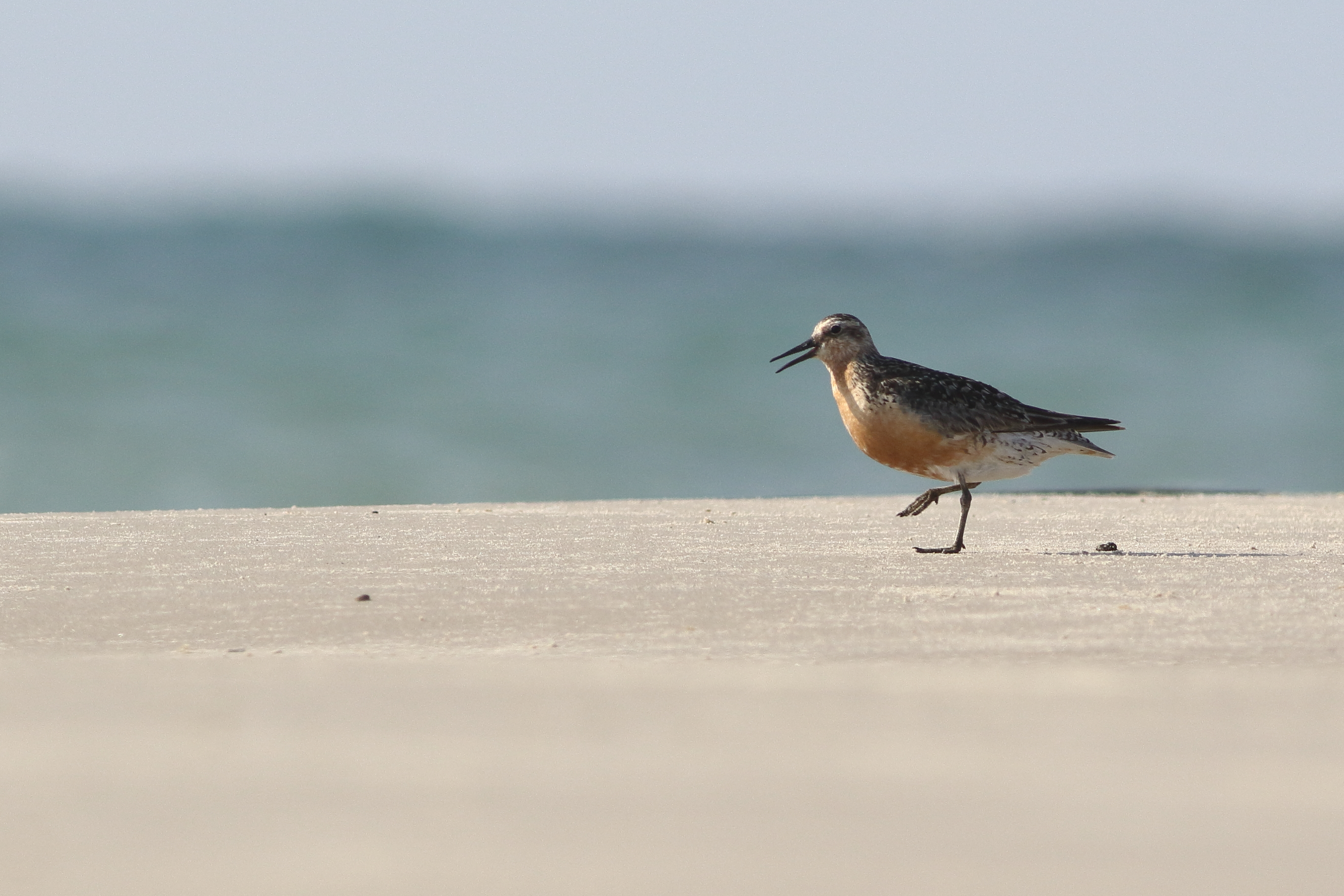
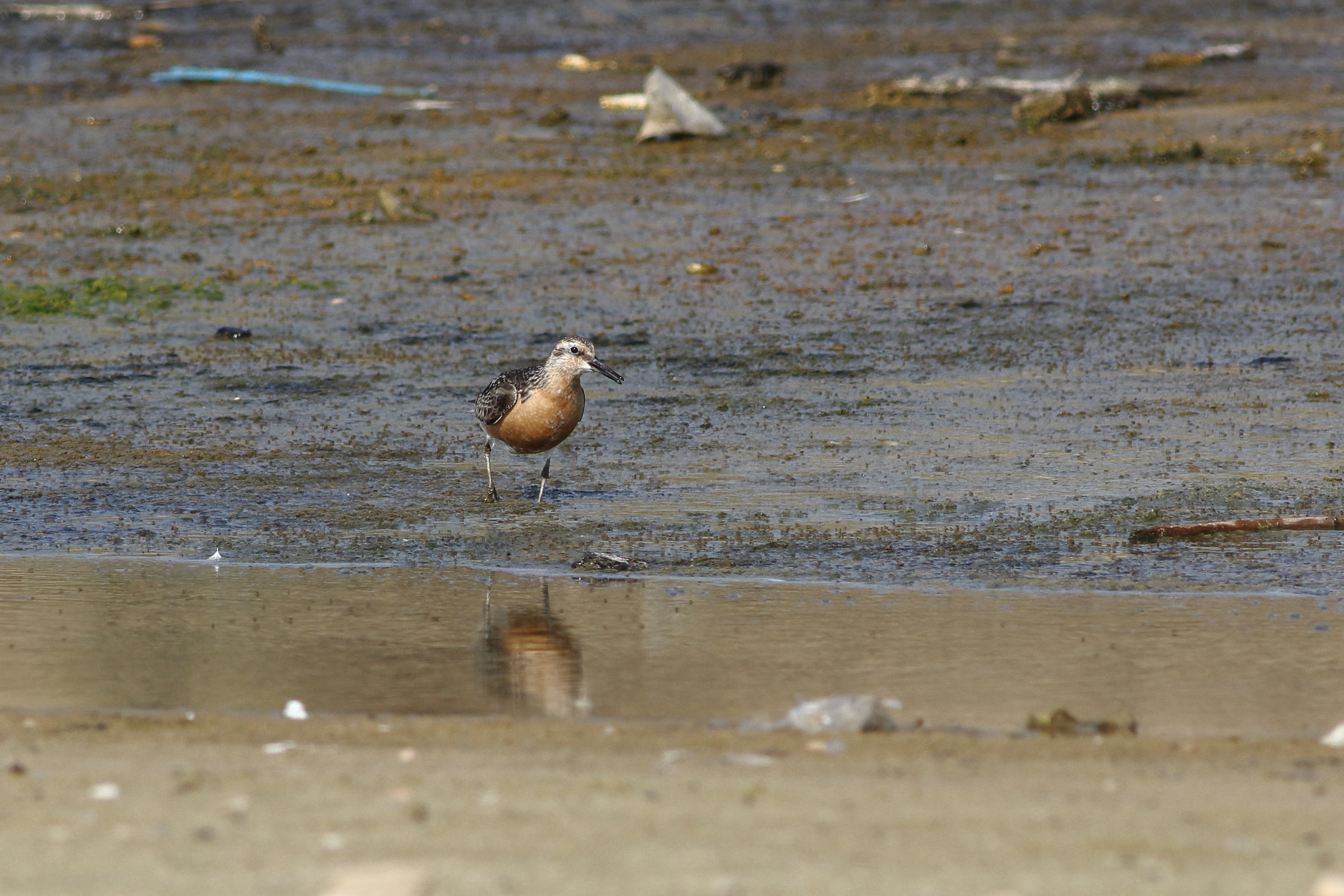
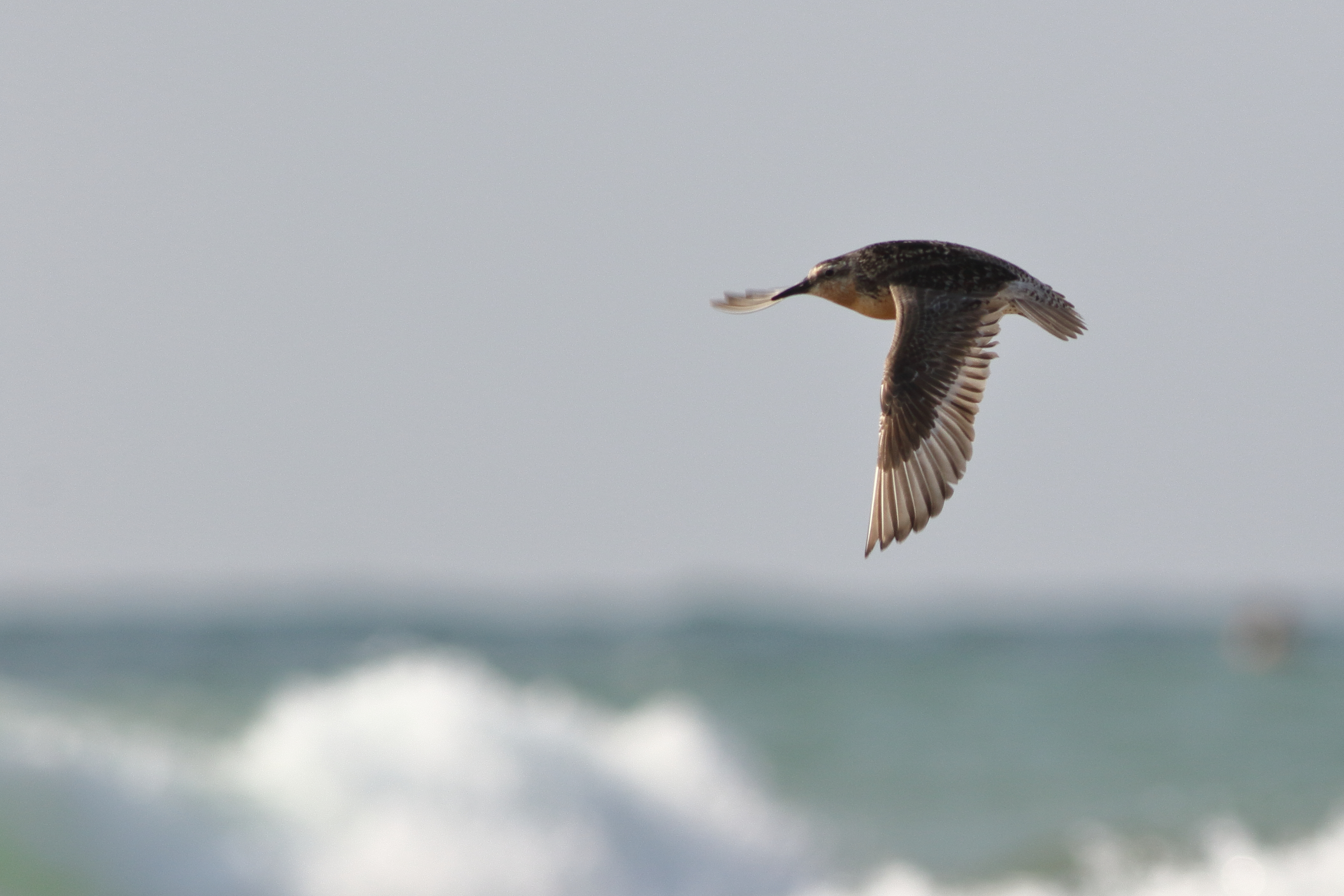
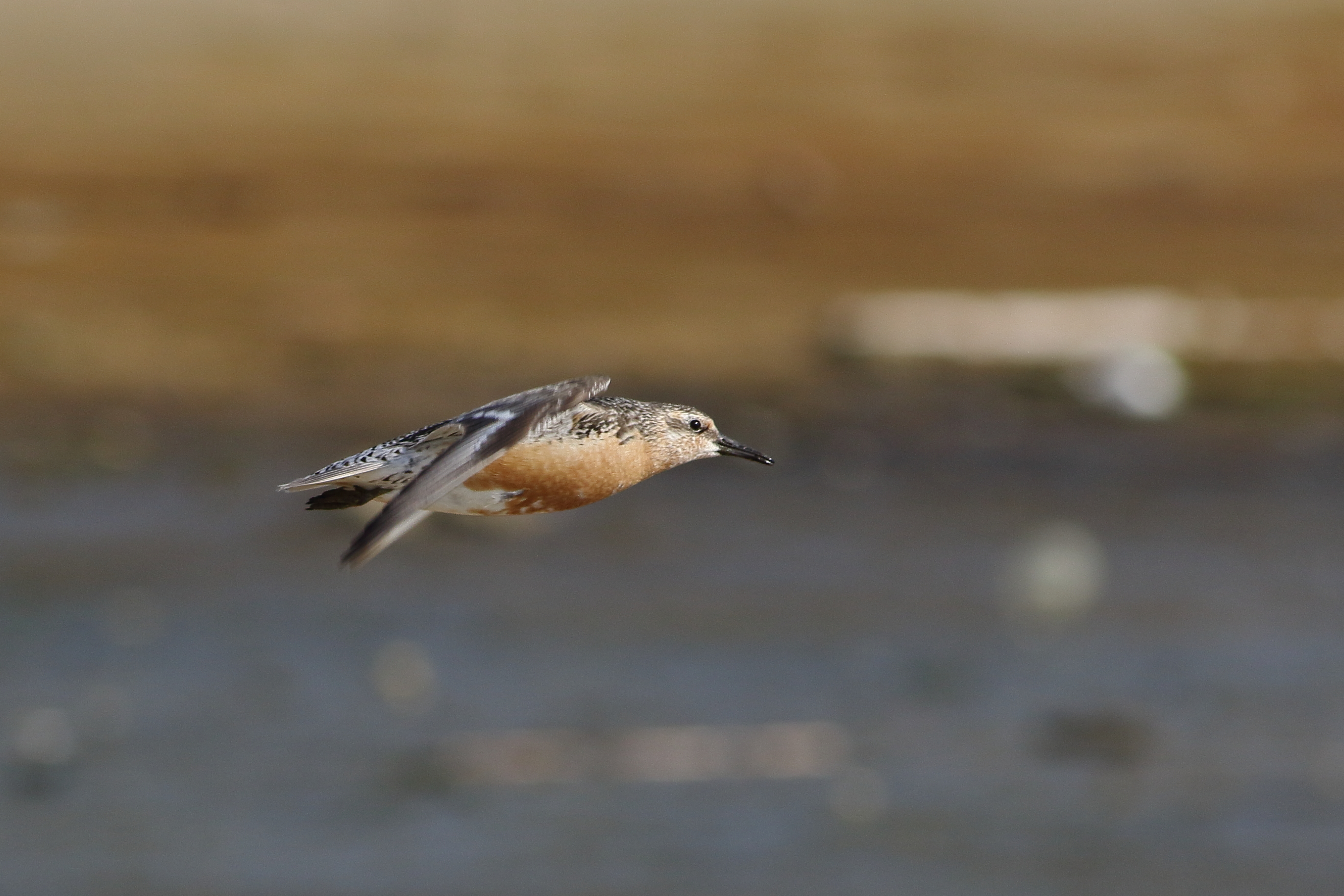
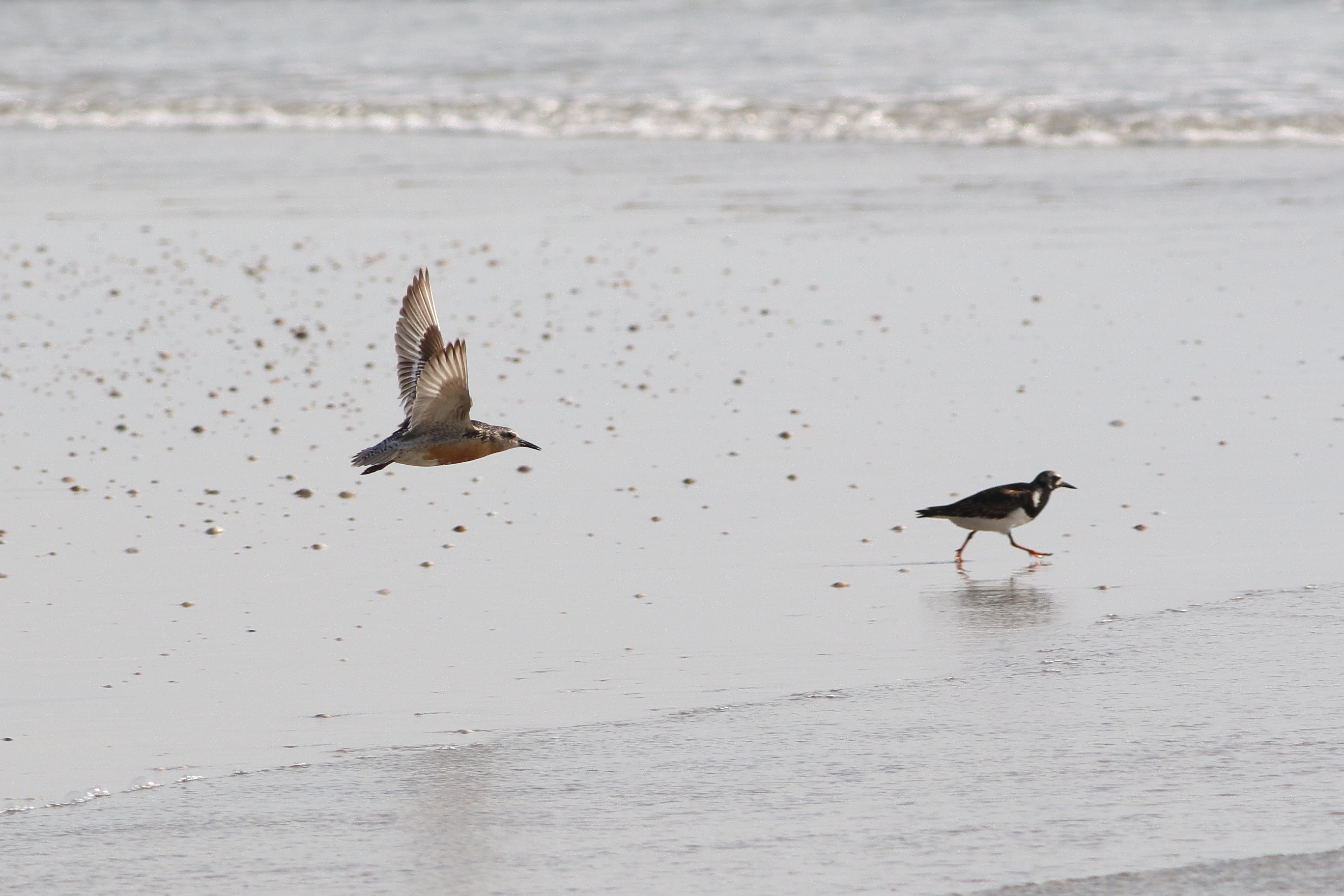
ID Features: Stocky, medium-sized shorebird with relatively short bill and legs. Combination of shape, overall color, and bill size usually distinctive. Beautiful breeding plumage shows entirely salmon-orange underparts and silvery wings with intricate pattering. Nonbreeding is plain gray pale underparts and a white eyebrow; juvenile similar but with scaly pattern on the wings. Usually shows dark barring on flanks. Legs are dull greenish or gray. Compare with larger, lankier, longer-billed Great Knot in Asia and Australia. Feeds on variety of small invertebrates; West Atlantic population reliant on horseshoe crab eggs during spring migration.
Habitat: Widespread and fairly common, breeding on high Arctic tundra and wintering on coastlines around the globe, as far south as Tierra del Fuego. Most numerous on beaches and mudflats; less common inland. Occurs in flocks, often mixed with other shorebirds.
Locations: Israel, Mozambique, Mongolia, New Zealand, Namibia, Cuba, Russia, Thailand, Iceland, Ireland, Argentina, United States, Belgium, South Africa